Home › Plant diseases › Lettuce drop
Plant diseases
Lettuce drop
Sclerotinia sclerotiorum and Sclerotinia minor · Fungus
Also called Sclerotinia rot (USA), Sclerotinia disease (UK), white mould (the Pacific).
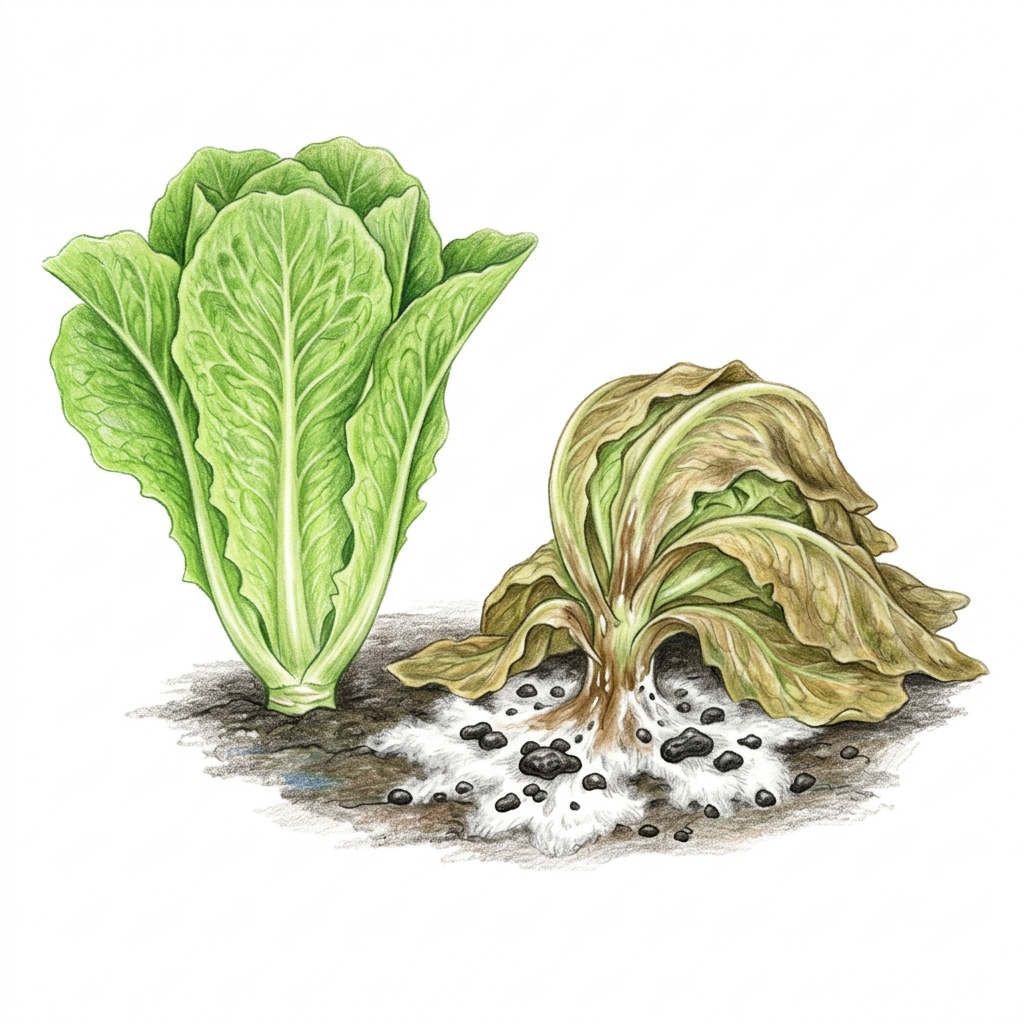
Illustration
A soil fungus that rots lettuce at the base, so the outer leaves wilt and the whole plant collapses, with white, cottony mould and hard black specks underneath. Pull out affected plants at once, before the black specks fall into the soil, keep the soil surface as dry as you can, and keep lettuce, beans, celery and tomatoes out of that bed for at least three years.
How to spot it
- Outer leaves wilt and flop onto the soil, then the whole plant collapses, often as it nears full size.
- In cool weather with wet soil, a plant can collapse within two days.
- A soft, wet, brown rot at the base of the stem and on leaves touching the soil.
- White, cottony mould on the rotted base and under the plant.
- Hard black specks in the mould, from under 3 mm (⅛ in) to 1 cm (⅜ in) or more across, depending on the species.
Easily confused with
Grey mould
Dusty grey or light brown fuzz over the rot, usually starting on old or damaged lower leaves, and any black specks are small and flat. Lettuce drop's mould is white and cottony.
Verticillium wilt
The outer leaves yellow and wilt too, but there's no white mould or rot at the base; instead, dark streaks show inside the root when you cut it.
Downy mildew
Yellow patches held in by the leaf veins, with fuzz only underneath, while the base of the plant stays firm.
Where it's a problem
- Worldwide: Found wherever lettuce is grown, including Australia and New Zealand, and worst in cool, wet weather and damp soil. The black resting bodies keep it going in the soil for years.
What to do
- Pull out a collapsing plant straight away, with the soil around its base, and bag it before the black specks drop into the soil.
- Keep the soil surface as dry as you can: water the soil rather than the leaves, and don't let the bed get soggy. Raised beds help on wet ground.
- Space plants so air moves between them, and pick off old leaves lying on the soil.
- Don't follow lettuce with lettuce, beans, celery, tomatoes or capsicum in that bed for at least three years.
If you use a fungicide, choose one labelled for lettuce drop and follow the label and local rules. Sprays only protect, so farms apply them early, around thinning. In the UK, no chemical treatments are available to gardeners.
Follow your local council's guidance for disposing of diseased plant material. Official guides usually advise against putting it in a home compost heap.
Vegetables it affects
Free account, no card needed. You sign up or sign in first, then the scanner opens.
Sources
- University of California IPM: Lettuce drop
- University of California IPM: Grey mould on lettuce
- RHS: Sclerotinia disease
- Utah State University Extension: Drop (Sclerotinia rot)
- Pacific Pests, Pathogens and Weeds: Lettuce Sclerotinia collar rot
Facts checked Wednesday 21 October 2026. General guidance only: follow your local council, agency and product label.