Home › Vegetables › Eggplants
Vegetables
Growing eggplants
Solanum melongena. A warm-season crop grown for its glossy fruit, raised from seed in trays and planted out into warm soil. It needs more heat than a tomato and a long season, with sun and steady water, and frost kills it. These steps work anywhere: they go by soil and weather, not by month. Also called aubergine (UK, Ireland and Europe), brinjal (India and South Africa).
How an eggplant grows
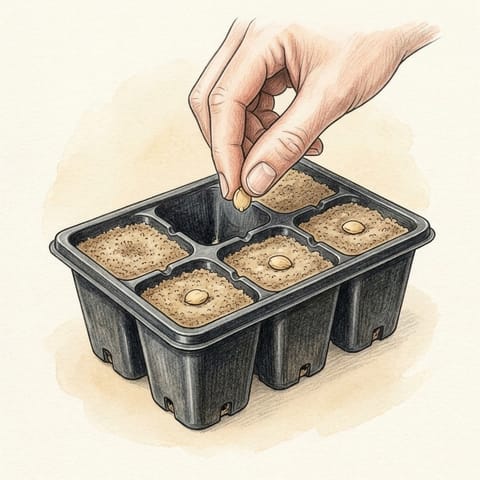 SowSeeds in a tray, kept warmUp in 1–2 weeks
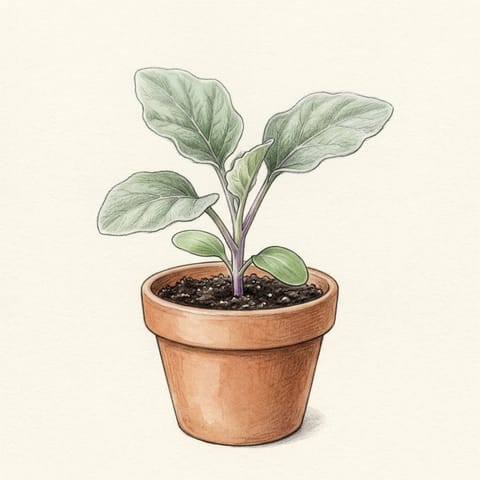 SeedlingMoved to its own pot3–6 weeks
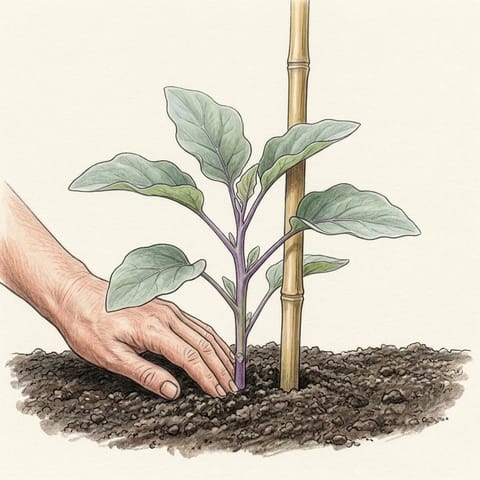 Plant outInto warm soil, cane beside itAbout 8 weeks from sowing
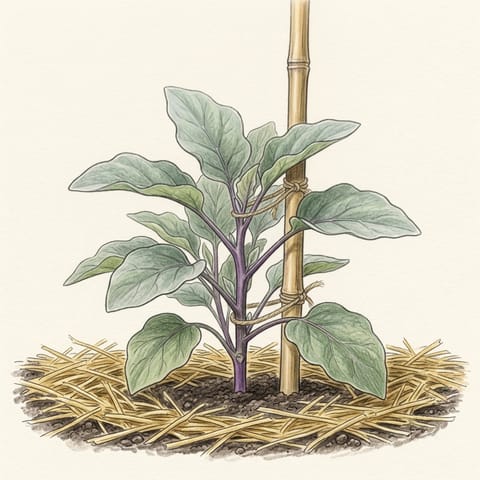 GrowTied in, mulch goes down3–4 weeks after planting
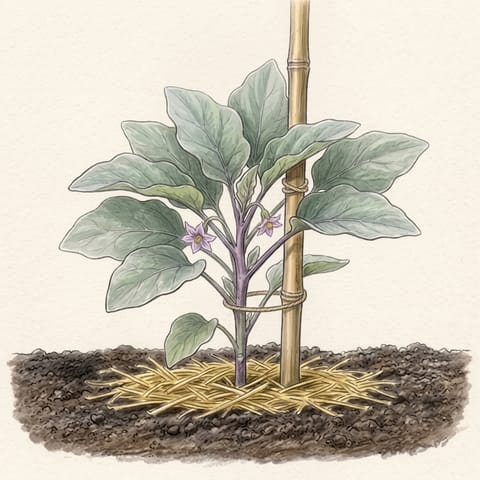 FlowerPurple flowers open4–6 weeks after planting
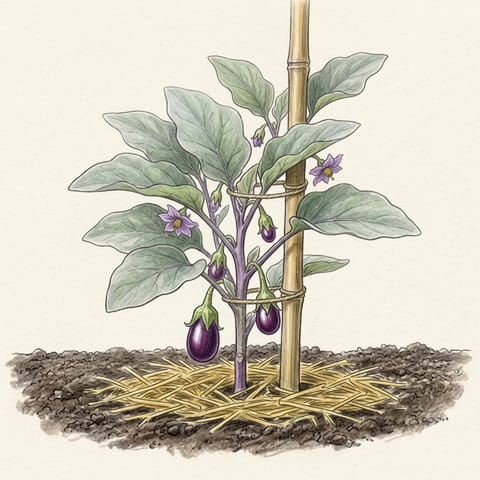 Fruit setsSmall glossy fruit swell6–9 weeks after planting
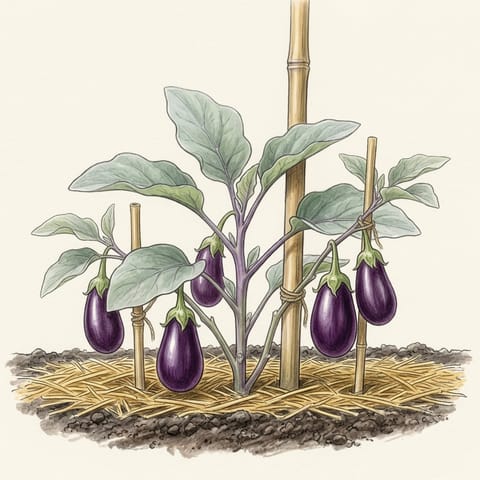 Full sizeGlossy, firm and deep purpleAbout 9–11 weeks after planting
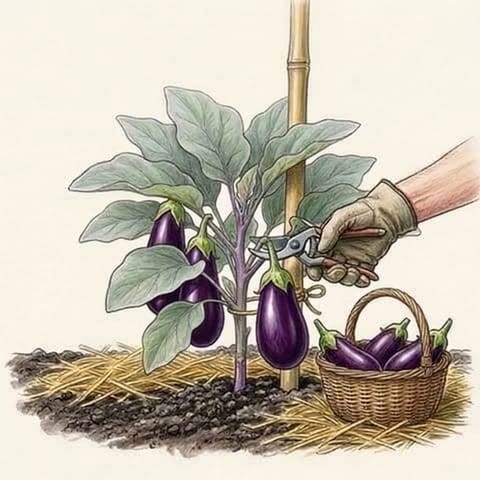 PickCut off, green cap left onOnce or twice a week, until it turns cold
Times vary with the variety and the weather. Small and slender kinds crop first; large, round kinds take the longest.
Growing it, step by step
Is it right for you?
- Eggplants need a long, warm season: about three months of days around 21–29°C (70–85°F) after planting out, on top of about two months in trays.
- Frost kills them, and they feel the cold more than tomatoes: cool nights stop them growing. Nights below about 13°C (55°F), or days above about 35°C (95°F), make the skins tough.
- They grow into sturdy bushes that need a cane, and many kinds have small prickles on the stems. Compact kinds grow well in pots at least 30 cm (12 in) across, one plant to a pot.
When to plant
Sow seeds in trays about eight weeks before you plan to plant out, and keep them warm: they come up best in soil at about 24–29°C (75–85°F). Plant out once the soil is at least 16°C (60°F), the last frost has passed and nights stay above about 13°C (55°F). They need more warmth than tomatoes: put out too early, they sit still for weeks.
Short, cool summers: start seeds early indoors, choose quick, small-fruited kinds, and grow them under cover or against a warm, sunny wall. Mild climates: plant out in late spring, once the soil has warmed, and cover them with fleece or cloches for the first two weeks. Hot or subtropical places: plant in spring once the nights are warm; they love the heat as long as they are watered well. Tropics: they can be planted all year; in the wet season, plant on mounds so the roots drain, and expect more leaf, fewer fruit and a slower crop.Prepare the bed
- A warm, sunny, sheltered spot with deep, well-drained soil. Dig in plenty of compost a few weeks before planting.
- Slightly acid to neutral soil suits them, pH 6.0–7.0. See soil pH.
- Where springs are cool, cover the bed with cloches or plastic for a week or two before planting to warm the soil.
- Avoid beds that grew eggplant, tomatoes, potatoes, capsicum or chillies in the last three years. They share the same diseases.
Sow and plant
- Sow seeds about 5 mm (¼ in) deep in trays or small pots, and keep them warm. A heat mat or heated propagator helps. Once they come up, move them somewhere bright.
- When the seedlings have their first true leaves, move each one to its own pot, about 7.5–9 cm (3–3½ in) across.
- Over a week or two before planting out, harden them off: put them outside by day and bring them in at night.
- Plant at the same depth as in the pot, or a little deeper. Space them 60 cm (24 in) apart, in rows 75 cm (30 in) apart.
- Put a sturdy cane in at planting time, so you don't damage the roots later.
Get it started
- Water in well, then water daily for the first week or so until the plants settle.
- If a cold night is forecast soon after planting, cover them with fleece or a cloche.
Keep it growing
- Tie in: tie the main stem loosely to its cane as it grows. Once fruit forms, give heavy branches canes of their own.
- Water: a deep soak at the base about twice a week in warm weather, so the soil is wet about 15 cm (6 in) down, and keep it steady. Uneven watering makes the fruit tough and causes blossom end rot. Pots may need water every day in hot weather.
- Mulch: about three weeks after planting, once the soil is warm, spread straw or compost about 5 cm (2 in) deep to hold moisture and keep weeds down. Keep it off the stem.
- Feed: good soil needs little, but from the first flowers a high-potash liquid feed every two weeks gives a bigger crop, and plants in pots need it. Too much nitrogen grows leaves and delays the flowers. Stop once new fruit has no time to ripen before the cold.
- Uncover: if the plants are under fleece or cloches, take the covers off once they flower so bees can reach the flowers.
- Short summers: pinch out the growing tip at about 30 cm (12 in) for a bushier plant that crops sooner. On large-fruited kinds, once five or six fruit have set, pinch off any more flowers so those can ripen before the cold.
Watch for problems
The common ones, with a Garden help page each where there is one:
Flea beetlesAphidsSpider mitesWhiteflyColorado potato beetleTomato hornwormStink bugsVerticillium wiltEarly blightLeaf spotBlossom end rotFlower dropSunscaldHarvest
- Start picking about 9–11 weeks after planting out, once the fruit is full-sized, firm and glossy. Pressed gently, the skin should spring back.
- Don't leave them too long: dull skin means the fruit is overripe, seedy and bitter. Pick once or twice a week to keep new fruit coming.
- Cut the stalk with secateurs or a sharp knife, leaving the green cap and a short stalk on the fruit. Many kinds have prickles on the stalk and cap, so wear gloves.
- Before the first frost, or once the nights turn cold, pick what is left. Small fruit that set late in the season rarely ripen.
After harvest
- Eggplants don't keep well: eat them within a few days. Keep them somewhere cool, about 10°C (50°F). A long stay in a cold fridge pits and browns them.
- To save seed, choose an open-pollinated kind and leave one fruit on the plant until it turns dull yellow or brown, well past eating. Seed from F1 hybrids won't grow true.
- Pull out plants that have finished. Bin diseased ones rather than composting them.
- Next in that bed: beans, peas or leafy greens. Keep eggplant, tomatoes, potatoes, capsicum and chillies out for three years.
Sources
- RHS: How to grow aubergines
- Utah State University Extension: How to grow eggplant in your garden
- University of Saskatchewan Gardening: Eggplant
- Penn State Extension: Eggplant in the garden and the kitchen
- Gardening Australia: Easy Solanaceae
Facts checked Friday 23 October 2026. General guidance only: local advice comes first.