Home › Vegetables › Lemongrass
Vegetables
Growing lemongrass
Cymbopogon citratus. A tropical grass grown for the lemon-scented base of its stalks, kept for years as a big clump where winters are warm. It wants sun, warmth and steady moisture, and frost kills it, so where winters are cold it lives in a pot. These steps work anywhere: they go by soil and weather, not by month. Also called lemon grass (UK), fever grass (Caribbean).
New to growing vegetables? Start with the beginner's guide.
How lemongrass grows
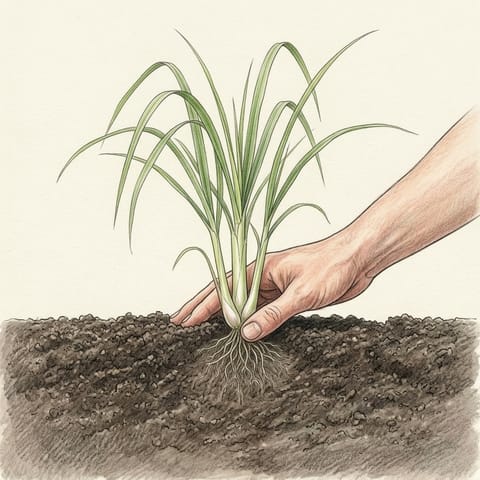 PlantA small plant, at the same depthDay 0
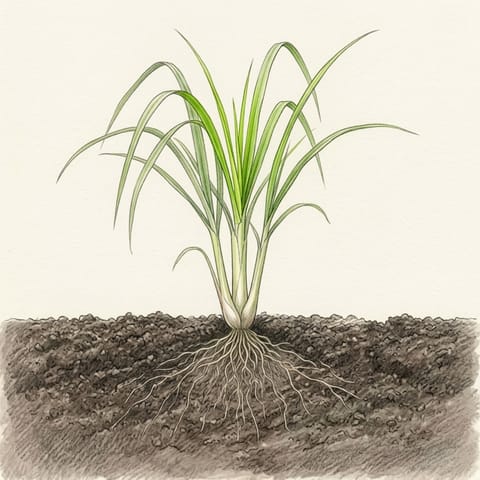 Settle inNew leaves come from the centre2–4 weeks after planting
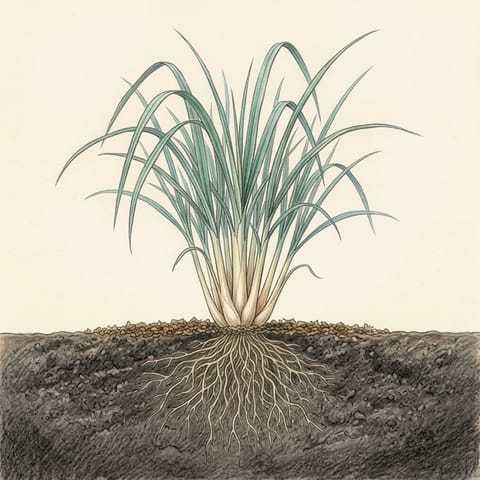 Clump growsMore stalks; compost mulch1–3 months after planting
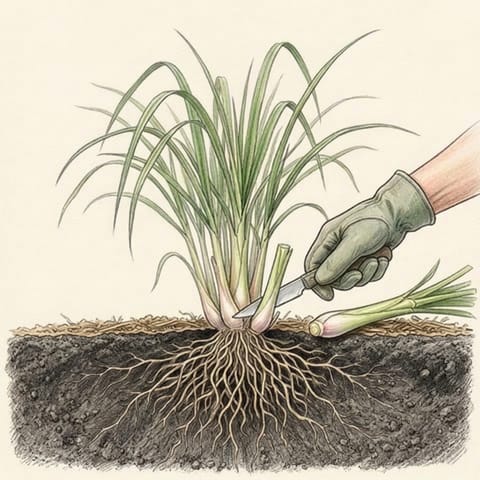 First picksThick outer stalks cut lowOnce stalks are 1.3 cm (½ in) thick
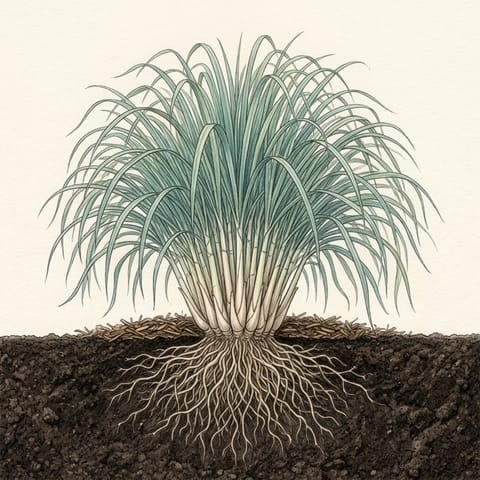 SummerA big, arching clumpIts first summer
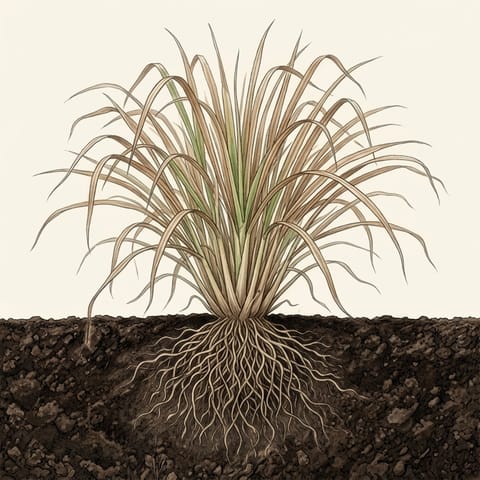 WinterLeaves brown back where it is coolIts first winter
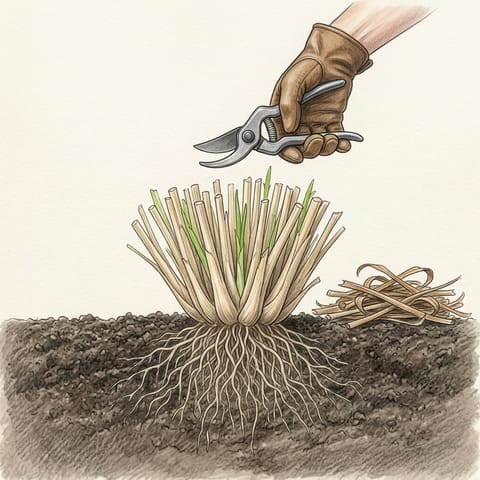 Cut backLeaves cut to 10 cm (4 in) in springEach spring, as growth starts
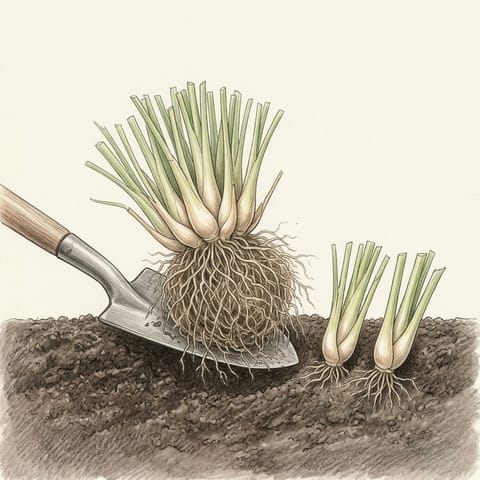 DivideLift and split the clump, then replantEvery 2–3 years, in spring
Times run from planting a small plant and vary with the warmth. Where winters are cold, the clump spends winter in a pot indoors and the steps start again each spring.
Growing it, step by step
Is it right for you?
- Lemongrass is a tropical grass grown for the swollen, lemon-scented base of its stalks. One clump gives stalks for years where winters are warm.
- It can't take frost. A light frost browns the leaves; a hard frost, around −5°C (23°F), can kill the whole clump. Where winters are cold, grow it in a pot and bring it in for winter.
- In the ground a clump grows 1–1.5 m (3–5 ft) tall and about 1 m (3 ft) wide; it stays smaller in a pot.
- In a pot: it soon needs one 30 cm (12 in) or more across, with drainage holes, in full sun. Move it to a bigger pot as the clump grows.
- It struggles indoors long term. It can spend a winter on a bright, warm sill, but makes few stalks in low light.
When to plant
Plant in spring, once the last frost has passed and the weather has warmed: it grows little below about 13°C (55°F) and fastest at 25–30°C (77–86°F). Where it never frosts, plant at any time of year. It is rarely grown from seed: the easy start is a small plant, or a piece split off an older clump.
Cold winters: grow it in a pot, outside in summer, and bring it in before nights drop below about 7°C (45°F). Keep it bright and above that indoors, then put it out again after the last frost. Mild climates: plant in spring. The leaves brown off in winter; shelter it from frost, or keep it in a pot you can move under cover. Hot or subtropical places: it stays in the ground all year. Plant in spring; the leaves may brown a little in the cool months. Tropics: it grows all year and can go in at any time. Give it soil that drains well in heavy rain.Prepare the bed
- Full sun in a warm, sheltered spot. Lemongrass takes light shade, but the more sun, the more stalks.
- Fertile soil that holds moisture but drains freely. Dig in 5–10 cm (2–4 in) of compost before planting.
- It rots in soil that stays wet. On heavy clay soil, use a raised bed or a pot.
- Leave it room: a clump spreads to about 1 m (3 ft) across. Weed well first; young plants can't compete, though a grown clump smothers weeds.
Plant
- Buy a small plant, or split a piece with roots and a few stalks off an older clump.
- Stalks from a shop can root in a glass of water in about two weeks, but they can carry disease. A nursery plant is the safer start.
- Plant at the same depth it grew before, 90 cm (3 ft) apart. Firm the soil around it and water it in well.
- In a pot, use a pot a little wider and deeper than the one it came in, filled with fresh potting mix, at the same depth.
Get it started
- Keep the soil moist, never wet, for the first few weeks while it settles.
- Weed by hand around young plants until the clump fills out.
- If a cold night is forecast soon after planting, cover it with fleece or move the pot under shelter.
Keep it growing
- Water: it likes steady moisture through the warm months. Water new plants until they settle, then give a deep soak at the base in dry spells; avoid wetting the leaves. Water much less in winter, when it stops growing. Pots dry out fast and need watering more often.
- Mulch: a layer of compost or straw, about 5 cm (2 in) deep, keeps moisture in. Keep it a little away from the stalks.
- Feed: good soil with compost needs little. Top up the compost each spring. If the leaves are pale and growth is slow in summer, a liquid feed once a month helps. In pots, a liquid feed every two to three weeks from spring to late summer.
- Cut back: in spring, as new growth starts, cut the whole clump back to about 10 cm (4 in) and clear away the dead leaves. Don't cut it back in cold weather.
- Divide: every two or three years, in spring, lift the clump, cut the leaves short and split it with a spade into pieces with roots and a few stalks each. Replant one piece in fresh, compost-rich soil and pot up or share the rest.
Wear gloves. The leaf edges are sharp enough to cut skin. Wear gloves, and long sleeves, when you pick, cut back or divide.Watch for problems
The common ones, with a Garden help page each where there is one:
Harvest
- Pick once the stalks are at least 1.3 cm (½ in) thick at the base. Take the thickest from the outside of the clump, older ones first.
- Cut each stalk at ground level with a sharp knife, or twist it and pull it away from the clump.
- Trim off the leaves and the tough outer layers. The pale lower 10 cm (4 in) has the best flavour: slice it finely, or bruise it so it gives up its flavour as it cooks.
- The leaves are too tough to eat, but make a good tea.
- Where winters are cold, pick what you need before the first frost.
After harvest
- Use stalks fresh, or freeze them whole or sliced for up to six months. Dry the leaves for tea.
- A clump stays at its best for about four years. After that it makes fewer good stalks: lift it, keep young pieces from the outside, replant them and throw out the old centre.
- Where winters are cold, before the first frost pot up a piece of the base with roots, keep it bright and warm indoors, water it sparingly and plant it out again after the last frost.
- Clear away fallen leaves, especially if rust has been on them: it lives on in the dead leaves.
- Next in that bed: lemongrass stays put for years, renewed by dividing it. When a clump is lifted for good, dig in compost and plant whatever you like there.
Sources (5, from RHS, Utah State University Extension, Penn State PlantVillage and others)
- RHS: How to grow lemon grass
- Utah State University Extension: Lemongrass in the garden
- Penn State PlantVillage: Lemon grass
- Gardening Australia: FAQs, lemongrass · Spice it up
Facts checked Friday 30 October 2026. General guidance only: local advice comes first.