Home › Plant diseases › Alternaria leaf spot
Plant diseases
Alternaria leaf spot
Alternaria brassicicola and Alternaria brassicae · Fungus
Also called black spot, grey leaf spot (USA), black leaf spot (the Pacific).
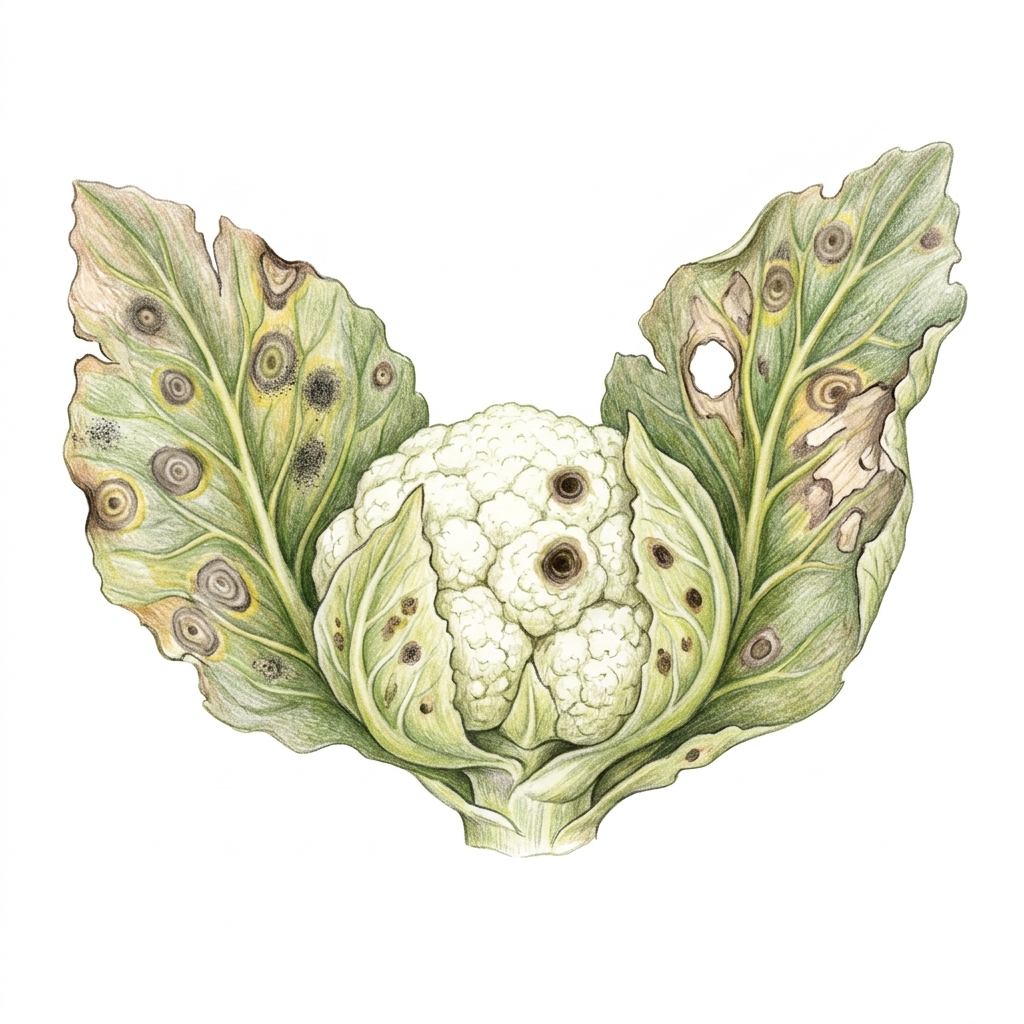
Illustration
A fungus that leaves round brown to black spots with target-like rings on the older leaves of cabbage-family plants, and dark rots on broccoli and cauliflower heads. It isn't the Alternaria that blights carrot leaves; clean seed, good spacing, dry leaves and clearing away old plants keep it in check.
How to spot it
- Small dark or yellow spots, on the older leaves first, that grow into round brown to grey spots up to 25 mm (1 in) across.
- Target-like rings in the spots, often with a dark rim or a yellow halo.
- Sooty black spores on the spots; old spots go papery and their centres fall out, leaving shot holes.
- Spots that merge until the leaves dry out, look scorched and drop.
- Dark, sunken spots or rots on broccoli and cauliflower heads, and dark streaks on the stems and leaf stalks.
Easily confused with
Alternaria leaf blight
On carrots, parsnips, parsley and celery: a different Alternaria species that attacks the carrot family rather than the cabbage family. The spots look much alike, so the plant tells you which it is.
Black rot
Yellow V-shaped wedges from the leaf edge with blackened veins inside them, not round, ringed spots.
Bacterial leaf spot
Small spots that look water-soaked at first, without target-like rings or sooty black spores.
Where it's a problem
- Worldwide: Found in temperate and tropical regions. Black leaf spot likes warm, wet weather of about 20–30°C (68–86°F); grey leaf spot can infect in cooler weather.
What to do
- Buy good seed from a reliable supplier: the fungus is carried on and inside seed.
- Space plants so air moves between them and the leaves dry quickly.
- Water the soil, not the leaves, especially once spots appear.
- Pick off spotted older leaves early, and pull out cabbage-family weeds and self-sown plants between crops.
- Don't grow spring and autumn crops of the cabbage family side by side, where the old crop can infect the new one.
- After harvest, clear away or dig in the old plants: infected leaves keep making spores until they rot.
- Keep the cabbage family out of that bed for at least three years.
If you use a fungicide, choose one labelled for alternaria leaf spot and follow the label and local rules.
Follow your local council's guidance for disposing of diseased plant material.
Vegetables it affects
Free account, no card needed. You sign up or sign in first, then the scanner opens.
Sources (4, from Pacific Northwest Plant Disease Management Handbook, Pacific Pests, Pathogens and Weeds and UConn Extension)
- Pacific Northwest Plant Disease Management Handbook: Kale, Alternaria diseases
- Pacific Pests, Pathogens and Weeds: Cabbage black leaf spot · Cabbage grey leaf spot
- UConn Extension: Alternaria leaf blight and head rot of brassicas
Facts checked Wednesday 28 October 2026. General guidance only: follow your local council, agency and product label.