Home › Garden pests › Mice
Garden pests
Mice
Several species, such as the wood mouse (Apodemus sylvaticus) and house mouse (Mus musculus) · Mammal
Also called field mice (wood mice and yellow-necked mice) (UK).
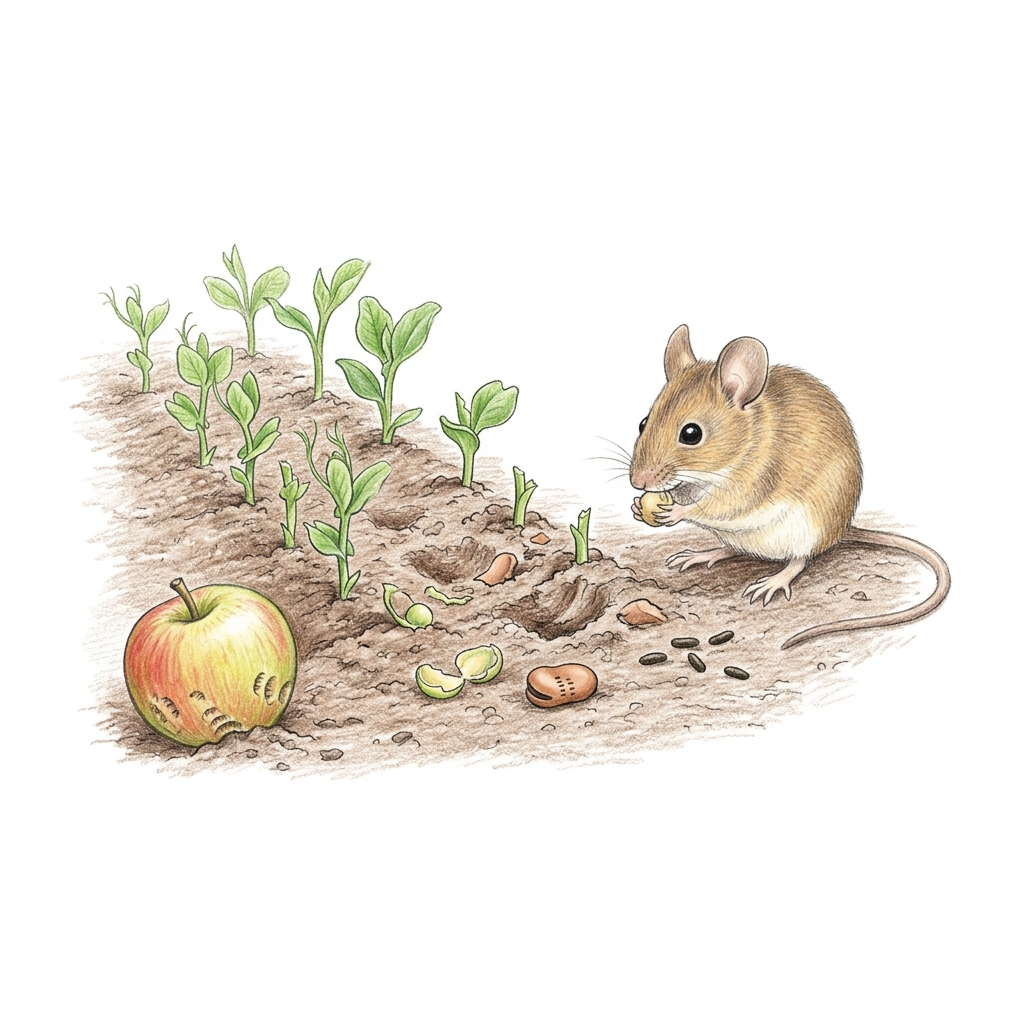
Illustration
Mice eat freshly sown pea, bean and sweet corn seed in the ground, mostly at night, so whole rows fail to come up. Sow the seed indoors in pots or modules and plant out once it's growing strongly, or cover outdoor rows with fine mesh until the seedlings are up.
How to spot it
- Rows of peas, broad beans or sweet corn with gaps, or nothing coming up at all: mice take newly sown seed from the ground.
- Seedlings grazed off, sometimes many in one night, in greenhouses and cold frames.
- Paired gnaw marks from the front teeth on seeds, bulbs, stems and stored apples.
- Small dark droppings nearby, and damage done at night.
Easily confused with
Birds
Peck and tear seedlings and young leaves, mostly early in the day; mice feed mostly at night.
Bean seed fly
The seed is still in the ground but has white maggots inside, and comes up damaged or not at all.
Poor germination
Seed that hasn't sprouted is still in the row, often soft or rotten in cold, wet soil; seed taken by mice is simply gone.
Slugs and snails
Seedlings eaten as they come up, with silvery slime trails; the seed itself isn't taken.
Where it's a problem
- Worldwide: The house mouse, first from Central Asia, has spread around the world with people. Mice are active all year, mostly at night, and their numbers can boom in good years.
- United Kingdom: Wood mice, yellow-necked mice and voles eat freshly sown peas, beans and sweet corn. The RHS treats them as part of garden wildlife, and advises tolerating them or using barriers where possible.
- North America: The house mouse isn't native; native deer mice have bigger eyes and a white belly. Rules on trapping vary: in California, for example, live wildlife, including house mice, can't be moved off your property without a permit.
- Australia: House mice are pests, but native rodents, such as swamp rats, and small marsupials that look like mice, such as antechinus, are protected by law (in South Australia, for example). Identify the animal before setting any trap or bait.
What to do
- Sow peas, broad beans and sweet corn indoors in small pots or modules, and plant them out once they are growing strongly. Seed sown indoors is safe from mice.
- If you sow outdoors, cover the row straight after sowing with fine wire mesh, its holes smaller than 6 mm (¼ in) and its edges pressed well into the soil: mice squeeze through any wider gap. Take it off once the seedlings are up and growing.
- Clear long grass, rubbish heaps and other cover close to the vegetable beds, where mice shelter: they rarely go more than about 9 m (30 ft) from their nest.
- Keep seed, bulbs and stored crops in sealed, mouse-proof containers, and keep sheds closed up.
- Sow a few extra seeds and tolerate some losses: owls, foxes, weasels and other predators help keep mice in check.
- Don't trap or bait until you know what the animal is: native animals that look like mice are protected in many places. Ask your council or wildlife agency what is allowed.
No spray protects seed from mice. Poison baits can also kill predators that eat poisoned mice, as well as pets and protected native animals, so protect the seed with indoor sowing and barriers instead. Follow your local rules, and ask your council or wildlife agency if you need more help.
Vegetables it affects
Take care: Mouse droppings, urine and nests can carry disease. Wear rubber or plastic gloves to clear them up, don't sweep or vacuum them, and wash your hands with soap and warm water afterwards.
Free account, no card needed. You sign up or sign in first, then the scanner opens.
Sources (6, from RHS, University of California IPM, US CDC and others)
- RHS: Mice and voles · How to grow peas · How to grow broad beans
- University of California IPM: House mouse
- US CDC: How to clean up after rodents
- Green Adelaide (SA Government): How to identify South Australia's native rodents
Facts checked Wednesday 28 October 2026. General guidance only: follow your local council, agency and product label.