Home › Vegetables › Broad beans
Vegetables
Growing broad beans
Vicia faba. A hardy cool-season bean grown for the big seeds in its thick pods, and one of the first crops of the year. It likes cool, mild weather and well-drained soil, and the plants take frost, but heat stops it cropping. These steps work anywhere: they go by soil and weather, not by month. Also called fava beans (US), faba beans (for the farm crop, in Australia and elsewhere).
How a broad bean grows
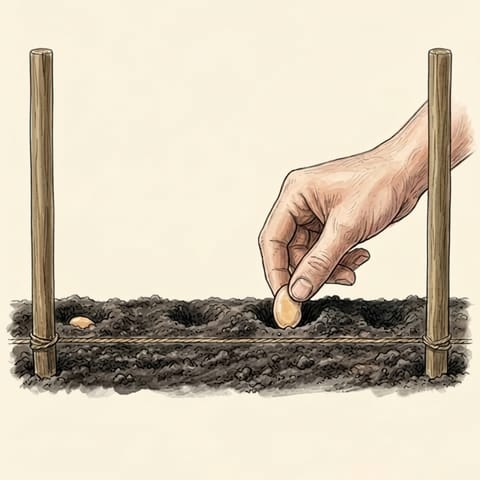 SowBig seeds pushed in, the stakes already upUp in 1–3 weeks
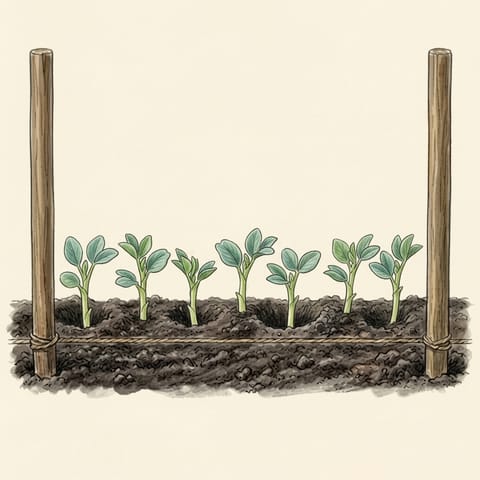 ShootsSturdy shoots push up1–3 weeks
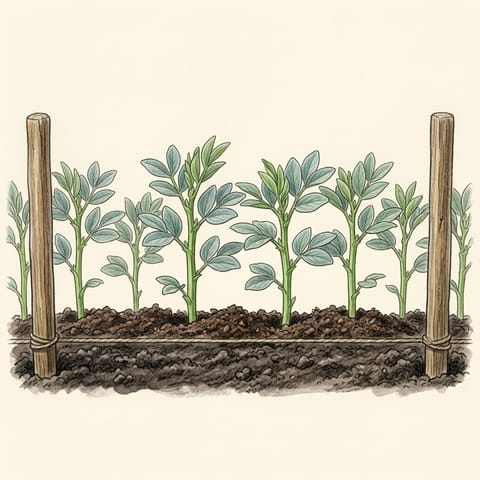 MulchCompost spread once they are up3–5 weeks
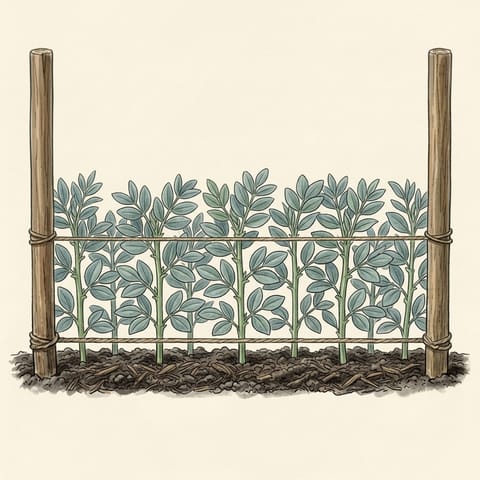 GrowStrings keep them upright5–8 weeks
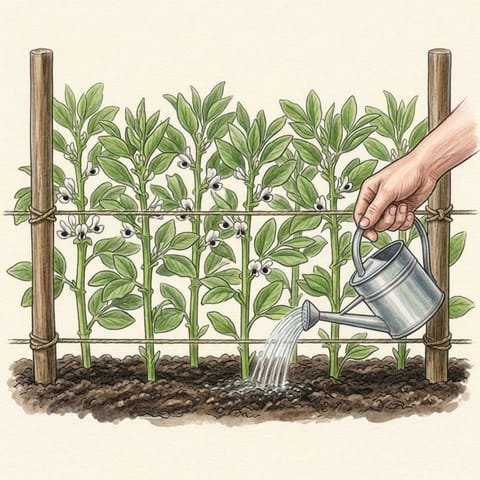 FlowerFlowers open: soak the rootsAbout 8–10 weeks
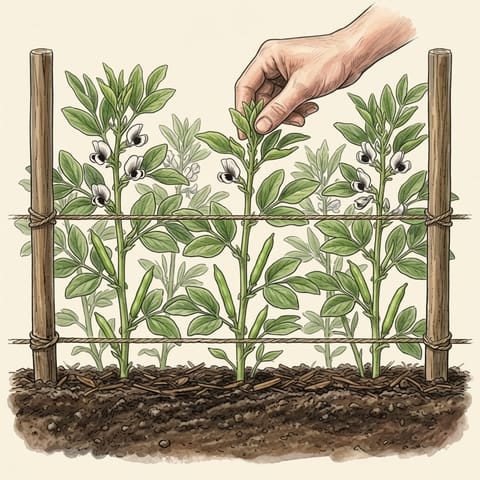 PinchSmall pods set: pinch out the tips1–2 weeks after the first flowers
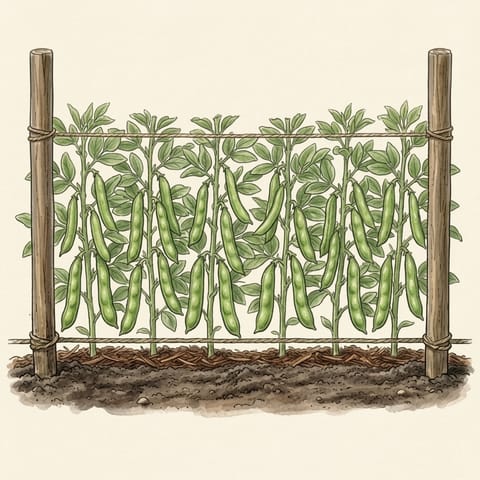 FillPods swell and hang down3–4 weeks after flowering
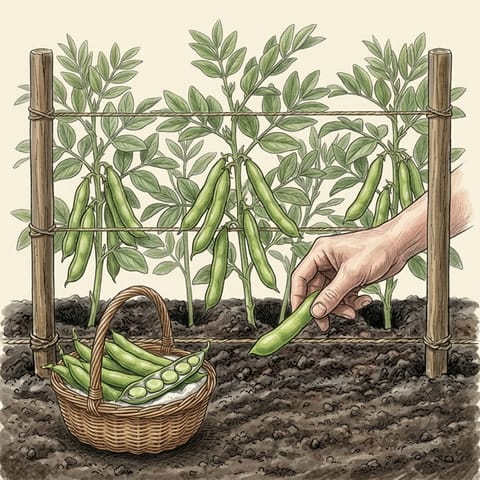 PickLowest pods first, every few daysFor 3–5 weeks
Times run from a spring sowing and vary with the variety and the weather. Autumn sowings stand through winter as short, sturdy plants and flower as the weather warms, so they take months longer but crop first.
Growing it, step by step
Is it right for you?
- Broad beans like cool, mild weather. From a spring sowing to the first pods takes about three to four months; sown in autumn, they stand through winter and give one of the earliest crops of the year.
- They are the hardiest bean: the plants take frost, but frost damages the flowers and young pods. Heat ends the crop: hot spells above about 30°C (86°F), or dry soil, make the flowers drop.
- They grow on thick, upright stems with no tendrils, so they don't climb. Tall kinds reach about 1.2 m (4 ft) and need stakes and string. Dwarf kinds stay short, hold each other up in a double row, and suit pots at least 40 cm (15 in) wide.
When to plant
Sow once the soil is at least 5°C (40°F) and dry enough to work: the plants take frost. Seed comes up in one to three weeks, more slowly in cold soil, where it rots if the soil stays wet. Time sowings so the plants flower after the hardest frosts and before the weather turns hot.
Cold winters: sow in early spring, as soon as the soil can be worked. Where winters are only moderately cold, hardy kinds can also be sown in autumn in a sheltered spot, with fleece over them in hard cold spells. Mild climates: sow in autumn for the earliest crop, and again in late winter or early spring. Hot or subtropical places: sow in autumn and early winter, so they crop before the weather warms. Tropics: the cool, dry season or the highlands.Prepare the bed
- Full sun and well-drained soil, in a spot sheltered from strong wind. Dig in compost a few weeks before sowing. Broad beans make their own nitrogen, so they need no fertiliser.
- Soil close to neutral suits them. Very acid soil holds them back. See soil pH.
- Cold, wet ground rots the seed. On heavy soil, sow in a raised bed.
- Put the supports in before sowing: a sturdy stake at each end of the row, and every 1.2 m (4 ft) along it, with string run round them 30 cm (12 in) above the ground.
- Choose a bed where peas or beans didn't grow in the last three years. Root rots and leaf diseases build up in the soil and in old plants.
Sow
- Sow straight into the bed where they are to grow.
- Sow 5 cm (2 in) deep, with the scar on each seed facing down, 20 cm (8 in) apart, in rows 45 cm (18 in) apart. Or sow a double row, the two lines about 23 cm (9 in) apart, with 60 cm (24 in) to the next double row.
- Sow a few extra seeds at the end of the row, to fill any gaps later.
- Cover, firm the soil gently and water once.
- Where mice dig up the seed, or the soil stays cold and wet, sow one seed 5 cm (2 in) deep in each small pot instead. Plant them out once they are growing well, after a few days outdoors to toughen up.
- For a longer picking, sow another row a few weeks later.
Get it started
- After that first watering, don't water again until the shoots show, unless the soil dries out. Cold, wet soil rots broad bean seed.
- Plants from an autumn sowing stand through winter. In hard cold spells, cover them with fleece.
- In damp weather, guard the young shoots against slugs and snails.
Keep it growing
- Water: rain is usually enough until the flowers open, except on light, sandy soil. The watering that matters most comes as the flowers open: soak the roots then, and again two weeks later if it is dry. Dry soil at flowering means few pods (poor pod set). Water the soil, not the leaves.
- Stake: as the plants grow, run another string round the stakes about 30 cm (12 in) higher, so the stems stay upright inside the strings. Plants full of pods are top-heavy and blow over.
- Mulch: about three weeks after sowing, once the plants are up, spread compost about 5 cm (2 in) deep around them to keep the soil moist and the weeds down.
- Pinch out: once the lowest flowers have set small pods, pinch out the top few centimetres of each stem. The pods fill better, and the soft tips that blackfly crowd onto are gone. The tips are good to eat, cooked like spinach.
- Feed: none in the ground: broad beans make their own nitrogen. In pots, a high-potash liquid feed every two weeks from the first flowers.
- Weed: hoe between the rows regularly, above all while the plants are young.
Not safe for everyone. Some people inherit a condition, G6PD deficiency, that makes broad beans dangerous to eat, raw or cooked: even a small amount can cause a serious reaction called favism, and for some the pollen of plants in flower can too. If you have it, or it runs in your family, check with a doctor before eating or growing them.Watch for problems
The common ones, with a Garden help page each where there is one:
Harvest
- Start with the lowest pods, once the beans inside are full but still fairly small. The scar along the edge of each bean should be white or green, not black: a black scar means the beans are old and tough.
- Check the pods every few days: they fill fast. Cut them off with scissors or secateurs rather than pulling, which can break the stems.
- Young pods about 5 cm (2 in) long can be cooked and eaten whole.
- For dried beans, leave the pods on the plant until they turn dark and dry, then shell them.
After harvest
- Broad beans are best fresh: shell them just before cooking. Larger beans have a tough skin; after a quick boil, slip it off.
- When the plants finish, cut them off at the base and leave the roots in the ground: they hold some nitrogen for the next crop. Compost the tops, but bin plants with chocolate spot or rust.
- Next in that bed: cabbage family crops or leafy greens. Keep peas and beans out for three years.
Sources
- RHS: How to grow broad beans
- Gardening Australia: Peas and beans
- UC Master Gardeners of Santa Clara County: Fava beans
- UC Master Gardeners: Know what you grow, fava beans
- GRDC GrowNotes: Faba bean plant growth and physiology
Facts checked Friday 23 October 2026. General guidance only: local advice comes first.