Home › Plant diseases › Poor germination
Plant diseases
Poor germination
Also called seeds not coming up (widely).
Illustration
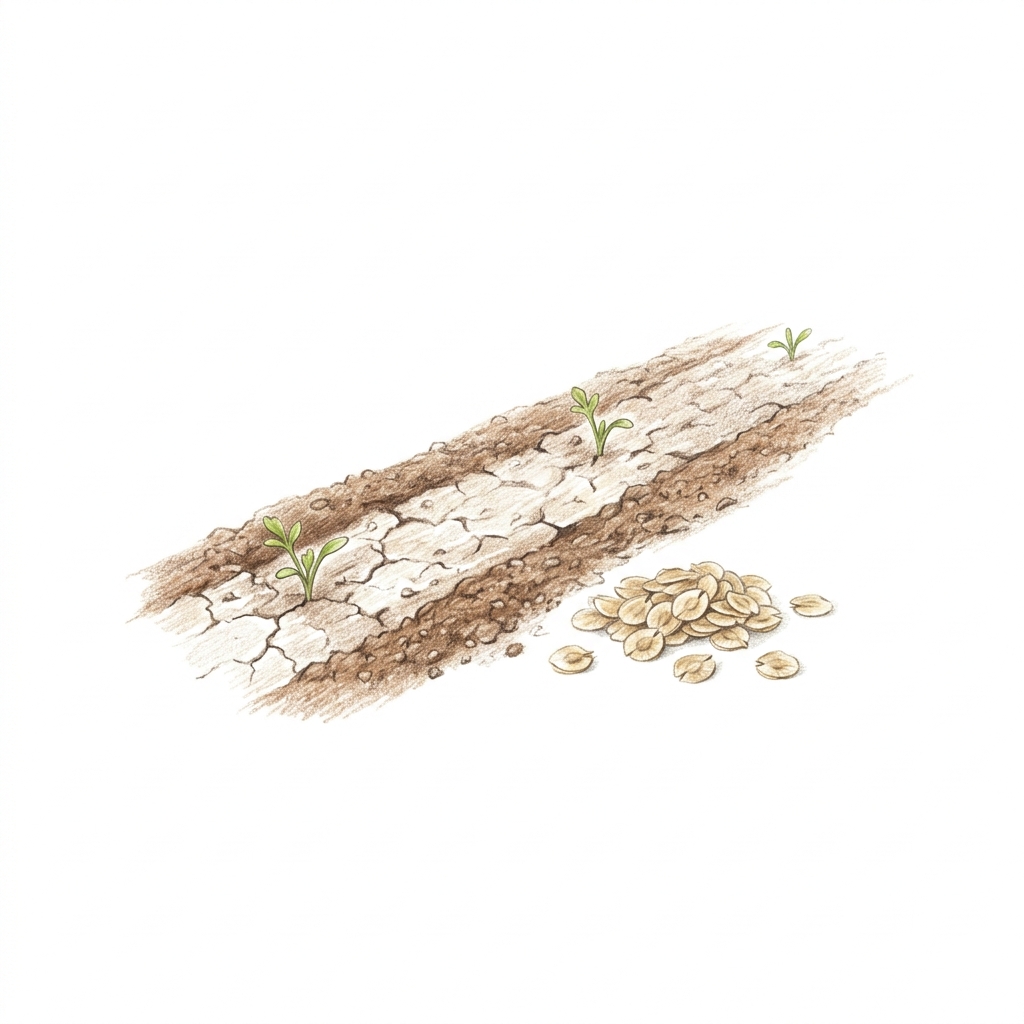
Seeds that come up patchily or not at all, most often parsnips, because the seed was old, the soil was too cold, or a crust or dry surface stopped them. Fresh seed, sowing into warm soil, and keeping the surface moist and loose fix it.
How to spot it
- Few or no seedlings weeks after sowing, or a patchy, gappy row.
- Parsnips are slow even when all goes well: two to four weeks, and longer in cold soil.
- Seed from last year's packet or older: parsnip seed loses its vigour quickly after a year.
- Sowings made early into cold soil.
- A hard crust on the soil surface after rain or watering dries out; beetroot and carrots also struggle to push through it.
Easily confused with
Damping off
Seedlings come up, then collapse and die at soil level.
Slugs and snails
Seedlings come up but are eaten off overnight, often with slime trails nearby.
Mice
Larger seeds, such as peas and beans, dug up and eaten soon after sowing.
Bean seed fly
Bean, pea and sweet corn seeds in cold soil hollowed out by small white maggots, so they rot or come up weak.
Where it's a problem
- Worldwide: Common everywhere, and worst with old seed and cold or crusting soil. Not regulated.
What to do
- Buy fresh parsnip seed each season. Before sowing an old packet of any seed, do a simple germination test on a few seeds.
- Wait for the soil to warm to at least about 12°C (54°F); parsnips come up fastest at about 18–20°C (65–68°F). Cloches or clear plastic over the bed for a couple of weeks warm it first.
- Sow shallowly, about 1 cm (½ in) deep, into fine, loose soil, and cover with fine compost, sand or vermiculite so no crust forms.
- Keep the surface evenly moist until seedlings appear. A damp hessian sack or a board over the row holds moisture in: lift it as soon as they show.
- Sow more seed than you need, in groups of three, and thin later.
- Sow a few quick radishes along the row: they mark it and help break the crust.
Spraying won't help: poor germination comes from the seed, the soil and the weather, not an infection. Official guides fix it with fresh seed, warm soil and a moist, loose surface. If seedlings come up and then collapse, see damping off.
Vegetables it affects
Free account, no card needed. You sign up or sign in first, then the scanner opens.
Sources (6, from RHS, Utah State University Extension, University of Saskatchewan, Gardening at USask and others)
- RHS: How to grow parsnips
- Utah State University Extension: Parsnips in the garden
- University of Saskatchewan, Gardening at USask: Parsnips
- Oregon State University Extension: Soil temperature conditions for vegetable seed germination
- Gardening Australia: Parsnips in the patch
- Clemson Cooperative Extension: Carrot, beet, radish and parsnip
Facts checked Wednesday 28 October 2026. General guidance only: follow your local council, agency and product label.