Home › Vegetables › Onions
Vegetables
Growing onions
Allium cepa. A cool-season crop grown for its bulbs, from seed, seedlings or small bulbs called sets. It wants sun, a weed-free bed and steady water, and it starts its bulb when the days reach a certain length, so the right kind for where you live matters most. These steps work anywhere: they go by soil and weather, not by month.
How an onion grows
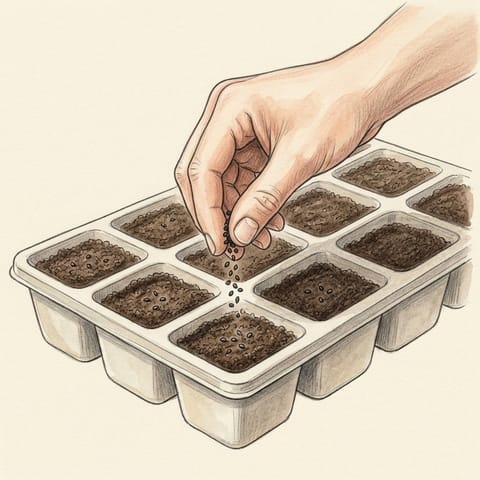 SowSeeds in a tray or rowUp in 1–3 weeks
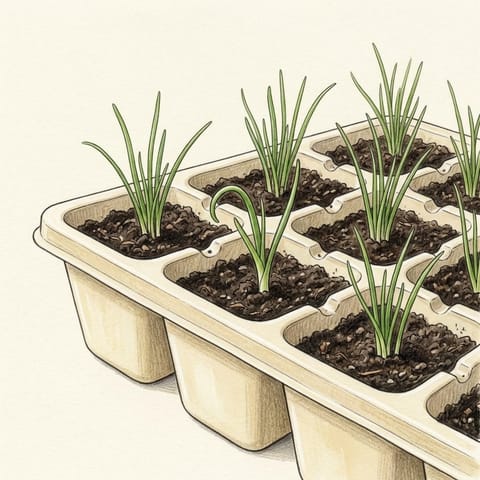 SeedlingThin, grass-like leaves4–8 weeks
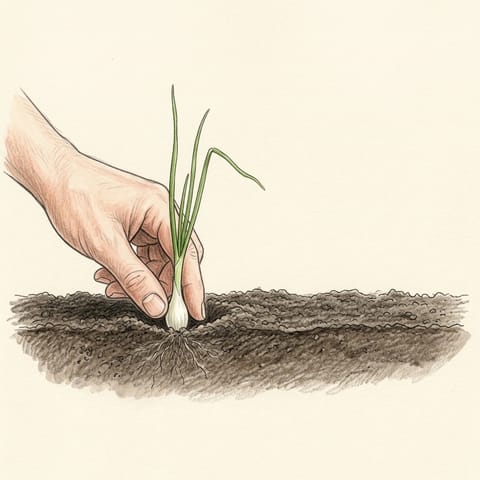 Plant outShallow, roots just coveredAbout 8 weeks from sowing
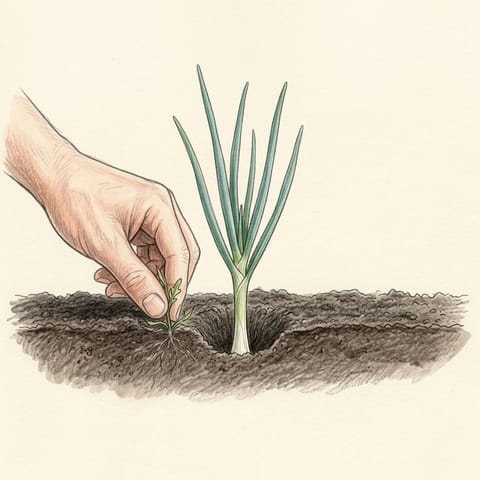 LeavesLeaves grow; keep weeds out1–2 months after planting
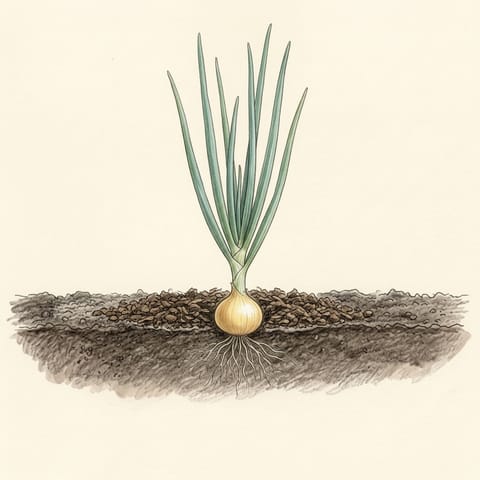 BulbingThe base swells at the surfaceWhen the days are long enough
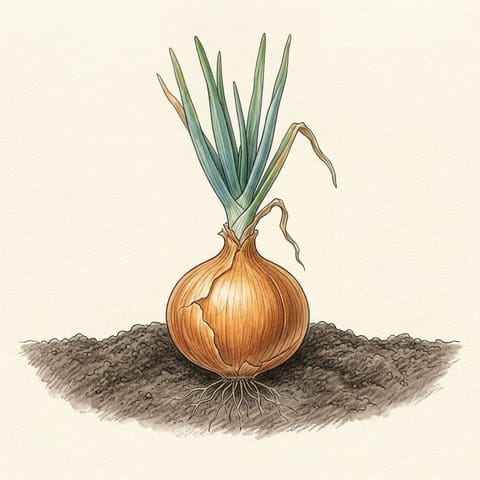 SwellBulb fills out, sitting on the soil2–5 months after planting
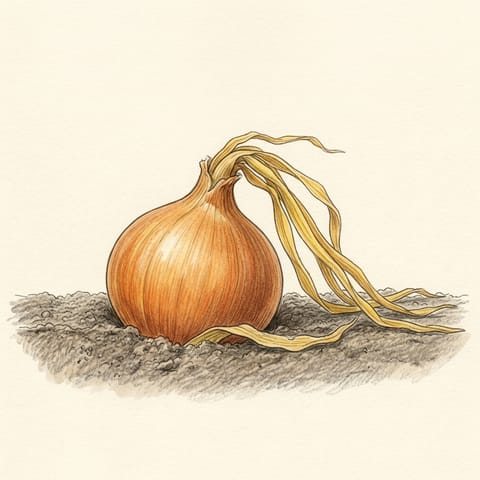 Tops fallLeaves yellow and flop over3–6 months after planting
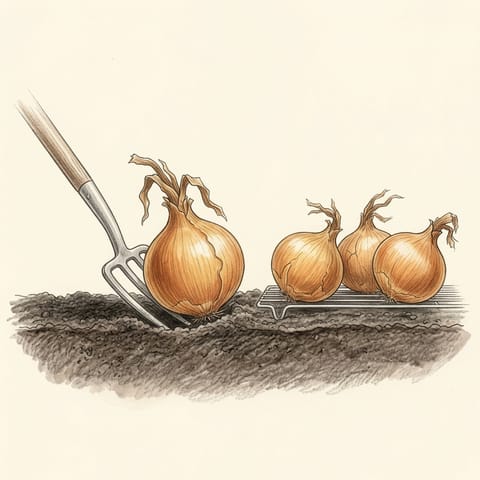 LiftLift, then dry for 1–2 weeksWhen most tops have fallen
Times vary with the kind, the day length and the weather. Sets and bought seedlings start at planting out; onions that grow through a winter take the longest.
Growing it, step by step
Is it right for you?
- Onions are a long, slow crop: three to six months in the ground, longer where they grow through winter. They like cool weather while the leaves grow, around 7–16°C (45–60°F), and warmer weather, around 16–24°C (60–75°F), as the bulbs swell.
- An onion starts its bulb when the days reach a certain length, not at a certain age, so choose a kind made for where you live. Short-day kinds start at about 10–12 hours of daylight and suit places nearer the equator: the tropics and subtropics. Long-day kinds need 14–16 hours and suit places far from the equator, where summer days are long. Intermediate kinds, at about 12–14 hours, suit the places in between.
- The wrong kind fails. A long-day onion grown too close to the equator never gets days long enough and just grows leaves; a short-day onion far from the equator bulbs too early and stays small. Seed packets and local nurseries say which kind they sell.
When to plant
Sow seed in trays about eight weeks before planting out, or straight into the bed; it comes up best in soil of 10°C (50°F) or more. Seedlings and sets take frost, so they can go out while the weather is still cool. The aim is plenty of leaf before the days reach the length that starts the bulb: more leaf makes a bigger bulb. Don't start too early, though: big young plants that then sit through a cold spell often flower instead.
Cold winters: long-day or intermediate kinds, sown in trays in late winter or planted as sets in spring. Mild climates: intermediate kinds, or long-day kinds far from the equator, sown or planted from autumn to early spring. Hot or subtropical places: short-day kinds, sown in autumn as the weather cools, so the bulbs form before the summer heat. Tropics: short-day kinds in the cooler, drier months. Days there stay near 12 hours, too short for most other kinds.Prepare the bed
- A sunny, open spot with loose, well-drained soil. Dig in compost, but no fresh manure. On heavy soil, a raised bed helps.
- Slightly acid soil suits them, around pH 6.0–6.5. If a soil test shows it is more acid than that, add lime a few weeks before planting. See soil pH.
- Weed the bed thoroughly and rake it fine before you plant. Onions can't compete with weeds.
- Avoid beds that grew onions, garlic, leeks or shallots in the last three or four years, and never plant where white rot has been.
Sow and plant
- Sow seeds 5 mm–1 cm (¼–½ in) deep in trays or modules, or straight into the bed. They come up in one to three weeks.
- Plant seedlings out about eight weeks after sowing, when they are 10–15 cm (4–6 in) tall and thinner than a pencil. Harden off ones raised indoors for a week first.
- Plant seedlings shallow, about 2 cm (¾ in) deep and no deeper than 2.5 cm (1 in): just cover the roots and firm them in. Push sets in until only the tip shows. Small sets bolt less than big ones.
- Space them 10 cm (4 in) apart, in rows 30 cm (12 in) apart. At 15 cm (6 in) apart, the bulbs grow bigger.
Get it started
- Water in well, then keep the soil moist for the first week or so, until they root. New seedlings flop at first and stand up within days.
- Birds pull up newly planted sets. Cover them with netting or fleece until they have rooted.
- Seed sown in the bed: thin to 5 cm (2 in), then to 10 cm (4 in), and eat the thinnings as spring onions.
Keep it growing
- Weed: every two weeks or so, pull weeds by hand close to the bulbs and hoe shallowly between the rows. Onion leaves are thin and shade out nothing, so weeds quickly shrink the bulbs.
- Water: the roots are shallow, so water at the soil, not the leaves: a good soak about twice a week in dry weather while the leaves grow and the bulbs swell. Dry spells as the bulb forms can split it. Stop once the bulbs are full size and the tops start to yellow and fall, so they ripen and keep.
- Mulch: once the plants are growing, a thin layer of compost about 3 cm (1 in) deep helps keep weeds down. Keep it off the bulbs, and never pile soil over them: onions bulb at the surface.
- Feed: compost dug in before planting is usually enough. If the leaves are pale, give one nitrogen-rich feed while they grow, never once the bulbs start to swell: late feeding gives onions that keep badly. In pots, a liquid feed every two weeks while the leaves grow, stopping as the bulbs start to swell.
- Flower stems: snap off any flower stem as soon as it shows. That onion won't store well, so eat it first.
Watch for problems
The common ones, with a Garden help page each where there is one:
Harvest
- Onions are ready when the leaves yellow and most of the tops have fallen over. Lift them within a week or two, before the leaves die right down.
- Loosen them with a fork and lift gently on a dry day. Bruised onions rot in store, so use any damaged ones first.
- Dry them for one to two weeks before storing: on a rack in the sun, or in an airy shed if it is wet or very hot (hot sun can scald them), until the necks are dry and the skins papery.
After harvest
- Trim the dry tops to about 2.5 cm (1 in), or leave them on and plait them. Store onions cool, dry and airy, in mesh bags or slatted trays, and check now and then for soft ones.
- Long-day kinds keep for months. Most short-day kinds keep poorly, so eat them first, along with any thick-necked onions or ones that flowered.
- If white rot showed up (white fluffy mould on the base of the bulb), bin those onions and keep the onion family out of that bed: it can last in the soil for 20 years or more.
- Next in that bed: the cabbage family, beans or peas. Keep onions, garlic, leeks and shallots out for three or four years.
Sources
- RHS: How to grow onions
- University of Maryland Extension: Growing onions in a home garden
- Virginia Cooperative Extension: Onions, garlic and shallots
- Sustainable Gardening Australia: Growing onions
Facts checked Wednesday 21 October 2026. General guidance only: local advice comes first.