Home › Vegetables › Leeks
Vegetables
Growing leeks
Allium ampeloprasum (Porrum Group). A hardy, cool-season crop grown for its long white stem, made by planting deep and drawing soil up as it grows. It wants sun, a weed-free bed and steady water, and it stands in the ground through frost, so it can be picked over many months. These steps work anywhere: they go by soil and weather, not by month.
How a leek grows
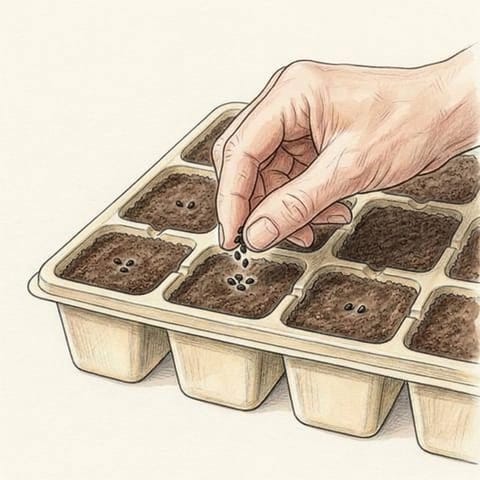 SowSeeds in a tray or seedbedUp in 1–3 weeks
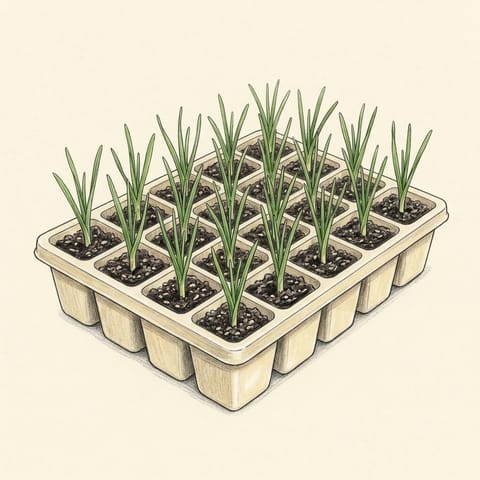 SeedlingThin, grass-like leaves4–8 weeks
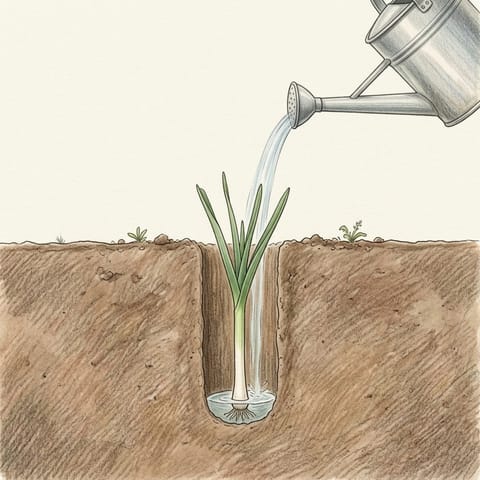 Plant outDropped into a deep hole, watered inAbout 8 weeks from sowing
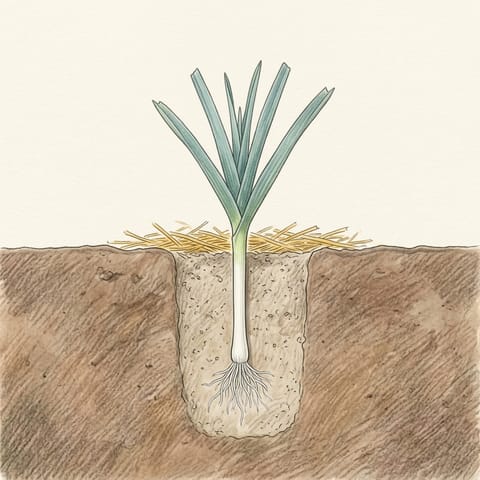 SettleThe hole fills in by itself; mulchAbout 2 weeks after planting
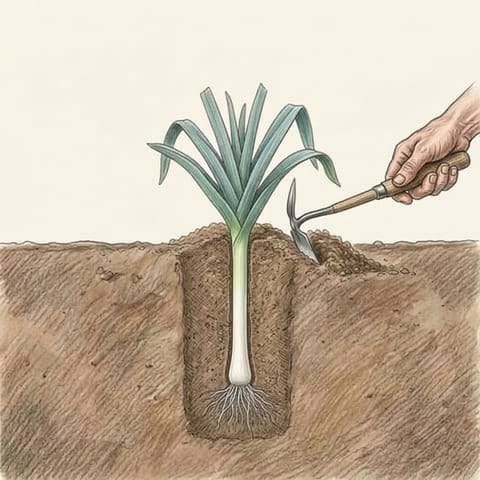 Earth upSoil drawn up around the stemAbout 4 weeks after planting
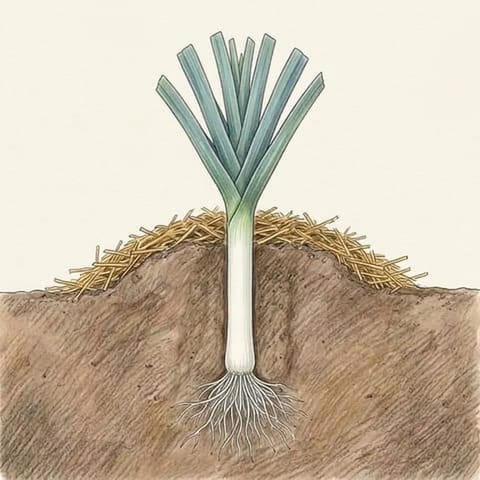 Earth up againMore soil, a longer white stemAbout 8 weeks after planting
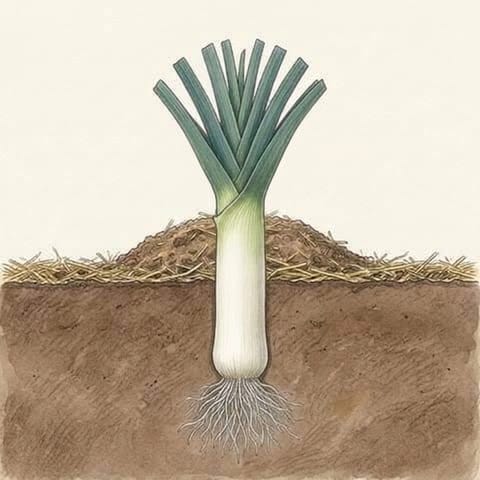 Full sizeA thick white stem, ready to lift3–5 months after planting
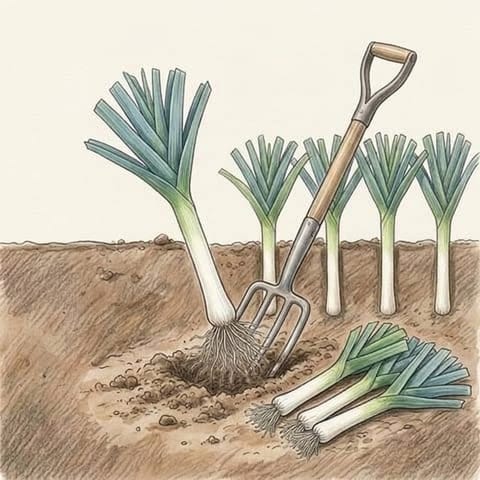 LiftLift as needed, over monthsOnce stems are 2.5 cm (1 in) thick
Times run from sowing, then from planting out, and vary with the kind and the weather. Early kinds are ready soonest; hardy winter kinds can stand in the ground for months.
Growing it, step by step
Is it right for you?
- Leeks are a long, slow crop: about eight weeks in trays, then three to five months in the ground, and hardy kinds can stand there for months more. They like cool weather, around 13–24°C (55–75°F).
- They are very frost-hardy. Winter kinds stand through hard frost, which can even sweeten them, so they give fresh picking through the cold months when little else does.
- The part you eat is the long white stem. It is made by planting deep and drawing soil up as the leek grows: kept from the light, the stem stays white and tender.
- Each plant needs about 15 cm (6 in) of row. Leeks also grow in large pots: one about 40 cm (16 in) wide holds four or five.
When to plant
Sow seed in trays or a seedbed about eight weeks before planting out; it comes up in soil of 10°C (50°F) or more, best at about 18–22°C (64–72°F). Plant out when the seedlings are about 20 cm (8 in) tall and as thick as a pencil. They take frost, so they can go out while the weather is still cool. Early kinds are ready from late summer into autumn; hardy winter kinds are planted a little later and picked through winter and into spring. Leeks that sit through a cold spell as small plants in spring may flower instead.
Cold winters: sow in trays in late winter, plant out in spring, and grow hardy winter kinds to pick through the cold. Where the ground freezes solid, mulch thickly or lift them first. Mild climates: sow from late winter to early summer for picking from autumn through winter and into spring. Hot or subtropical places: sow as the weather cools in autumn and plant out into winter, so they grow in the cool months and are picked before the summer heat. Tropics: hard in the hot lowlands. Try the highlands or the coolest, driest months.Prepare the bed
- A sunny, open spot with deep, well-drained soil. Dig in plenty of compost; leeks like rich soil that holds moisture. On heavy soil, a raised bed helps.
- Neutral or slightly acid soil suits them, around pH 6.0–7.0. If a soil test shows it is more acid than that, add lime a few weeks before planting. See soil pH.
- Weed the bed thoroughly before you plant. Young leeks grow slowly and can't compete with weeds.
- Avoid beds that grew leeks, onions, garlic or shallots in the last three or four years, and never plant where white rot has been.
Sow and plant
- Sow seeds 5 mm–1.5 cm (¼–½ in) deep in trays or modules, or thinly in a seedbed. They come up in one to three weeks.
- Plant out about eight weeks after sowing, when the seedlings are about 20 cm (8 in) tall and as thick as a pencil. Harden off ones raised indoors for a week first. Trimming the roots to about 2.5 cm (1 in) makes them easier to drop in.
- Make holes about 15 cm (6 in) deep and 5 cm (2 in) wide with a dibber or a thick stick. Drop one leek into each hole, so only the top of its leaves shows.
- Don't fill the holes with soil. Fill each one with water instead: it settles soil around the roots, and the hole fills in by itself over the next few weeks.
- Space them 15 cm (6 in) apart, in rows 35 cm (14 in) apart. For baby leeks, 10 cm (4 in) is enough.
Get it started
- Keep the soil moist for the first two weeks or so, until they root and start to grow.
- Where leek moth or allium leaf miner are about, cover the bed with fine insect mesh from planting.
- About two weeks after planting, spread straw about 5 cm (2 in) deep around the young plants to keep weeds down and the soil moist.
Keep it growing
- Earth up: about four weeks after planting, draw soil up 5–8 cm (2–3 in) around the stems to keep them white. Do it again about four weeks later, and once more a month after that for a longer white stem. Keep soil out of the joint where the leaves divide, or it ends up in your cooking. The straw mulch can be drawn up too.
- Weed: hoe between the rows and pull weeds by hand close to the plants, most of all while the leeks are young. Their narrow leaves shade out little.
- Water: the roots are shallow, so in dry weather give a good soak at the soil, not over the leaves, about once a week. Wet leaves spread rust. Even moisture gives thick stems.
- Feed: compost dug in before planting does most of the work. Leeks are in the ground a long time, so about six weeks after planting give a nitrogen-rich feed, and perhaps one more six weeks later. Skip it if they are already thick and dark green.
- Flower stems: pull out any flower stem as soon as it shows: the leek's centre turns tough once it flowers. Use that leek first.
Watch for problems
The common ones, with a Garden help page each where there is one:
RustWhite rotDowny mildewPurple blotchBoltingLeek mothAllium leaf minerOnion flyThripsSlugs and snailsHarvest
- Start lifting once the stems are about 2.5 cm (1 in) thick. Take every second leek first, so the rest have room to grow bigger.
- Loosen the soil with a fork and lift them; don't pull, or the long stems snap. Take only what you need: the rest keep best in the ground.
- Hardy kinds stand in the bed through the cold, and frost can improve their flavour. Lift them all before the weather warms in spring, when they start to flower.
After harvest
- Trim the roots and the leaf tops, and rinse out any soil caught between the leaves. Leeks keep a week or two in the fridge. Where the ground freezes solid, lift them before it does and keep them cold and moist.
- If white rot showed up (white fluffy mould on the base of the stem), bin those leeks and keep the onion family out of that bed: it can last in the soil for 20 years or more.
- Next in that bed: the cabbage family, beans or peas. Keep leeks, onions, garlic and shallots out for three or four years.
Sources
- RHS: How to grow leeks
- University of Wisconsin–Madison Extension: Leeks
- Utah State University Extension: Leeks in the garden
- University of Florida IFAS Extension: Leek
- Gardening Australia: Top tip, leeks
Facts checked Friday 23 October 2026. General guidance only: local advice comes first.