Home › Plant diseases › Sunscald
Plant diseases
Sunscald
Also called sunburn (widely).
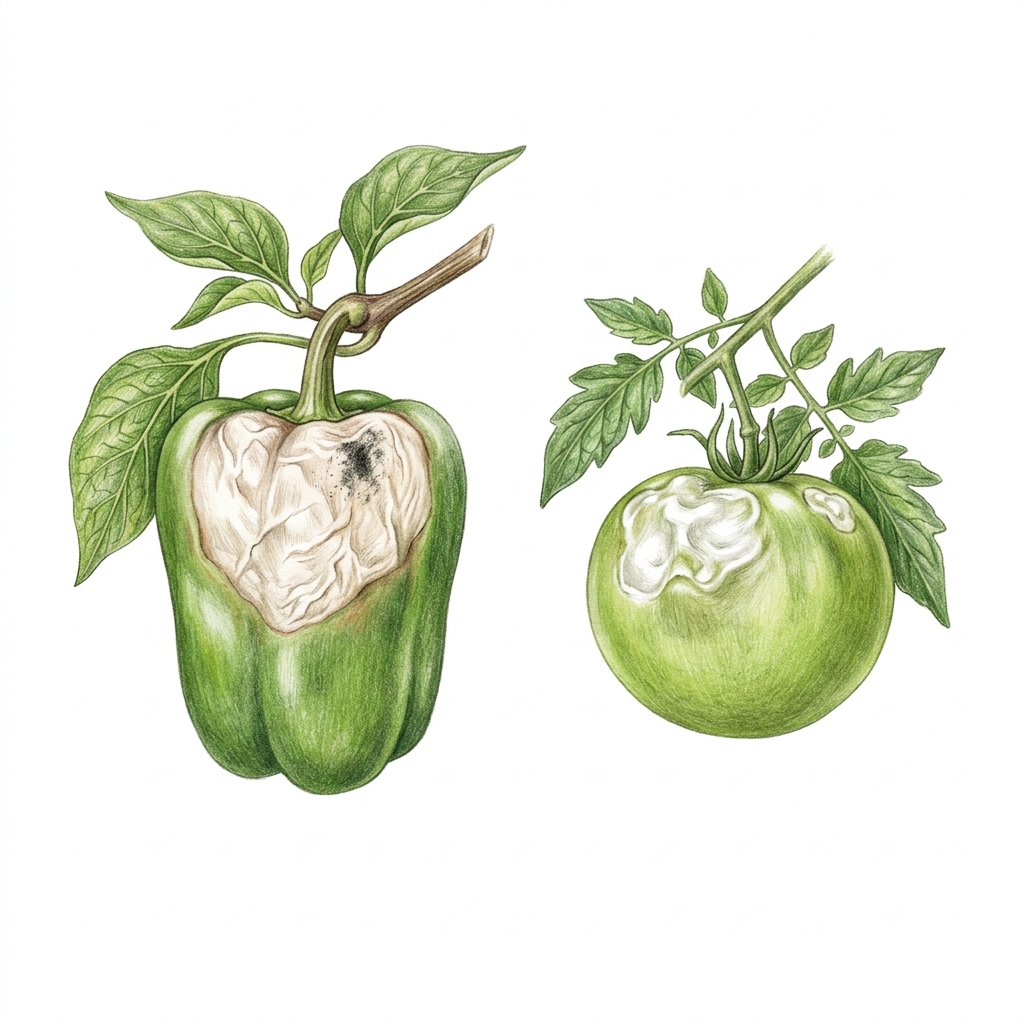
Illustration
A pale, sunken patch that turns papery on the sunny side of capsicums, chillies, eggplant and tomatoes, where strong sun has burnt fruit that lost the shade of its leaves. Keeping plants leafy, staked and well watered, and shading exposed fruit in heatwaves, prevent it.
How to spot it
- A pale white or yellowish patch, only on the side of the fruit that faced the sun.
- Capsicums and chillies: the patch is soft, sunken and wrinkled at first, then dries to a thin, papery, whitish-tan patch.
- Tomatoes: a white, shiny or blistered patch that becomes sunken and wrinkled.
- Most often on green, unripe fruit, especially fruit that was shaded and is suddenly in full sun after leaves are lost or a branch breaks.
- Black mould may grow on the dead patch, and the fruit may then rot.
Easily confused with
Blossom end rot
Always at the flower end of the fruit, opposite the stalk, whichever way it faces; sunscald is only on the side that faced the sun.
Anthracnose
Round, sunken spots, often several, anywhere on ripening fruit, with salmon-pink spore masses in wet weather.
Hail damage
Small pits, bruises or scars scattered over the fruit after a storm, often with tattered leaves.
Where it's a problem
- Worldwide: Common wherever these crops grow in strong sun and heat. Not regulated.
What to do
- Keep plenty of leaves on the plants: don't strip leaves or prune tomatoes too hard.
- Stake and tie plants so branches don't break or flop open and leave fruit in the sun.
- Water regularly in dry weather, so plants don't wilt and expose their fruit.
- Check plants every week for pests and leaf diseases, and deal with them early: lost leaves leave fruit unshaded.
- In a heatwave, cover exposed fruit or the whole plant with light shade cloth.
- If it happens every year, choose kinds with good leaf cover.
- Pick scalded fruit. If it isn't rotting, the undamaged part can still be used.
Spraying won't help scalded fruit: sunscald is sun damage, not an infection. Official guides prevent it by keeping the leaves healthy and shading exposed fruit.
Vegetables it affects
Free account, no card needed. You sign up or sign in first, then the scanner opens.
Sources (5, from New Mexico State University, Missouri Botanical Garden, Pacific Pests, Pathogens and Weeds and others)
- New Mexico State University: Chile pepper disorders caused by environmental stress
- Missouri Botanical Garden: Sunscald of fruits
- Pacific Pests, Pathogens and Weeds: Capsicum sunscald
- Clemson University HGIC: Tomato diseases and disorders
- Queensland Department of Agriculture and Fisheries: Capsicum critical temperature thresholds
Facts checked Wednesday 28 October 2026. General guidance only: follow your local council, agency and product label.