Home › Plant diseases › Flower drop
Plant diseases
Flower drop
Also called blossom drop (widely).
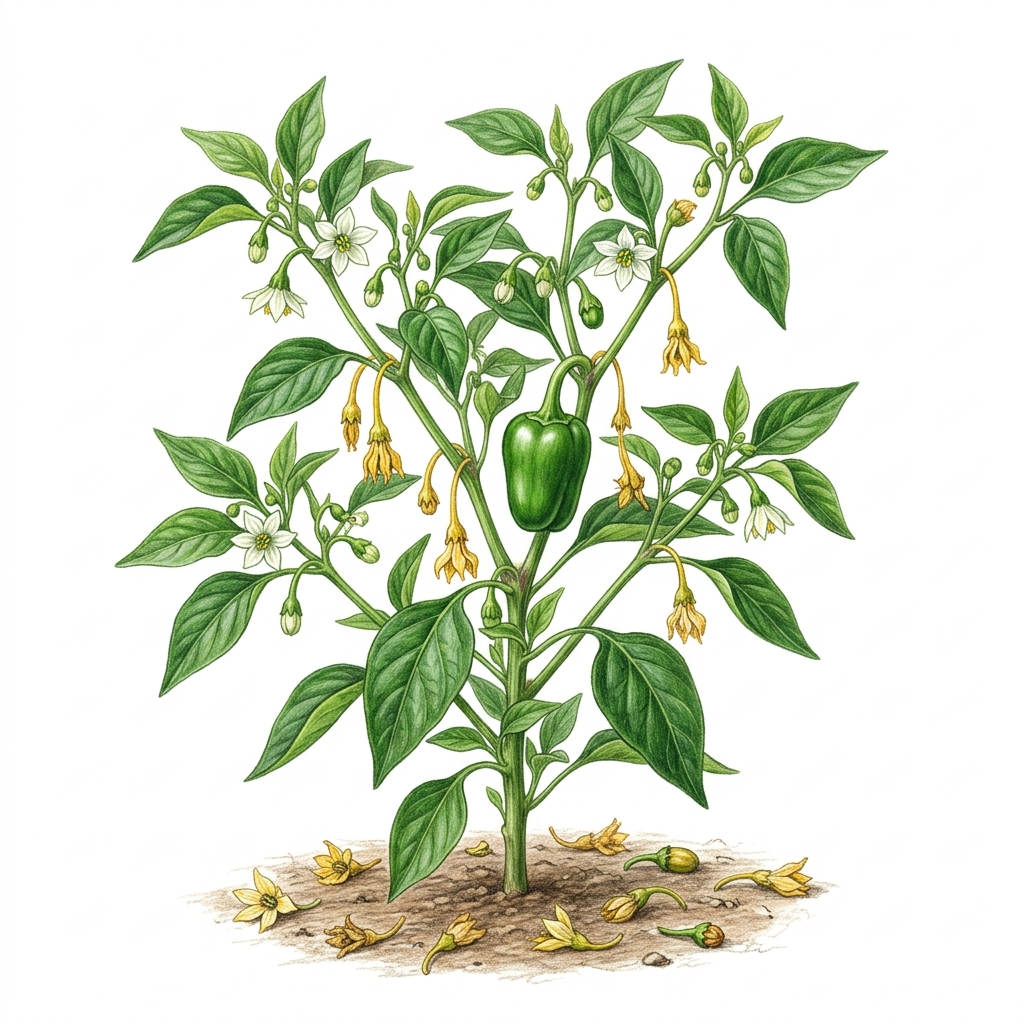
Illustration
Capsicum, chilli and eggplant flowers, buds or tiny new fruit that wither and fall off before a crop forms, usually because of heat, cold nights or dry soil. Steady watering, moderate feeding and shelter help, and plants usually set fruit again once the weather turns milder.
How to spot it
- Flower buds, open flowers or tiny new fruit that wither and fall off, so the plant flowers but carries little or no fruit.
- Worst in hot spells, when days pass about 32°C (90°F) or nights stay above about 21–24°C (70–75°F).
- Cold nights do it too: capsicum flowers drop when nights fall below about 16°C (60°F), and eggplant sets little fruit until nights stay above about 13°C (55°F).
- Dry soil, strong or hot, dry wind and too much nitrogen fertiliser make it worse.
- Plants often stop setting fruit in the hottest weeks of summer, then start again as it cools.
Easily confused with
Poor fruit set
On zucchini, squash and pumpkins: the first flowers are male and fall off naturally, and tiny fruit behind unpollinated female flowers shrivel. That's a lack of pollination; capsicum, chilli and eggplant flowers mostly pollinate themselves and drop from weather stress.
Blossom end rot
The fruit forms and grows, then gets a dark, sunken patch at its flower end; the flowers themselves don't drop.
Cold and frost damage
Leaves and shoots turn dark, limp or black after a cold night, not just the flowers falling.
Too much nitrogen
Big, leafy plants with few flowers to begin with, rather than flowers that open and then fall.
Where it's a problem
- Worldwide: Common wherever summers are hot, and in cool spells early in the season. Not regulated.
What to do
- Water deeply and regularly while the plants flower, so the soil never dries out.
- Feed moderately: too much nitrogen fertiliser gives leaves instead of flowers and fruit.
- Shelter plants from strong, hot, dry wind, and in hot regions give them light shade in the late afternoon.
- Don't plant out too early: wait until nights are warm, as cold nights make the flowers drop.
- Pick ripe fruit regularly: plants left loaded with fruit slow down their flowering.
- Be patient after a hot spell: healthy plants usually flower and set fruit again once the weather cools.
- If it happens every year, try other kinds: some drop their flowers less than others.
Spraying won't help: flower drop is the plant's reaction to heat, cold or dry soil, not an infection. Official guides prevent it with steady watering, moderate feeding and shelter.
Vegetables it affects
Free account, no card needed. You sign up or sign in first, then the scanner opens.
Sources (5, from University of Maryland Extension, New Mexico State University, University of California IPM and others)
- University of Maryland Extension: Poor blossom and fruit set of vegetables
- New Mexico State University: Chile pepper disorders caused by environmental stress
- University of California IPM: Blossom drop
- University of Illinois Extension: Pepper production problems
- Queensland Department of Agriculture and Fisheries: Capsicum critical temperature thresholds
Facts checked Wednesday 28 October 2026. General guidance only: follow your local council, agency and product label.