Home › Plant diseases › Corn smut
Plant diseases
Corn smut
Ustilago maydis (also called Mycosarcoma maydis) · Fungus
Also called boil smut (Australia), common smut (USA and Australia), sweetcorn smut (UK).
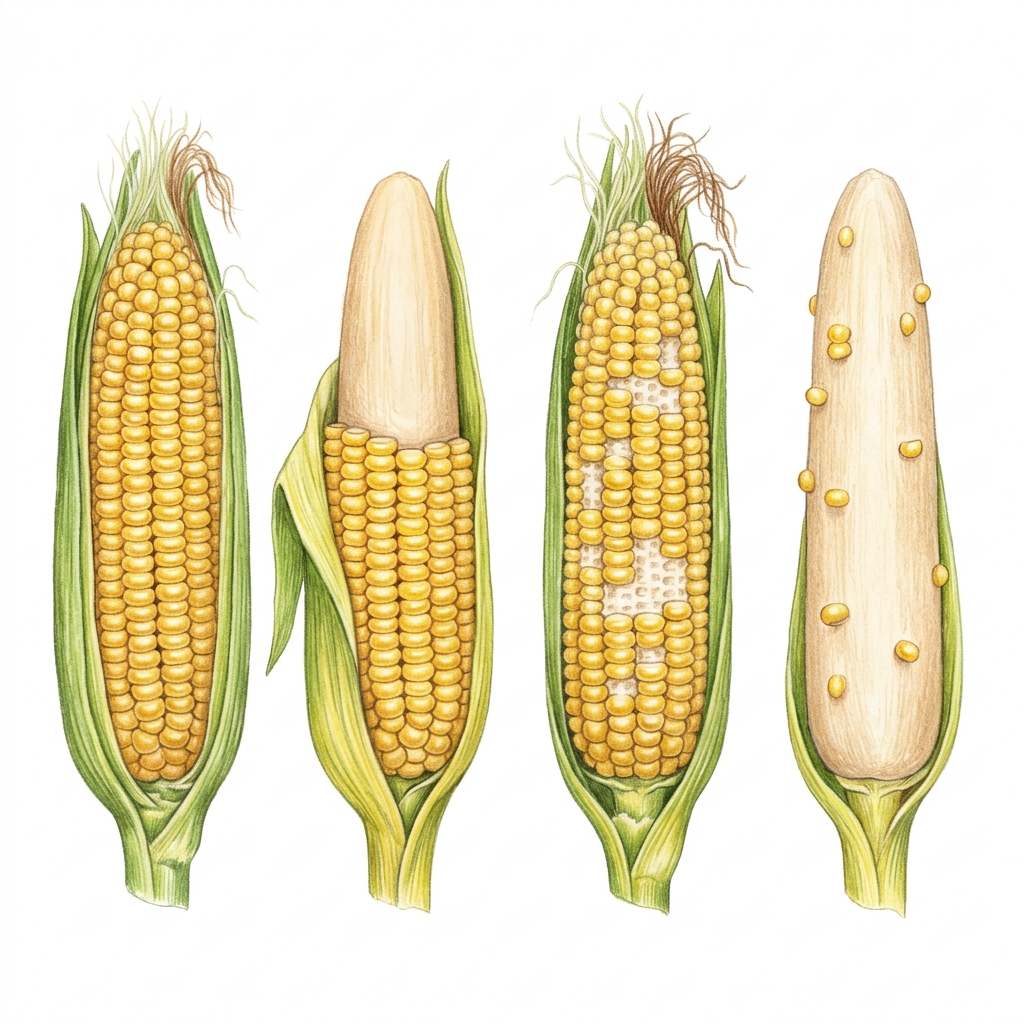
Illustration
Large, swollen grey-white galls on corn cobs, tassels, stalks and leaves that burst into masses of black spores. There's no cure once galls form: cut them off before they burst, avoid injuring plants, and grow corn somewhere else for several years.
How to spot it
- Swollen, tumour-like galls on the cob, kernels, tassels, stalks or leaves.
- Young galls smooth, fleshy and silvery-white to green, from under 1 cm (½ in) to over 30 cm (1 ft) across; galls on leaves stay small and hard.
- Galls that turn papery, then break open to release masses of black, sooty spores.
- Kernels on the cob swollen and grey, scattered among normal ones.
- Plants that may be stunted and distorted, mostly in hot weather.
Easily confused with
Corn earworm
A caterpillar chewing kernels at the tip of the cob, with droppings, but no swollen galls.
European corn borer
Small holes in stalks and cobs with sawdust-like droppings and a caterpillar inside. Its wounds can let smut in.
Poorly filled cobs
Gaps where kernels never formed, with no swellings or black spores.
Where it's a problem
- Worldwide: Found wherever corn is grown. Sweet corn and popcorn are hit harder than field maize.
- Australia: Present in New South Wales and Queensland. South Australia's agriculture department says it has not been found in South Australia or Western Australia, and South Australia restricts corn plant material coming in. In South Australia, report a suspected case to the Exotic Plant Pest Hotline, 1800 084 881.
- North America: Common, and mostly a problem for sweet corn, where even a little makes the cobs unappealing.
What to do
- Grow varieties with some resistance where you can; none is fully immune.
- Avoid injuring the plants when weeding or hoeing, as wounds let the fungus in.
- Feed in balance: neither starved nor overfed with nitrogen. A soil test helps.
- Cut off galls while they are still firm and pale, before they burst, and take them out of the garden.
- At the end of the season, remove badly affected plants rather than leaving the stalks in the bed.
- Grow corn in a different spot for several years: the spores live in the soil for years.
No spray helps: the RHS says there are no fungicides for smut diseases, and Wisconsin Extension says fungicides don't control it. Removing galls before they burst is the answer.
Follow your local council's guidance for disposing of diseased plant material. Official guides usually advise against putting it in a home compost heap.
Vegetables it affects
Free account, no card needed. You sign up or sign in first, then the scanner opens.
Sources (5, from RHS, University of Wisconsin–Madison Extension, PIRSA (South Australia) and others)
- RHS: Smuts
- University of Wisconsin–Madison Extension: Common corn smut
- PIRSA (South Australia): Boil smut of maize
- Pacific Pests, Pathogens and Weeds: Maize boil smut
- NC State Extension: Embracing the Mexican truffle, corn smut
Facts checked Wednesday 28 October 2026. General guidance only: follow your local council, agency and product label.