Home › Plant diseases › Cercospora leaf spot
Plant diseases
Cercospora leaf spot
Cercospora beticola · Fungus
Also called beetroot leaf spot (the Pacific).
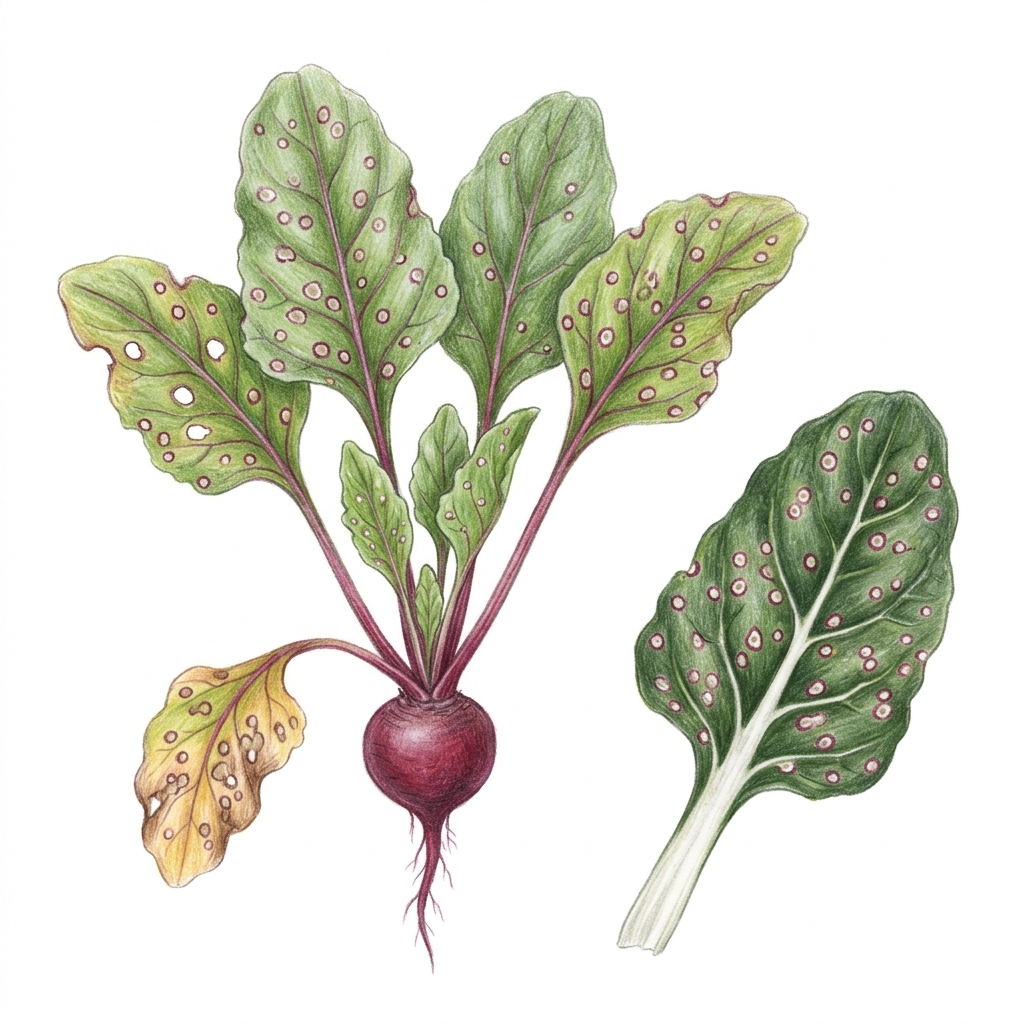
Illustration
A fungus that leaves small round spots with pale tan to grey centres and reddish-purple rims on beetroot and silverbeet leaves, oldest leaves first, until the centres fall out and the leaves die. Clean seed, leaves that dry quickly, weeding, clearing old leaves and a two- to three-year break from beetroot, silverbeet and spinach keep it in check.
How to spot it
- Many small, round spots, about 3–5 mm (⅛–3/16 in) across, with a pale tan, grey or off-white centre and a reddish-purple to brown rim.
- The oldest, outer leaves are hit first and worst; the young leaves in the centre are usually spared longest.
- Tiny black dots in the centre of the spots, easiest to see with a magnifying glass. In humid weather the spots turn grey and fuzzy with spores.
- The centres of old spots dry and fall out, leaving small holes.
- Spots join up until the leaves yellow, dry and die. Badly hit beetroot stays small.
- Worst in warm, humid weather, around 24–29°C (75–85°F), when the leaves stay wet overnight; often in late summer.
Easily confused with
Leaf miners
Pale blotches inside the leaf that turn brown, with a small maggot or its droppings between the leaf surfaces, rather than round spots with a red rim.
Flea beetles
Small holes and shallow pits chewed by tiny beetles that jump when disturbed, with no pale spot or red rim around them.
Phoma leaf spot
Very similar spots, but with more obvious tiny dark dots in them, and it can also rot the roots.
Where it's a problem
- Worldwide: Found wherever beetroot, silverbeet and spinach are grown, and worst in warm, humid weather.
- Australia: A common disease of beetroot and silverbeet, though usually a minor one. It matters most where the leaves are picked young as salad leaves, when their looks count.
- North America: One of the most important diseases of beets, chard and spinach, causing the most damage in late summer.
What to do
- Buy good-quality seed from a reliable supplier: the fungus can arrive on seed.
- Water the soil, not the leaves, early enough in the day that the leaves dry before night. Mulch around the plants and space them so air moves between them.
- Pull weeds of the same family, such as fat-hen, and any self-sown beet: they carry it between crops.
- Pick off spotted leaves, and pull out badly hit plants. Once silverbeet is badly spotted, harvest it all at once rather than picking it for regrowth.
- Don't sow new rows of beetroot or silverbeet right beside older, spotted ones.
- After harvest, clear away or dig in the old leaves: the fungus survives in them.
- Keep beetroot, silverbeet and spinach out of that bed for at least two to three years.
If you use a fungicide, choose one labelled for cercospora leaf spot and follow the label and local rules. Sprays only protect, so official guides start them at the first spots, before the disease takes hold.
Follow your local council's guidance for disposing of diseased plant material.
Vegetables it affects
Free account, no card needed. You sign up or sign in first, then the scanner opens.
Sources (5, from UMass Extension, University of Maryland Extension, Utah State University Extension and others)
- UMass Extension: Cercospora leaf spot of Swiss chard, beets and spinach
- University of Maryland Extension: Cercospora leaf spot of vegetables
- Utah State University Extension: Cercospora leaf spot
- University of Minnesota Extension: Swiss chard, spots or blotches on leaves
- Pacific Pests, Pathogens and Weeds: Beetroot (silver beet) leaf spot
Facts checked Wednesday 28 October 2026. General guidance only: follow your local council, agency and product label.