Home › Plant diseases › Boron deficiency
Plant diseases
Boron deficiency
Also called brown heart (swedes and turnips), internal black spot (beetroot), heart rot (beetroot).
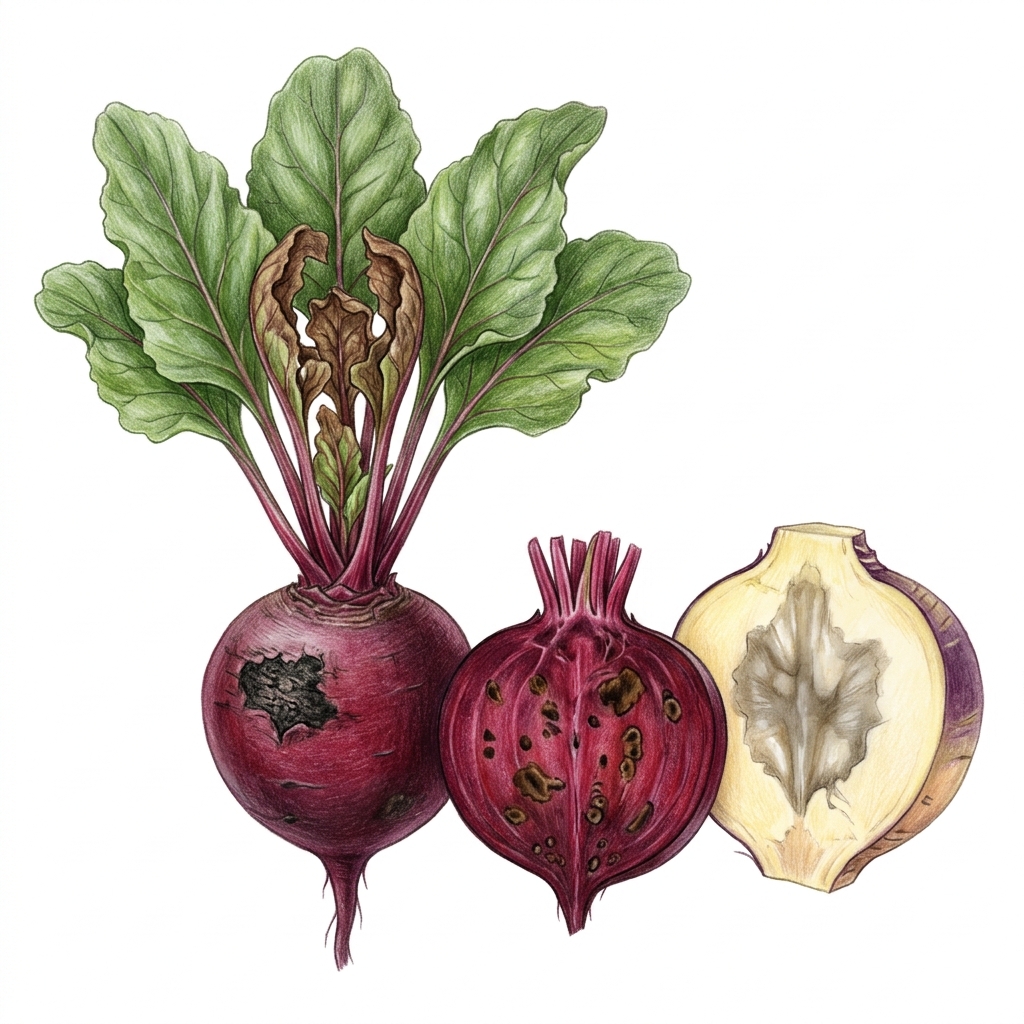
Illustration
Black spots inside beetroot, or a glassy, brown centre in swedes and turnips (called brown heart), from too little boron reaching the plant, usually on sandy, alkaline or over-limed soil, or in drought. A soil test comes first: add boron only if the test shows it's short, because too much harms plants.
How to spot it
- Beetroot: hard black or dark brown spots and patches inside the root, and sometimes dry, black patches on the skin.
- Beetroot: the youngest leaves in the middle turn brown and die, leaving a small cluster of dead leaves on top.
- Swedes and turnips (brown heart): the centre of the root turns glassy and water-soaked, then grey, brown or black, and soft.
- Swedes and turnips: the skin may be rough and badly hit plants are stunted, but often nothing shows until you cut them open.
- Other crops: hollow stems and browning heads on cauliflower and broccoli, brown cracks in celery stalks, rotting hearts in celeriac.
- Worst on sandy, washed-out, alkaline or recently limed soil, and after a long dry spell.
Easily confused with
Woody roots
Tough, stringy flesh all through the root, with no dark spots or soft brown centre.
Common scab
Rough, corky patches on the skin of beetroot, swedes and turnips, while the flesh inside stays sound.
Club root
Lumpy, swollen roots on turnips and swedes, and plants that wilt on warm days: the damage is on the outside of the roots, not a brown core.
White rings in beetroot
Pale and dark rings through the flesh, worse after hot weather. The flesh stays firm and sound, with no black spots.
Where it's a problem
- Worldwide: Found wherever soil is sandy and washed out, alkaline or heavily limed, and worse in drought. Not regulated.
- United Kingdom: The RHS says real shortages in the soil are rare: more often the boron is there but locked up in alkaline soil above pH 7.
- United States: UMass Extension notes that soils in the eastern United States are naturally low in boron, and it washes out of them easily.
What to do
- Cut a few roots open at harvest: brown heart only shows inside.
- Have the soil tested for pH and boron. Your local agriculture department or extension service can suggest a lab.
- Don't lime soil that is already alkaline, and lime acidic soil only as far as a test says: liming locks boron up.
- Water in dry spells and mulch, so the soil stays evenly moist.
- If the test shows boron is short, add it before sowing, following the lab's advice and the label exactly. The gap between too little and too much is narrow, and too much damages plants.
- Once the roots show it, it's usually too late to fix this crop, so correct the soil before the next sowing.
- Kinds differ in how badly they're hit: if it keeps happening, try another kind.
No fungicide helps: this is a nutrient shortage, not an infection. Official guides test the soil first and add boron only where a test shows it's short, following the lab's advice and the label, because too much boron damages plants.
Vegetables it affects
Free account, no card needed. You sign up or sign in first, then the scanner opens.
Sources (6, from RHS, UMass Extension, Pacific Northwest Plant Disease Handbook and others)
- RHS: Nutrient deficiencies
- UMass Extension: Boron deficiency
- Pacific Northwest Plant Disease Handbook: Turnip and rutabaga, boron deficiency · Beet, heart rot
- Washington State University HortSense: Turnip, rutabaga, boron deficiency
- Texas A&M AgriLife Extension: Beets
Facts checked Wednesday 28 October 2026. General guidance only: follow your local council, agency and product label.