Soil
Raised bed soil
Also called raised bed mix (gardeners).
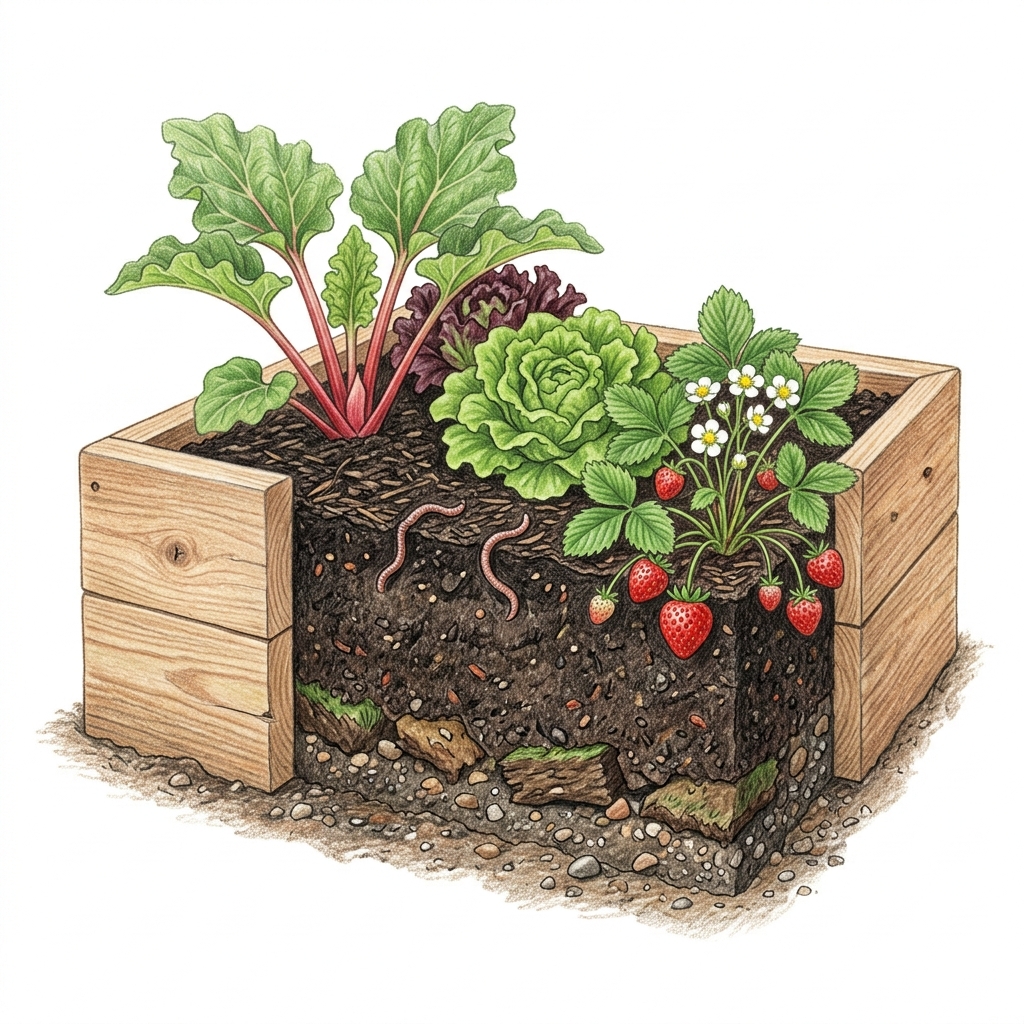
Illustration
Fill a raised bed mainly with good topsoil blended with compost. Compost or potting mix on its own breaks down and slumps within a few seasons. Expect the bed to settle, and top it up with compost or mulch each year.
How to tell a good fill
- Good topsoil is dark and crumbly with an earthy smell. Avoid soil that's very sandy or clayey, smells foul, or has greyish mottling or a chalky, sticky or rough feel.
- A soil test shows its pH and nutrients. If you'll grow food, ask the lab to test for lead too.
- The level sinks below the rim over time. That's the compost in the mix breaking down, and a sign to top up.
Easily confused with
Potting mix
Light and made for pots. On its own in a bed it breaks down and slumps within a few seasons.
Compost
A soil improver to blend in. Oregon State University advises against filling a bed with compost alone.
Topsoil
The main ingredient, usually enriched with compost or well-rotted manure before it goes in the bed.
Where it helps
- Heavy or wet ground: A raised bed drains better and warms up faster in spring. The RHS says it suits crops such as rhubarb and asparagus, which would otherwise rot in the winter wet.
- Paving and hard surfaces: A bed on a hard surface needs enough depth for roots and a way for water out. The RHS adds extra sharp sand to the mix, and drainage holes in timber sides.
- Hot, dry summers: Raised beds dry out faster than soil at ground level. The RHS suggests collecting rainwater and mulching the surface.
- Where your soil doesn't suit: A bed can be filled with a different soil, such as acid (ericaceous) soil for rhododendrons, camellias, heathers and blueberries. Line brick or block beds so lime in the mortar can't reach the roots.
How to fill and keep it
- Clear or smother the turf first. Over thick grass, plain cardboard or overlapping newspaper under a layer of compost kills it in place.
- Loosen the ground underneath with a fork to help drainage. In a deep bed, rubble or subsoil in the base saves good soil, and turves laid upside down will rot down and enrich it.
- Fill mainly with good topsoil blended with compost or well-rotted manure, not compost or potting mix alone. Sources differ on how much compost to add, and Clemson warns that both too little and too much can cause problems later.
- Fill to just below the rim, firm it, let it settle for a couple of weeks, then top it up.
- Add compost or a layer of leaves every year, because organic matter breaks down and the level sinks.
Plants that do well
- Vegetables and salad leaves
- Strawberries and other soft fruit
- Rhubarb and asparagus
- Cut flowers
- Herbs, alpines and bulbs, with extra sand for drainage
- Fruit bushes, shrubs and small trees
Take care: Bagged mixes and compost can carry Legionella bacteria: wear a mask and gloves, dampen them to keep dust down, and wash your hands afterwards. For food crops, don't build beds from old railway sleepers or older treated timber, which may leach creosote or other chemicals into the soil.
Free account, no card needed. You sign up or sign in first, then the scanner opens.
Sources
- RHS: How to make a raised bed
- RHS: Growing veg in raised beds
- Oregon State University Extension: Raised bed gardening
- Oregon State University Extension: How to use compost in gardens and landscapes
- University of Maryland Extension: Soil to fill raised beds
- Clemson Home & Garden Information Center: Raised beds
- NSW Health: Stay safe from legionnaires' disease when gardening
Facts checked Sunday 27 September 2026. General guidance only: follow your local council, agency and product label.