Soil
Compost
Also called garden compost (UK), home-made compost (gardeners).
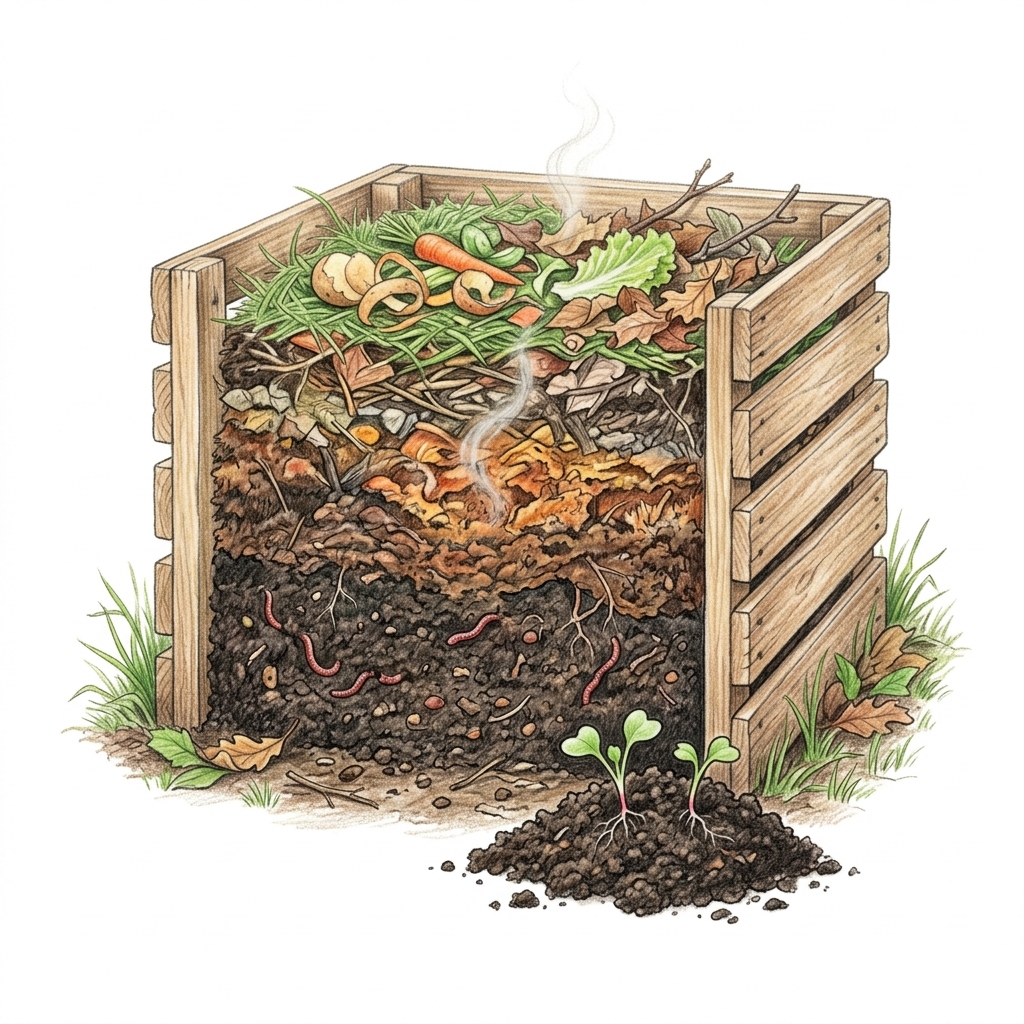
Illustration
Garden compost is rotted-down plant waste that you spread as mulch or dig in to improve your soil. It's ready when it's dark brown, crumbly and smells earthy, like damp woodland, and you can no longer tell what went in.
How to tell it's ready
- Dark brown or black, crumbly and soil-like, with nothing left that looks like what went in.
- It smells earthy, like damp woodland or forest soil. A foul smell, or one of ammonia or sulphur, means it isn't finished.
- The heap has shrunk to about half its starting size.
- Radish test: sow a few radish seeds in a pot of it. If most of them sprout and grow on, it's ready to use.
Easily confused with
Potting mix
A bagged mix made for pots. In the UK it's also sold as compost, so check what the bag says it's for.
Well-rotted manure
Used much like compost, but can be high in salts that harm seeds and young transplants.
Topsoil
Real mineral soil. Compost is blended into it, not used instead of it.
By region
- Worldwide: Composting works almost anywhere. A sheltered spot in part or full shade keeps the heap away from extremes of heat and wet, which the microbes doing the work don't like.
- Cold winters: In Colorado, a large, well-built heap keeps working through winter, while smaller heaps cool down and stop.
- Dry climates: Heaps dry out from the outside in, so gardeners often cover them with a tarp or lid.
- Australia and New Zealand: Health authorities in both countries link Legionnaires' disease to compost and potting mix, and Health NZ names them as the most common source of the bacteria.
How to make and use it
- Choose a sheltered, part-shaded spot, ideally on bare earth, and use a bin or a simple heap.
- Mix soft green waste, such as grass clippings, vegetable peelings and annual weeds, with woody brown waste, such as prunings, straw, dry leaves and shredded cardboard. Grass on its own turns slimy and smelly.
- Keep it as moist as a wrung-out sponge: squeeze a handful and only a few drops should come out. Turn it now and then to let air in; it speeds things up but isn't essential.
- Hot or slow: a hot heap, built in one go and turned often, is fastest but takes work. A slow (cold) heap, added to as you go, is easy but takes longer, and few home heaps get hot enough to kill weed seeds or disease.
- Leave out meat, dairy, fats and oils (they attract pests), pet droppings (they can spread disease), and diseased plants or weeds in seed (they can survive the heap).
- Spread it as a mulch or fork it in. It improves soil more than it feeds plants, so hungry crops may still need fertiliser.
Best used for
- Mulching beds and borders
- Digging into beds before planting
- Vegetable gardens
- Blending with topsoil to fill raised beds
- Top-dressing lawns after aerating
- Home-made potting mix, blended with topsoil and sand
Take care: Compost can carry Legionella bacteria, which cause Legionnaires' disease, a lung infection (pneumonia). Wear gloves and a mask when turning or handling it, dampen it to keep the dust down, and wash your hands afterwards. The risk is higher for older people, smokers and anyone with a weakened immune system.
Free account, no card needed. You sign up or sign in first, then the scanner opens.
Sources
- RHS: Composting
- Colorado State University Extension: Making compost
- Clemson Home & Garden Information Center: Composting
- UF/IFAS Extension Sarasota County: Compost maturity tests
- Oregon State University Extension: How to use compost in gardens and landscapes
- NSW Health: Stay safe from legionnaires' disease when gardening
- Health NZ: Legionnaires' disease (legionellosis)
Facts checked Sunday 27 September 2026. General guidance only: follow your local council, agency and product label.