Soil
Potting mix
Also called potting soil (USA), soilless mix (USA), potting compost or multi-purpose compost (UK).
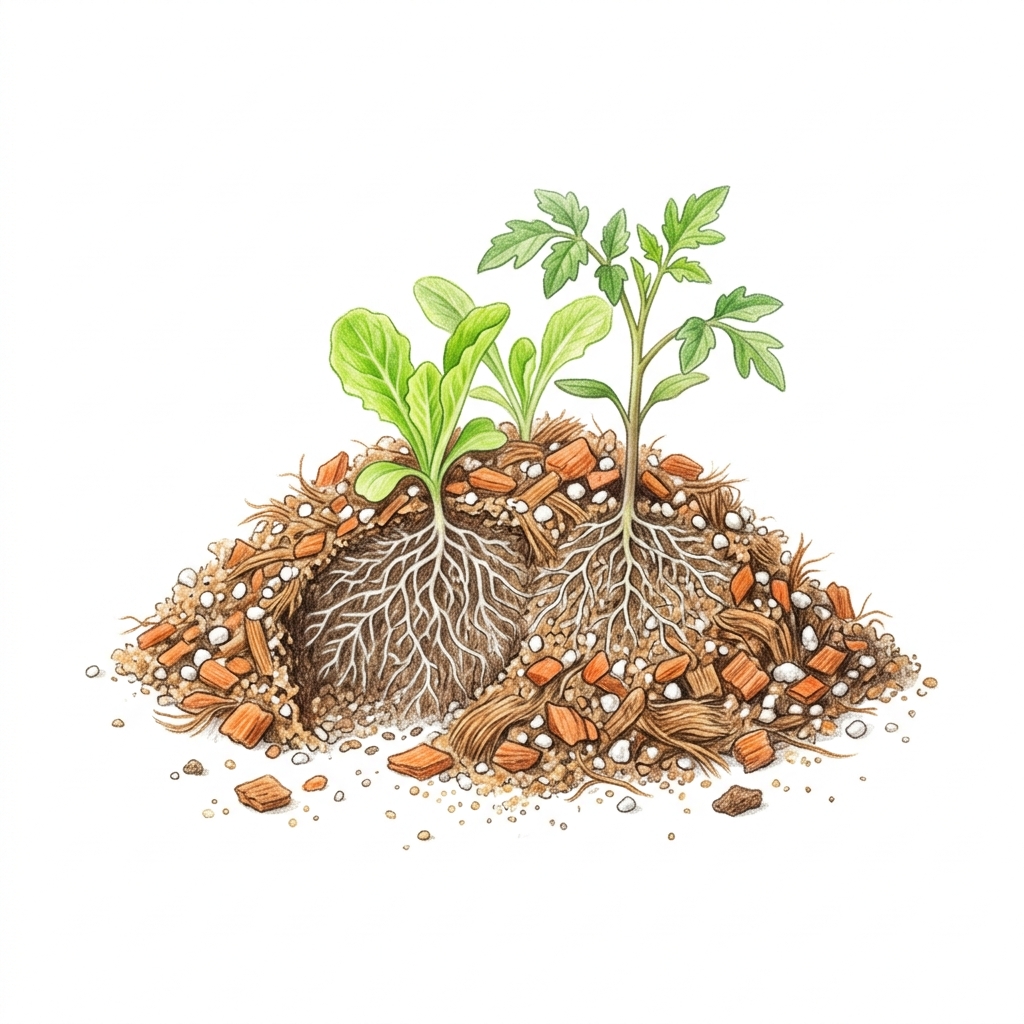
Illustration
Potting mix is a light, open blend, usually of bark, coir, peat or compost with sand or perlite, made for pots. Garden soil packs down in a pot and starves roots of air, so use a mix, and refresh or replace it as it breaks down.
How to choose and check it
- Read the bag: a good label says what the mix is for and how to feed plants grown in it.
- In Australia, a Standards label on the bag means the mix was made to the Australian Standard for potting mixes, which sets a regular and a premium grade.
- It should feel light and open. Very fine, heavy mixes hold too much water and starve roots of air.
- Old mix breaks down and packs tight, so it drains and breathes poorly.
- Fresh is best: the RHS suggests using peat-free mix within the season you buy it, as older stock starts to break down.
Easily confused with
Garden compost
Made at home from garden waste, and used to improve soil rather than on its own in pots. In the UK both are called compost.
Topsoil
Real soil from the ground. Right for beds, but in a pot it drains and breathes poorly.
Seed-raising mix
A very fine mix made for sowing seeds.
By region
- Australia: An Australian Standard covers potting mix, with regular and premium grades and special mixes for seedlings, orchids, acid-lovers and low-phosphorus natives. Most mixes are based on pine bark, composted first to remove its natural toxins.
- United Kingdom: Sold as multi-purpose or potting compost. The RHS encourages peat-free mixes, because peatlands store carbon and soak up heavy rain, which helps prevent flooding.
- North America: Called potting soil or soilless mix, and often contains no soil at all, just materials such as peat, bark, coir and vermiculite.
How to use it well
- Use potting mix in pots, not garden soil. In a container, soil drains poorly, runs short of air, and can carry pests such as nematodes.
- Choose the mix for the job: a very fine one for seedlings, a free-draining one for orchids, an acid one for azaleas and camellias, and a low-phosphorus one for banksias and proteas.
- Moisten dry mix slightly before planting.
- Feed as the bag says. A regular-grade mix needs fertiliser from the start; a premium grade holds enough for about the first month. Peat-free mixes often need different watering and feeding, so follow the label.
- Refresh or replace it as it wears out. Sources differ: UF/IFAS suggests fresh mix at least once a year, while the RHS and University of Illinois say mix from healthy plants can be reused, enriched with fresh organic matter.
- Use spent mix as a mulch or soil improver. As you empty pots, look for vine weevil grubs, and spread the mix thinly so birds can eat them.
Best used for
- Pots, tubs and other containers
- Vegetables grown in containers
- Seedlings, in a very fine seed-raising mix
- Orchids, in a free-draining orchid mix
- Azaleas and camellias, in an acid mix
- Banksias and proteas, in a low-phosphorus mix
Take care: Potting mix can carry Legionella bacteria, which cause Legionnaires' disease, a lung infection (pneumonia). Read the warning on the bag. Wear a mask and gloves, open bags outdoors with scissors and away from your face, dampen the mix to keep dust down, and wash your hands afterwards. Older people, smokers and anyone with lung disease or a weakened immune system are at higher risk.
Free account, no card needed. You sign up or sign in first, then the scanner opens.
Sources
- RHS: Peat-free compost choices
- RHS: How to reuse spent compost
- University of Illinois Extension: Container gardens, soil
- UF/IFAS Gardening Solutions: Vegetable gardening, container media
- CSIRO: Down to Earth, episode 5, potting mixes (transcript)
- Queensland Government: Legionnaires' disease
- Health NZ: Legionnaires' disease (legionellosis)
Facts checked Sunday 27 September 2026. General guidance only: follow your local council, agency and product label.