Soil
Loam
Also called loamy soil (gardeners), sandy loam or clay loam (depending on which particles lead).
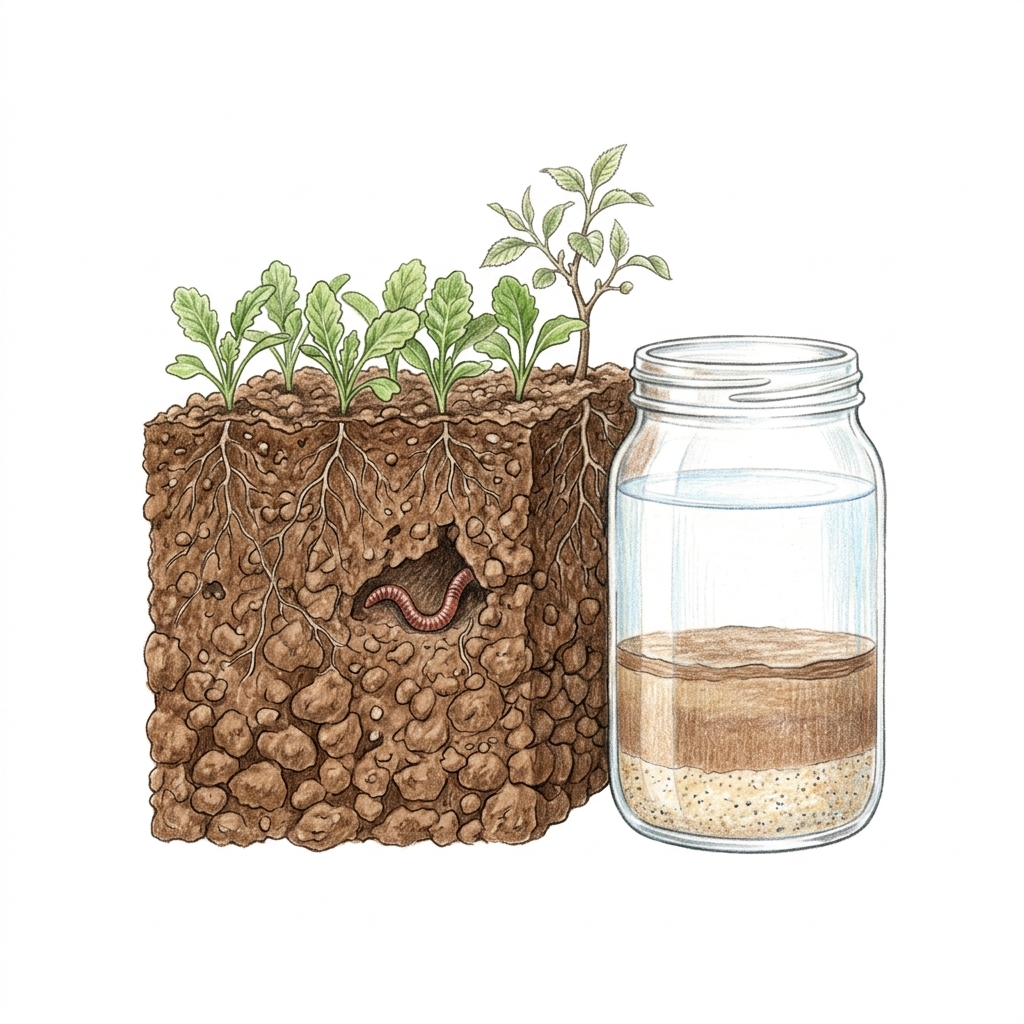
Illustration
Drains well, holds enough waterCrumbly, fertile and easy to work
Loam is a balanced mix of sand, silt and clay. It drains well but holds enough moisture and nutrients, and it's easy to dig. It's the soil most vegetables do best in. Keep it good by adding organic matter regularly.
How to tell
- Rub a moist pinch: it's neither very gritty like sand nor sticky like clay.
- Jar test: fill a clear jar a third full of soil, top up with water, shake and let it settle. Sand drops in about a minute, silt over about two hours and clay over about two days. Loam shows a good layer of each.
- It drains after rain without drying out fast, and digs easily.
Easily confused with
Sandy soil
Gritty, falls apart when squeezed, and dries out fast.
Clay soil
Sticky when wet, and rolls easily into a long, thin, shiny sausage.
Silty soil
Feels slightly soapy and slippery, and packs down easily.
Where it's common
- Worldwide: Loam is a texture, not a place. Depending on which particles lead, it may be a sandy loam or a clay loam.
- Australia: The state soils of NSW and Victoria are duplex soils, with a sharp change in texture from topsoil to subsoil. In Victoria's, water can build up on the dense subsoil after heavy rain.
How to improve it
- Keep adding organic matter, such as compost or well-rotted manure, especially if you dig or cultivate it every year.
- Don't leave it bare over winter: sow a green manure, such as red clover, which suits loamy soils, to protect and improve the structure.
- Have the soil tested now and then. A standard test reports pH, nutrients and organic matter, and suggests what, if anything, to add.
- Check what lies underneath before planting trees or big shrubs. In duplex soils, a good loam can sit on a dense, slow-draining subsoil.
Plants that do well
- Most vegetables
- Plums
- Red clover, as a green manure
- Bay and other shrubs in pots, in a loam-based compost
Free account, no card needed. You sign up or sign in first, then the scanner opens.
Sources
- RHS: Soil types explained
- RHS: Green manures
- RHS: How to grow bay
- RHS: How to grow plums
- Clemson Cooperative Extension: Soil texture analysis, the jar test
- Colorado State University, Landscape for Life: Determine soil type and pH
- Soil Science Australia: State soils
Facts checked Sunday 27 September 2026. General guidance only: follow your local council, agency and product label.