Soil
Silty soil
Also called silt loam (when mixed with some sand and clay), loess (silt laid down by wind).
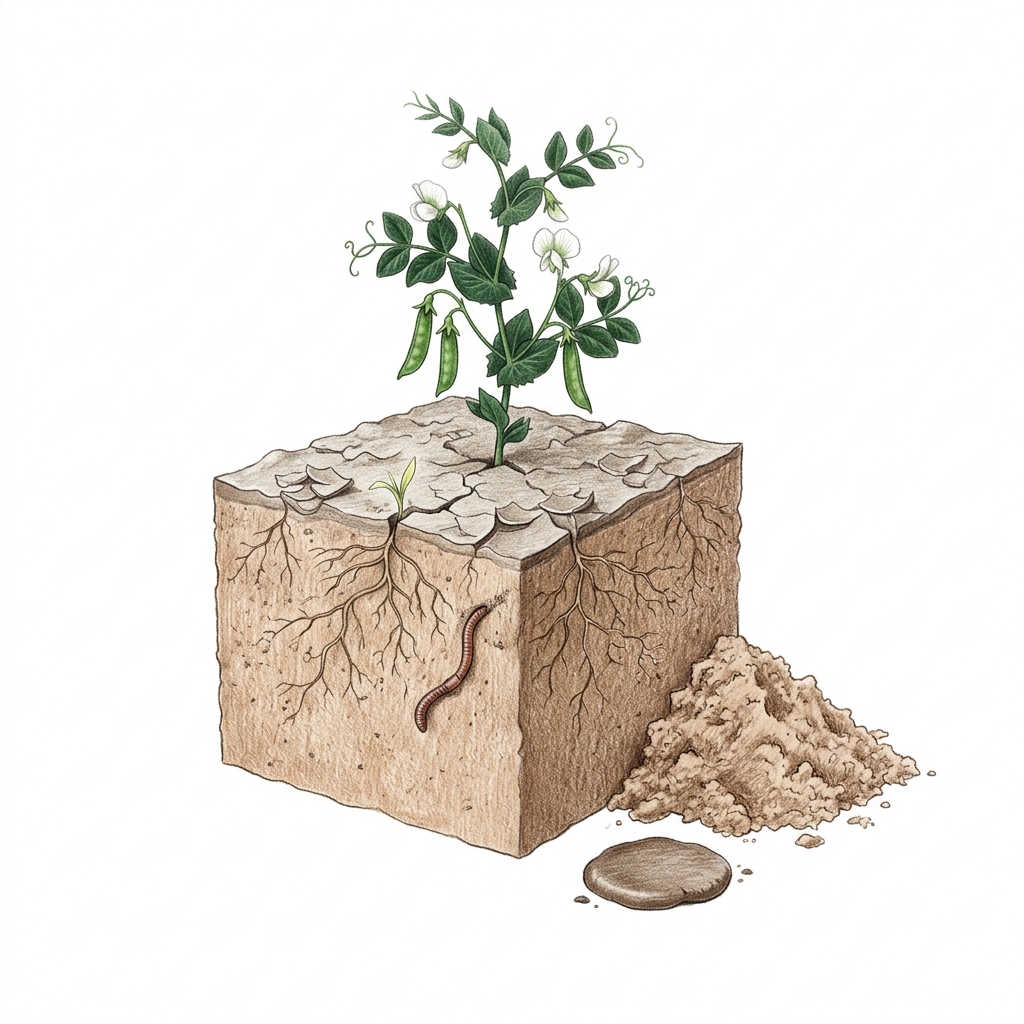
Illustration
Fertile but easily packed downCrusts after heavy rain, erodes when bare
Silty soil feels smooth and slightly soapy. It's fertile and holds more water than sand, but it packs down easily, forms a hard crust after heavy rain, and washes or blows away when bare. Add organic matter and keep it covered.
How to tell
- Rub a moist pinch: it feels smooth and slightly soapy or slippery, not gritty or sticky, and doesn't clump easily.
- Jar test: after shaking soil and water in a clear jar, a thick middle layer of silt settles over about two hours.
- After heavy rain or watering, the surface dries into a hard crust, and small seeds such as carrots and beetroot struggle to push through.
- Footprints and wheel marks pack it down easily.
- Bare soil washes away in rain or blows away in wind.
Easily confused with
Clay soil
Sticky rather than soapy, and rolls easily into a long sausage.
Loam
A balanced mix: a jar test shows good layers of sand and clay as well as silt.
Where it's common
- Worldwide: Pure silt soils are rare, especially in gardens.
- New Zealand: Pallic soils, formed mostly in wind-blown silt (loess), cover 12% of the country in the seasonally dry east of both islands and in the Manawatu. They are dry in summer and wet in winter.
- United Kingdom: Capping, a hard surface crust that stops seedlings coming up, is more common on silty and sandy soils, especially where organic matter is low.
How to improve it
- Add organic matter regularly to bind the fine silt into more stable crumbs.
- Keep it covered with mulch, crop remains or cover crops, so heavy rain can't batter the surface into a crust or wash it away.
- Keep feet and machinery off the beds as much as you can; silt packs down easily.
- Avoid preparing seedbeds just before heavy rain. If a crust forms over sown seed, a gentle watering can soften it.
- Dig less: reduced tillage helps the soil keep its structure.
Plants that do well
- Vegetables, especially later-season crops
- Peas and lentils
- Lucerne (alfalfa)
- Grains and hay grasses
- Cover crops, which protect the surface
Free account, no card needed. You sign up or sign in first, then the scanner opens.
Sources
- RHS: Soil types explained
- AHDB: Soil capping and slumping
- University of Minnesota Extension: Managing soil crusting
- Clemson Cooperative Extension: Soil texture analysis, the jar test
- Utah State University Extension: Soil (vegetable guide)
- Manaaki Whenua Landcare Research: Pallic soils
- USDA NRCS: Official series description, Palouse series
Facts checked Sunday 27 September 2026. General guidance only: follow your local council, agency and product label.