Home › Soil › Alkaline and chalky soil
Soil
Alkaline and chalky soil
Also called chalky soil (UK), lime-rich or limy soil (UK gardeners), high-pH soil (USA).
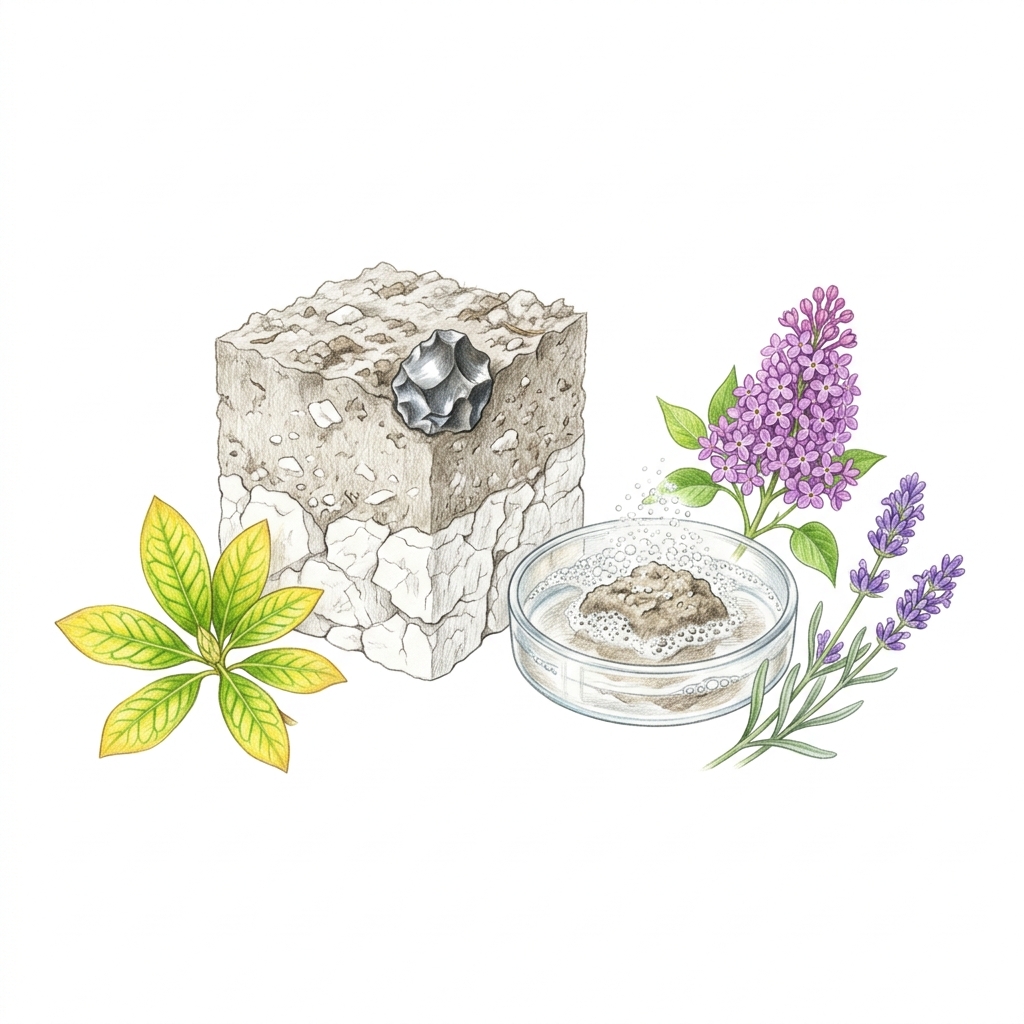
Illustration
Alkaline soil has a pH above 7, often because it's full of chalk or limestone. Iron and manganese get locked up, so acid-loving plants turn yellow. Lowering the pH is slow and often impossible, so the best approach is to grow plants that like lime.
How to tell
- A pH test reads above 7.
- Drop some soil into a jar of vinegar. If it froths, it contains free chalk or lime.
- Chalky soil has lumps of white chalk and often large, sharp flints, and is usually shallow, stony and quick to dry out.
- Leaves turn yellow between green veins, first and worst on new growth, especially on azaleas, rhododendrons, blueberries, maples and oaks.
Easily confused with
Salty soil
Leaf edges burn and brown rather than yellowing between the veins, and a white crust may form. A lab salt test tells them apart.
Waterlogged soil
Wet, compacted soil can bring on the same yellowing, but the ground stays soggy and roots rot.
Acidic soil
Poor growth can look similar, but a pH test reads below 7.
Where it's common
- United Kingdom: Chalk and limestone soils are widespread in Britain, typical of downland such as the South Downs, herb-rich pastures and chalk and limestone woodlands.
- North America: Much of the dry West, including Utah and Colorado, has naturally alkaline soil full of free lime, and iron chlorosis is common.
- Australia: Common in drier areas: in Queensland, soils in drier areas usually run from pH 6.5 to 9, against 5 to 7 where rainfall is higher.
- Worldwide: Typical of low-rainfall climates and of soils formed from chalk or limestone.
How to improve it
- Test the pH and do the vinegar test. If the soil froths, it can't realistically be made acid. Only slightly alkaline soil without free lime can be lowered with sulphur, and slowly: months in cold soil, years at root depth.
- Choose plants that like or tolerate lime. Sources agree this is the easiest and most reliable approach.
- On chalk, dig in plenty of well-rotted organic matter and mulch to hold moisture. It breaks down quickly here, so keep adding it.
- Break up hard chalk under the topsoil so roots can spread.
- Grow acid-lovers such as rhododendrons in containers of lime-free (ericaceous) compost, or in raised beds.
- Sequestered iron can green up yellowing plants for a while, but it's a stopgap, not a cure.
Plants that do well
- Lilac and viburnum
- Lavender and rosemary
- Clematis
- Pinks (dianthus) and hardy geraniums
- Ceanothus and cistus
- Salvias and scabious
- Beech and crab apples
Free account, no card needed. You sign up or sign in first, then the scanner opens.
Sources
- RHS: Chalky soils
- RHS: Chalky soils, plants for
- RHS: Acidifying soil
- Colorado State University Extension: Iron chlorosis of woody plants
- Utah State University Extension: Solutions to soil problems, high pH
- Queensland Government: Soil pH
- South Downs National Park Authority: Our chalk grassland
Facts checked Sunday 27 September 2026. General guidance only: follow your local council, agency and product label.