Soil
Acidic soil
Also called acid soil (UK and Australia), soil acidification (Australian farm advice, for the process).
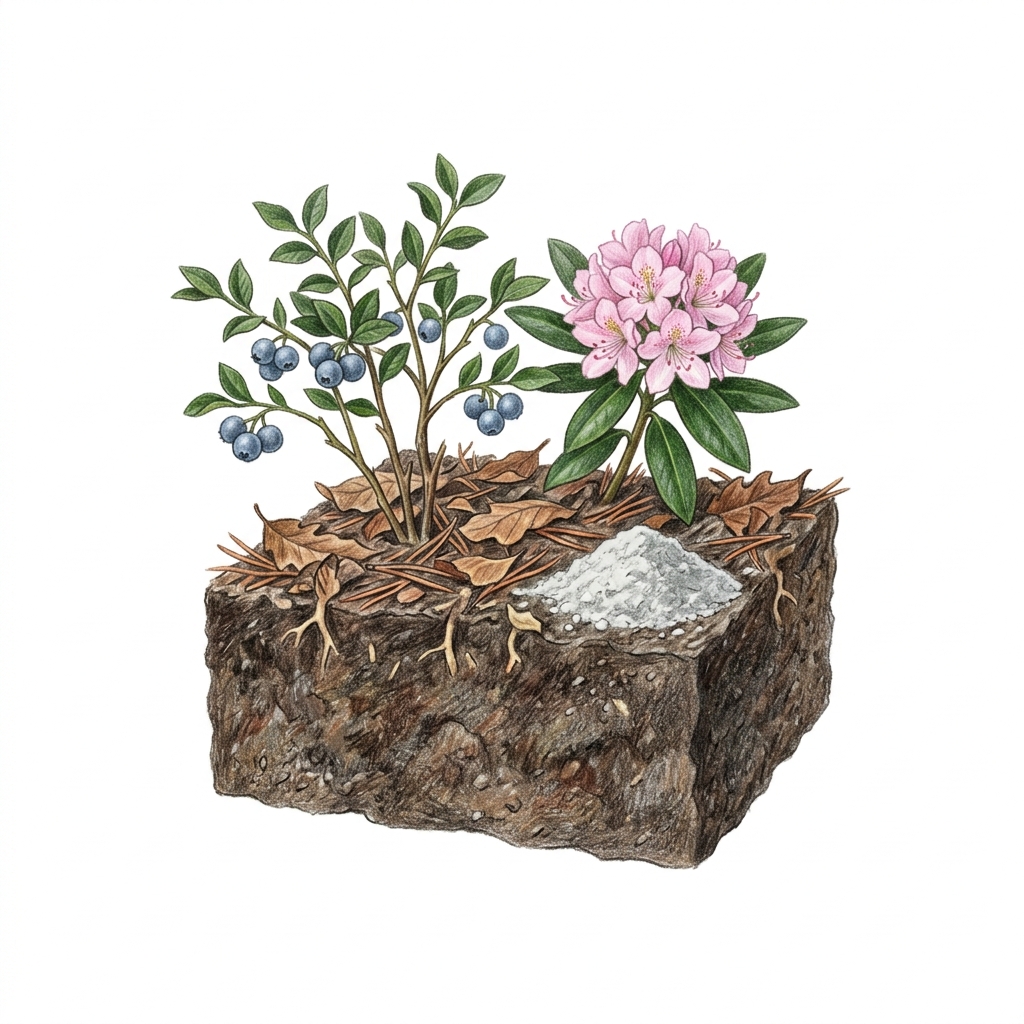
Illustration
Acidic soil has a pH below 7. When it gets strongly acid, nutrients are locked up and aluminium can reach levels that damage roots. It's widespread in Australia. Test first, then add lime if needed, or grow plants that like acid soil.
How to tell
- A pH test reads below 7. A lab test is more accurate than a home kit and can tell you how much lime the soil needs.
- Poor, stunted growth: strong acidity makes nutrients such as phosphorus harder to get and can release aluminium that harms roots.
- Lime-hating plants such as rhododendrons, camellias and heathers thrive in the area.
- It's most likely in higher-rainfall areas and where ammonium-based nitrogen fertilisers are used heavily.
Easily confused with
Soil pH
The measurement itself. Acidic soil is simply soil whose pH sits below 7.
Alkaline and chalky soil
Can also yellow and stunt plants, but a pH test reads above 7.
Hungry, nutrient-poor soil
Poor growth looks much the same. A soil test for pH and nutrients tells them apart.
Where it's common
- Australia: About 50 million hectares of farmland is affected, mostly in Western Australia and New South Wales. In WA, more than 70% of surface soils are below appropriate pH levels, and Queensland has over 500,000 hectares acidified or at risk.
- Worldwide: Most common where rainfall is high, because calcium and magnesium slowly leach out, and where nitrogen fertilisers are used heavily.
How to improve it
- Test first. A lab test gives the pH and how much lime the soil needs; a pH reading on its own isn't enough to work that out.
- If the test says so, add ground limestone (garden lime). Dolomite lime also supplies magnesium, useful where magnesium is low.
- Lime works slowly. Mix it in a few months before planting; spread on the surface, it can take years to reach the roots.
- Don't overdo it: too much lime can cause shortages of manganese and other trace nutrients.
- Treat it early and retest. Acidity creeps back, especially where nitrogen fertilisers are used, and acid subsoil is much costlier to fix.
- Or work with it: azaleas, rhododendrons and blueberries prefer acid soil and don't want lime.
Plants that do well
- Rhododendrons and azaleas
- Camellias
- Heathers
- Blueberries
- Conifers
Take care: Builders' (hydrated) lime can irritate skin and eyes. Wear gloves, and goggles if it bothers you.
Free account, no card needed. You sign up or sign in first, then the scanner opens.
Sources
- Soil Science Australia: Save our soils, acidification
- WA DPIRD: Managing soils
- Queensland Government: Soil acidification
- NC State Extension: Soil acidity and liming, basic information for farmers and gardeners
- Clemson Cooperative Extension: Changing the pH of your soil
- RHS: Lime and liming
- RHS: Soil: understanding pH and testing
Facts checked Sunday 27 September 2026. General guidance only: follow your local council, agency and product label.