Home › Soil › Waterlogged soil
Soil
Waterlogged soil
Also called poorly drained soil (gardeners), wet soil (UK gardeners), gley soil (New Zealand soil scientists).
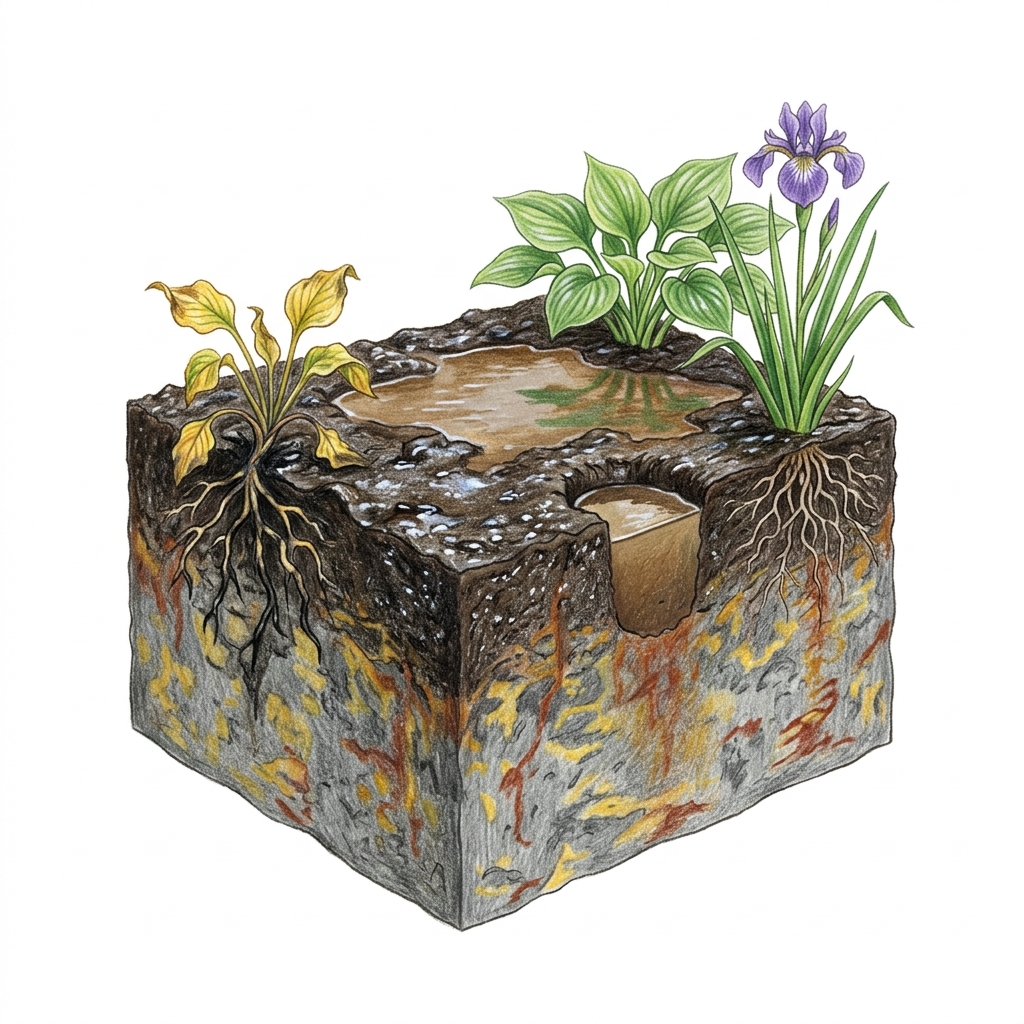
Illustration
Waterlogged soil stays saturated, so water pushes out the air and roots can drown, turning plants yellow and rotting their roots. Find the cause with a test hole, keep off it while wet, add organic matter, and use raised beds or plants that like wet feet.
How to tell
- Water sits on the surface, or the ground stays soggy long after rain.
- Dig a hole about 60 cm deep and leave it covered overnight: water seeping in means a high water table. If it stays dry, fill it with water; if water is still there a day later, drainage is poor.
- Plants have yellow leaves, grow poorly and may wilt as if thirsty. Their roots turn blue-black, with a sour, rotting smell.
- Dig down: grey subsoil, often mottled with yellow or reddish-brown, is a sign of lasting or seasonal waterlogging.
- A hard, compacted layer or dense clay below the topsoil stops roots going deeper.
Easily confused with
Compacted soil
Hard, dense soil that water struggles to soak into. It's one of the commonest causes of waterlogging.
Clay soil
Naturally slow to drain, wet in winter and baked dry in summer, but not always waterlogged.
Drought stress
Plants wilt in dry soil. Waterlogged plants can wilt too, but the soil around their roots is wet.
Where it's common
- United Kingdom: Common on heavy and compacted soils, especially in winter, and where paving sends runoff onto a smaller patch of soil.
- Australia: In Western Australia, duplex soils (sand over sodic clay) often waterlog in wetter-than-average years, as water perches on the clay.
- New Zealand: Gley soils, strongly affected by waterlogging, occur in low parts of the landscape with high water tables or seepage, and cover about 3% of the country.
- Worldwide: Low spots, high water tables, and places with a hard layer under the topsoil.
How to improve it
- Find the cause first. A test pit shows whether it's a high water table or a hard layer holding the water up.
- Keep off the soil until it's workable, so you don't compact it further. Fork through compacted soil, including at the base of each planting hole.
- Dig in plenty of bulky organic matter over a large area. Sand or grit is seldom effective, and US extension services advise against adding sand to clay.
- Grow in raised beds, and plant trees and shrubs on slightly raised mounds.
- For lasting problems, consider drains, or a ditch, seasonal pond or rain garden at the lowest point to catch surplus water.
- Cut runoff with permeable paving and water butts, and choose plants that like moist soil; few survive long spells of flooding.
Plants that do well
- Alders and birches
- Dogwoods (cornus)
- Hydrangeas and viburnums
- Hostas and astilbes
- Moisture-loving primulas
- Japanese water iris
- Swamp cypress
Free account, no card needed. You sign up or sign in first, then the scanner opens.
Sources
- RHS: Waterlogging and flooding
- RHS: Gardening on wet soils
- RHS: Wet soils, plants for
- University of Maryland Extension: Soil health, drainage, and improving soil
- Soil Quality Knowledge Base (Murdoch University and WA DPIRD): Waterlogging
- Manaaki Whenua - Landcare Research: Gley Soils
Facts checked Sunday 27 September 2026. General guidance only: follow your local council, agency and product label.