Home › Plant diseases › Strawberry viruses
Plant diseases
Strawberry viruses
Virus
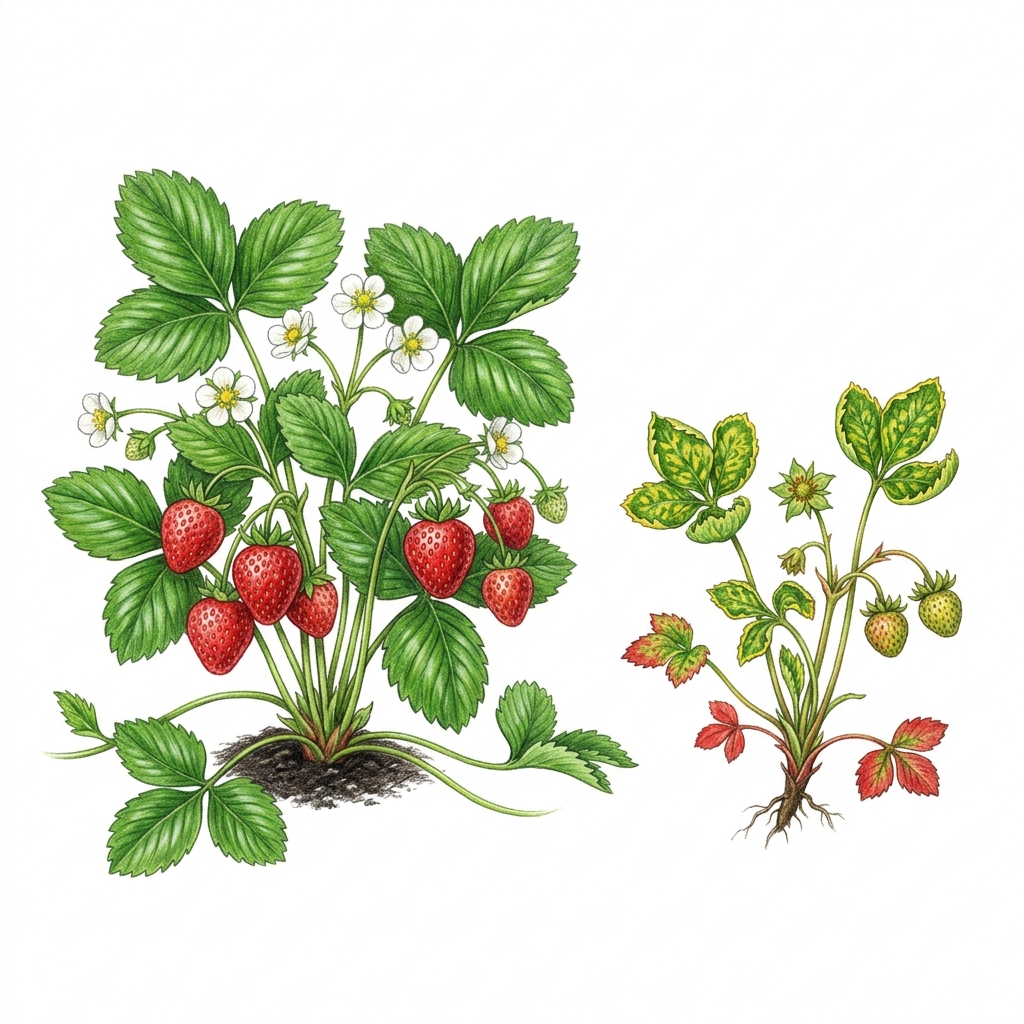
Illustration
Several viruses, mostly spread by aphids, that slowly weaken strawberry plants so they stay small and crop poorly. There is no cure: start with certified virus-free plants, and replace the bed with new plants in a fresh spot every two or three years.
How to spot it
- Plants that slowly lose vigour, stay small, and give fewer berries and fewer runners.
- Young leaves with yellow edges, or leaves that are cupped, crinkled or distorted.
- Yellow spots, mottling or marbling on the leaves, which may turn red; older leaves can redden.
- Flowers that don't develop properly and have a greenish tinge.
- Often no clear sign at all from a single virus: symptoms are worst when a plant carries several.
Easily confused with
Spider mites
Fine pale speckling with silk webbing, and tiny mites under the leaves.
Verticillium wilt
The outer leaves wilt, dry and turn brown, and whole plants can collapse; viruses stunt and crinkle without wilting.
Herbicide damage
Twisted or yellowed leaves appear suddenly across many plants, often after spraying nearby.
Nutrient deficiency
Yellowing shows evenly across the bed rather than as crinkling and mottling on some plants.
Where it's a problem
- Worldwide: Common wherever strawberries are grown. Old plants, and runners taken from old beds, are the most likely to be infected.
- Australia: Gardening Australia advises buying certified disease-free plants and replacing strawberries about every three years, moving to a new bed.
- United Kingdom: The RHS advises buying plants certified as virus-free; there are no chemical controls for gardeners.
- North America: Common in the USA and Canada, where plants often carry two or more aphid-spread viruses at once; that is when the damage is worst.
What to do
- Buy plants certified as virus-free, or disease-free, from a reputable nursery.
- Don't accept runners from old beds or other people's patches: they are likely to carry viruses.
- Plant in a fresh spot where strawberries haven't grown before, away from older plants, as some of these viruses live on in eelworms in the soil.
- Check under the leaves for aphids and deal with them early.
- Only take runners from young, healthy plants that crop well: a virus passes into every runner.
- When cropping falls, usually after two or three years, dig out and destroy the old plants, and start again with new plants in a new bed.
There's no cure and no chemical control. The RHS says gardeners' insecticides don't last long enough to stop aphids spreading these viruses, and Washington State University says aphid sprays haven't prevented the spread. Clean plants are the answer.
Follow your local council's guidance for disposing of diseased plant material.
Vegetables it affects
Free account, no card needed. You sign up or sign in first, then the scanner opens.
Sources (5, from RHS, UMass Extension, Washington State University HortSense and others)
- RHS: Strawberry viruses
- UMass Extension: Strawberry IPM, virus diseases
- Washington State University HortSense: Strawberry viruses
- Gardening Australia: Sumptuous strawberries · Growing strawberries
Facts checked Wednesday 28 October 2026. General guidance only: follow your local council, agency and product label.