Home › Plant diseases › Bulbs not dividing
Plant diseases
Bulbs not dividing
Also called single-clove bulbs (widely), solo bulbs (UK).
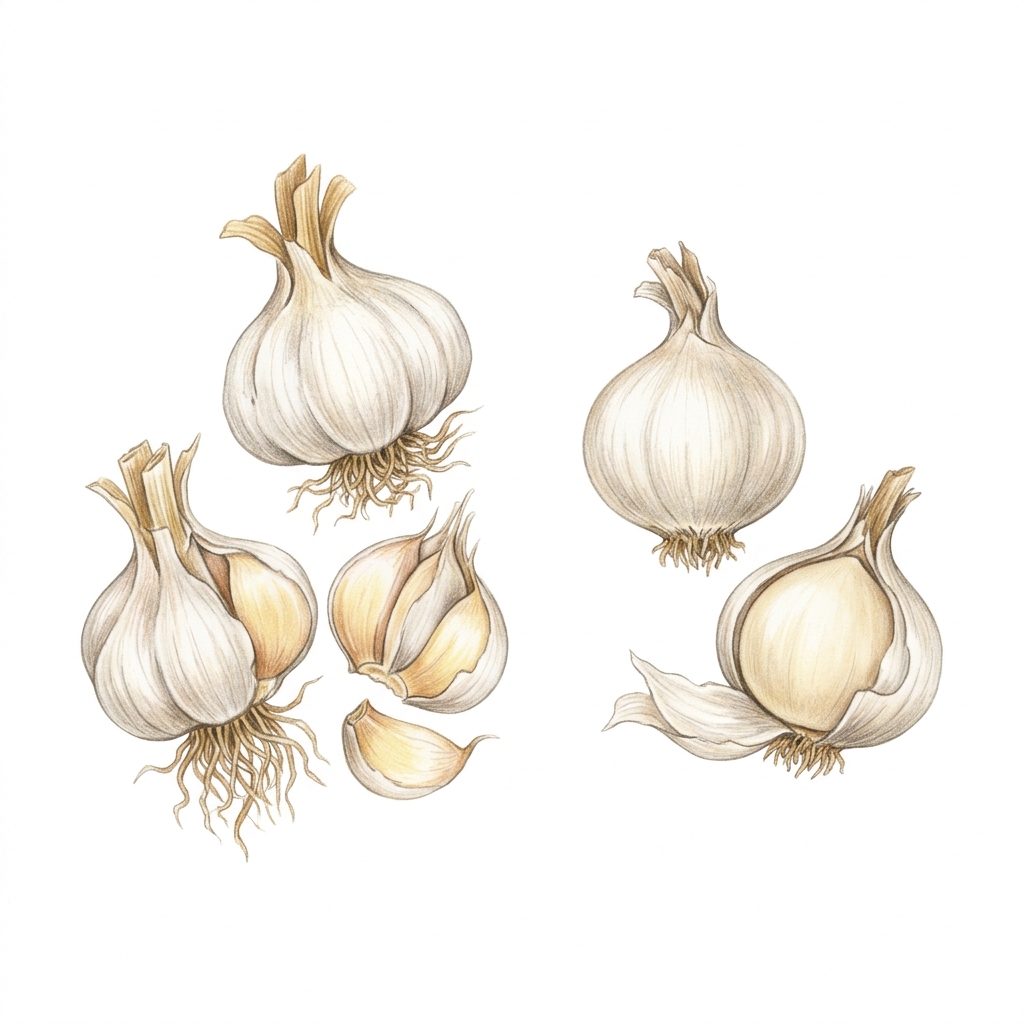
Illustration
Garlic that grows a single, round clove instead of a bulb of separate cloves, usually because it didn't get enough cold over winter. Planting in autumn, choosing kinds that suit your climate, and chilling the cloves in the fridge in warm places fix it.
How to spot it
- At harvest, a bulb that is one solid, rounded clove, like a small onion, instead of separate cloves.
- Bulbs that are often small as well.
- Most common after spring planting, a mild winter, or in warm and tropical climates.
- Elephant garlic sometimes makes one large single clove (a 'solo' bulb), especially when planted late.
Easily confused with
Top sets
Small cloves forming up on the stalk or stem, rather than one single clove underground.
White rot
Yellowing, dying leaves, with white fluffy mould and tiny black dots on the base of the bulb.
Leek moth
Caterpillars tunnelling down through the leaves into the bulb, leaving brown, rotting tunnels.
Where it's a problem
- Worldwide: Most likely in places with mild winters, in the subtropics and tropics, and after spring planting anywhere. Not regulated.
- Australia: In subtropical Brisbane, Gardening Australia advises chilling garlic in the fridge for about a month before planting, because the winters there are too mild.
- United States: In Hawaii, the University of Hawaiʻi advises chilling cloves in the fridge before planting: without it, plants grow leaves but little or no bulb.
What to do
- Plant in autumn, so the cloves get the cold most kinds need: one to two months at 0–10°C (32–50°F).
- Spring planting gets too little cold. If you must plant in spring, chill the cloves first, or plant as early as you can.
- In warm climates, chill the cloves in the fridge at about 4°C (40°F) for one to two months before planting.
- Choose kinds that suit your climate: softneck kinds cope better with mild winters, and hardneck kinds need colder ones.
- Plant named kinds from a garden centre or supplier, not shop-bought garlic, which may not suit your climate and can bring in disease.
- Eat undivided bulbs as usual. Single-clove elephant garlic replanted the next autumn usually goes on to divide.
Spraying won't help: garlic that doesn't divide got too little cold, not an infection. Official guides prevent it with autumn planting, the right kind and, in warm climates, chilled cloves.
Vegetables it affects
Free account, no card needed. You sign up or sign in first, then the scanner opens.
Sources (5, from RHS, University of Vermont Extension, University of Hawaiʻi CTAHR and others)
- RHS: How to grow garlic
- University of Vermont Extension: Growing garlic
- University of Hawaiʻi CTAHR: Garlic production guidelines for Hawaiʻi
- University of Georgia Extension: Garlic production for the gardener
- Gardening Australia: Subtropical harvesting
Facts checked Wednesday 28 October 2026. General guidance only: follow your local council, agency and product label.