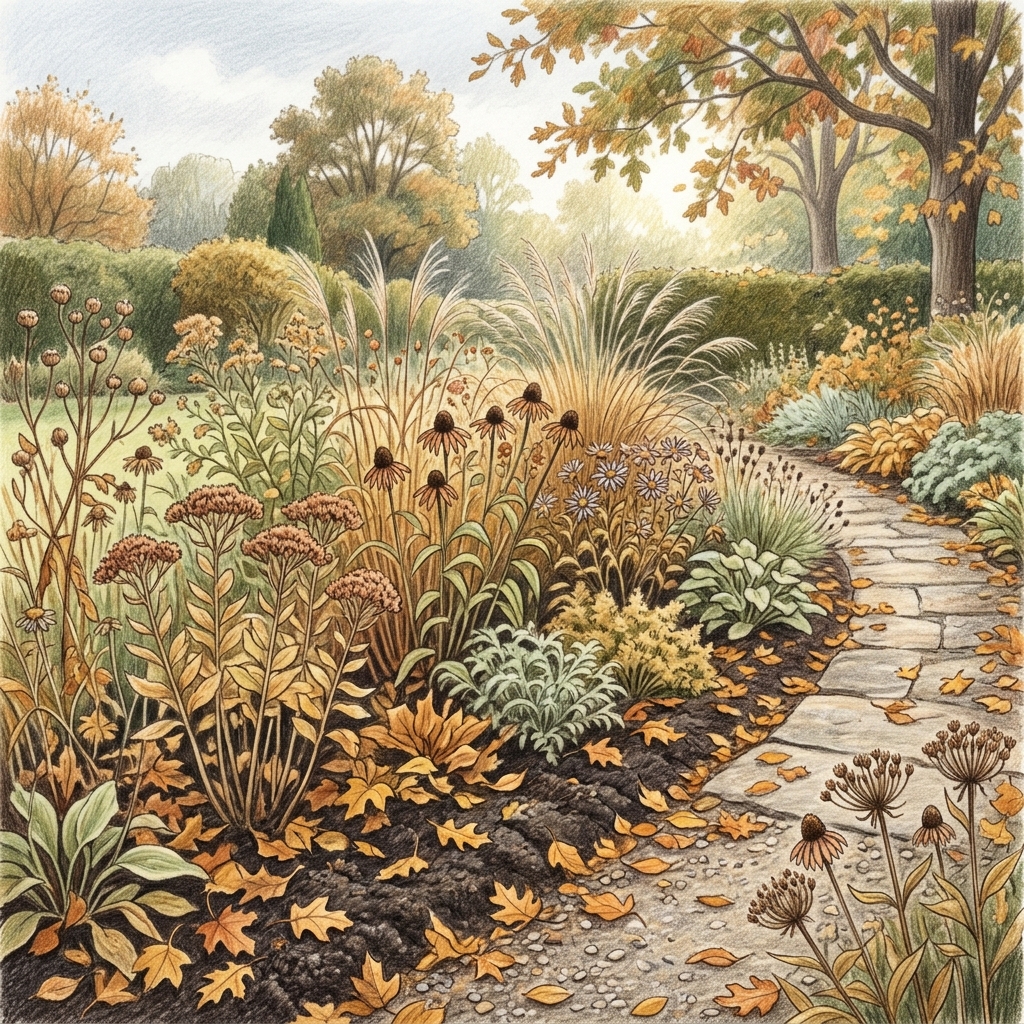
Daily gardening tip · Northern hemisphere · Sunday 25 October 2026 · mid autumn
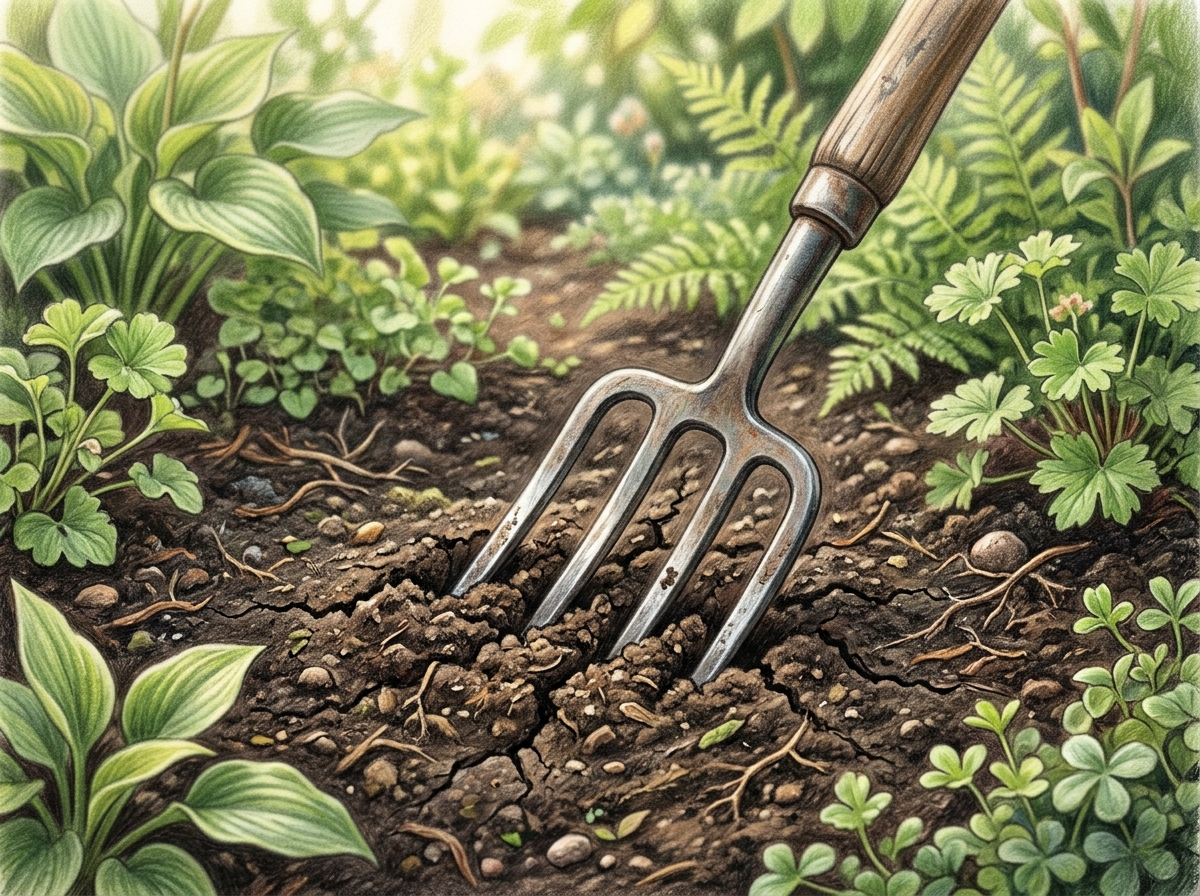
Aerate Compacted Soil in Autumn Borders
Compacted soil traps water during wet autumn months, which can rot plant roots over winter.
15 minuteseasysoil
Walk along your garden borders and look for areas where the soil feels hard or water pools.
Insert a garden fork about four to six inches deep into the firm soil.
Gently wiggle the handle back and forth to loosen the earth without turning it over.
Repeat this process every few inches across the hard patch.
Leave the surface loose so rain can soak in evenly.
Optionally spread a thin layer of compost over the aerated area to protect it.
Why it works
Compacted soil lacks the tiny air pockets needed for water to drain freely. Loosening the soil with a fork breaks up hard crusts, allowing heavy autumn rain to sink deeper into the ground instead of sitting around plant roots and causing rot.
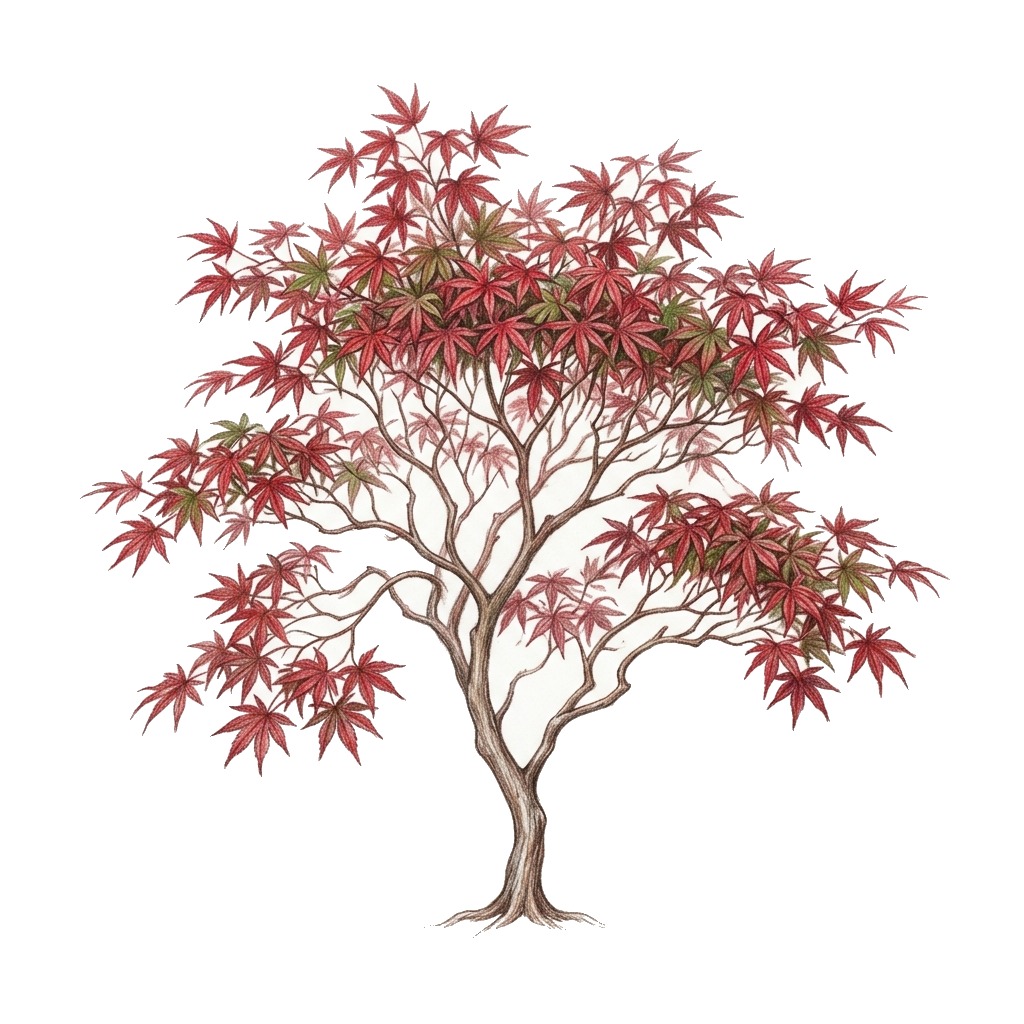
A small, graceful deciduous tree or shrub prized for its delicate, deeply lobed foliage and layered growth habit. Spring leaves emerge in vibrant shades of green, red, or pink, transforming into spectacular crimson, orange, and gold tones in autumn
Government sets out plans to cut red tape for businesses
The government is reducing paperwork requirements for companies and continuing to pause taxes on over 250 imported goods to help businesses save nearly 800 million pounds every year.
Honeybees outcompete wild pollinators on shared garden flowers
Scientists discovered that honeybees aggressively chase wild pollinators away from flowers to dominate nectar sources. Rising temperatures and dense urban beehives can make this competition harder on native insects. Planting a wider variety of flowers helps ensure all pollinators get enough food.
Italian botanist Odoardo Beccari passed away on 25 October 1920. He is best known for discovering the giant corpse flower during an expedition to Sumatra in 1878. His explorations introduced many tropical plant species to botanical science.