Soil
Compacted soil
Also called compaction (gardeners and farmers).
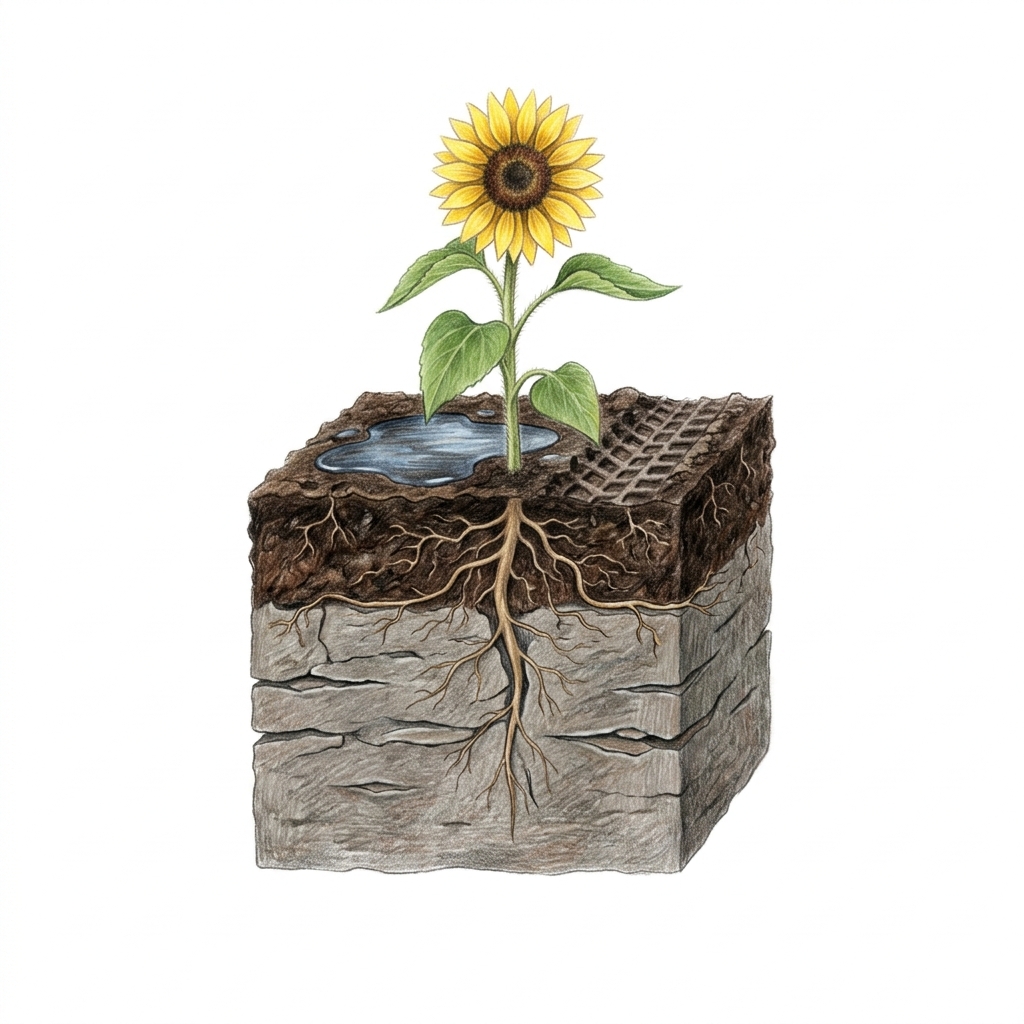
Illustration
Hard, airless and slow to drainWorst after building work or traffic on wet ground
Compacted soil has been squashed by feet, machinery or vehicles, so water and air can't get in and roots struggle. Water puddles or runs off, and plants grow poorly. Keep off wet soil, loosen it, add organic matter, and let roots and worms rebuild it.
How to tell
- Water sits in puddles or runs off instead of soaking in; a lawn goes squelchy or turns into a lake after rain.
- Moss spreads in the lawn over winter.
- Plants grow slowly, wilt, scorch or die back.
- Dig a hole about 50 cm deep and look for dense, hard layers in the sides that roots can't get through. Fill it with water; if more than half is still there next day, drainage is poor.
- It's most common after building work, and on paths, play areas and anywhere vehicles park.
Easily confused with
Clay soil
Dense by nature, so it drains slowly even where nobody has walked or driven.
Waterlogged soil
Often the result of compaction rather than the cause. Roots in waterlogged soil turn blue-black and smell rotten.
Where it's common
- Worldwide: Most likely around new-build homes and wherever heavy machinery, vehicles or regular foot traffic have been.
- Australia: In Western Australia, almost no farm soils can resist compaction or repair themselves once compacted.
How to improve it
- Keep off soil and lawns when they're wet, and use set paths so feet follow the same route.
- For compaction in the top 25 cm or so, fork over or single dig. Deeper layers, as around new-build homes, may need double digging.
- Spike lawns with a garden fork or a hollow-tined aerator in autumn, then brush a free-draining top dressing into the holes.
- Add organic matter and mulch. It helps bind soil into crumbs and supports the earthworms that help repair it.
- Sow deep-rooted plants, such as lucerne, sunflowers or mooli radish, to break through shallow compaction.
- Around established trees, don't dig. Mulch over the roots, and for serious cases ask a professional about loosening the soil with compressed air.
Plants that do well
- Lucerne (alfalfa), whose deep roots break through compacted layers
- Sunflowers
- Mooli (daikon) radish
- Grazing rye, as a winter green manure
- Winter field beans, on heavy soils
Free account, no card needed. You sign up or sign in first, then the scanner opens.
Sources
- RHS: Double digging
- RHS: Waterlogged lawns
- RHS: Waterlogging and flooding
- RHS: Green manures
- University of Maryland Extension: Problems caused by compacted soil
- Teagasc: Soil structure management and remediation
- WA DPIRD: Managing soils
Facts checked Sunday 27 September 2026. General guidance only: follow your local council, agency and product label.