Daily gardening tip · Northern hemisphere · Friday 25 September 2026 · early autumn
Prep Woody Autumn Stems for the Compost Bin
As you clear out faded summer plants this autumn, taking a moment to break down tough stems prevents them from sitting unchanged in your compost pile for months.
15 minuteseasycompost
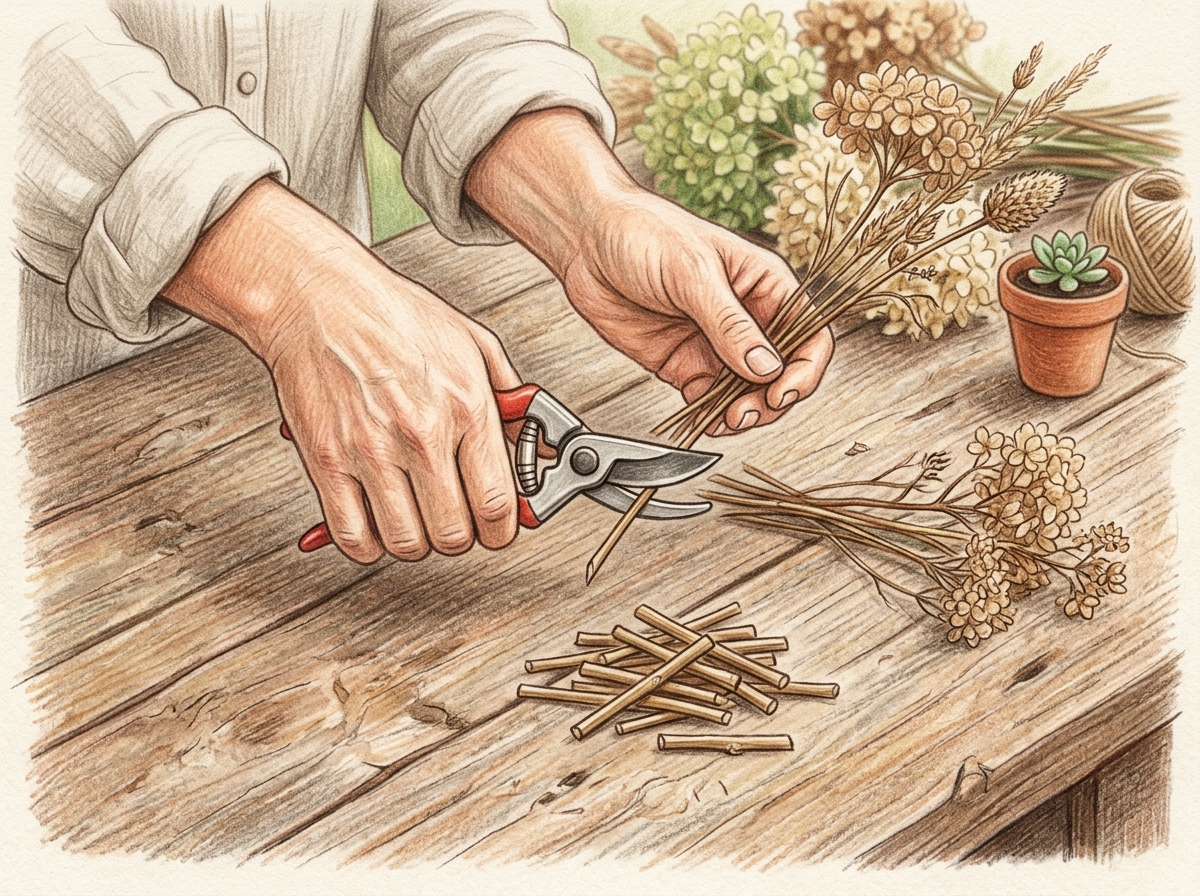
Gather the thick, woody stems of cleared annuals and finished perennials.
Place a small bundle of stems on a flat, solid surface like a wooden board.
Use sharp pruning shears to cut the stems into pieces under two inches long.
Alternatively, spread them on a lawn and run a lawnmower over them to shred a larger pile quickly.
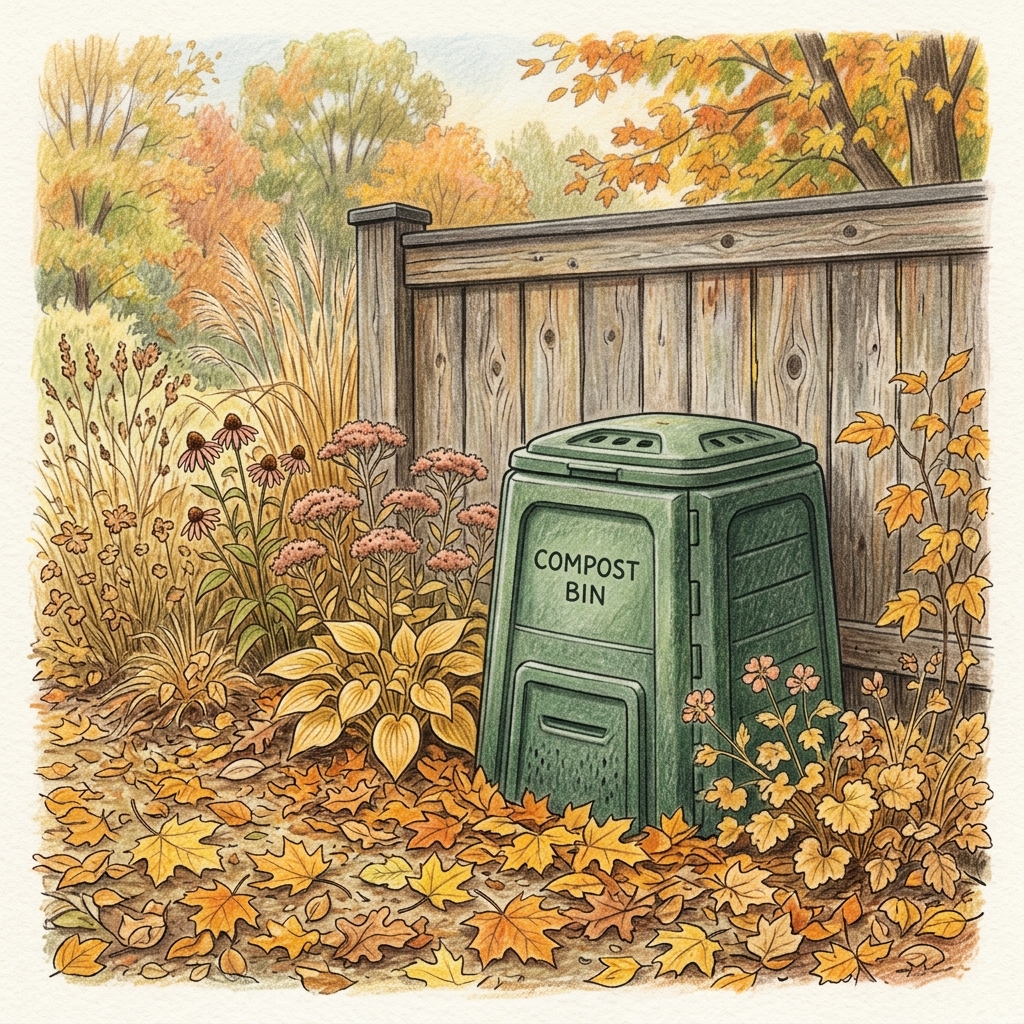
Toss the chopped pieces into your compost bin and mix them with moist, green kitchen scraps.
Why it works
Chopping tough stems increases their surface area, allowing decomposers like bacteria and fungi to access the interior of the wood much faster. Without this step, thick autumn stems can take over a year to break down, leaving woody chunks in your finished compost.
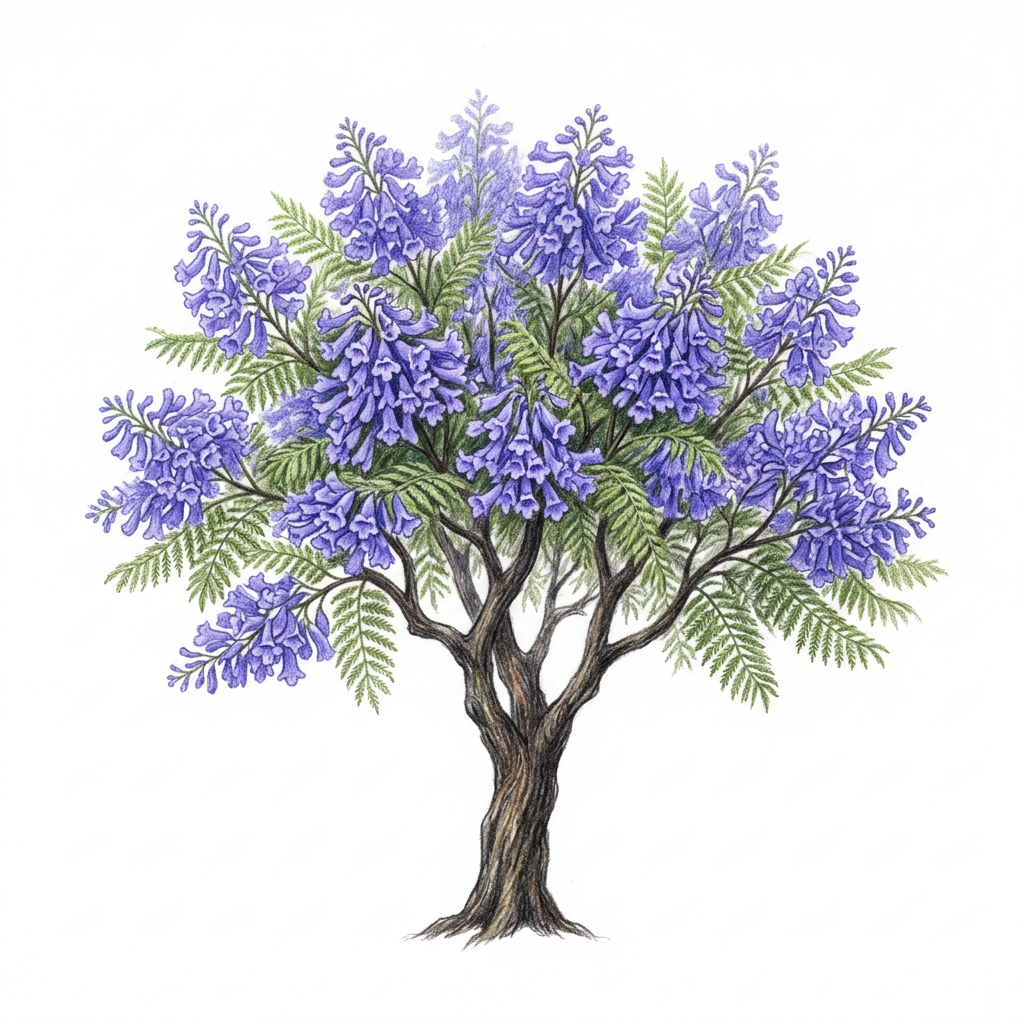
A fast-growing sub-tropical tree famous for its broad canopy covered in vibrant lavender-blue trumpet flowers. It features fine, bipinnate fern-like leaves that produce soft filtered shade.
Eastbourne’s sustainable planting wins public backing
A public survey found that nearly seventy percent of people in Eastbourne prefer a new, environmentally friendly style of plants along the seafront over the traditional Victorian style.
Letting cleared land regrow naturally rapidly restores forest carbon
Researchers used airborne lasers to monitor land in Brazil where forests were left to regrow naturally. They found that letting nature take its course restores plant growth and captures carbon surprisingly fast. This proves that natural regrowth is a highly effective way to help heal damaged landscapes.
French botanist Louis Alphonse de Brébisson was born in 1798
On 25 September 1798, French botanist Louis Alphonse de Brébisson was born in Normandy. He studied native plant life across France and published detailed works on regional flora and algae. He also helped pioneer early botanical photography to document local species.