Home › Plant diseases › Pithy roots
Plant diseases
Pithy roots
Also called spongy radishes (USA).
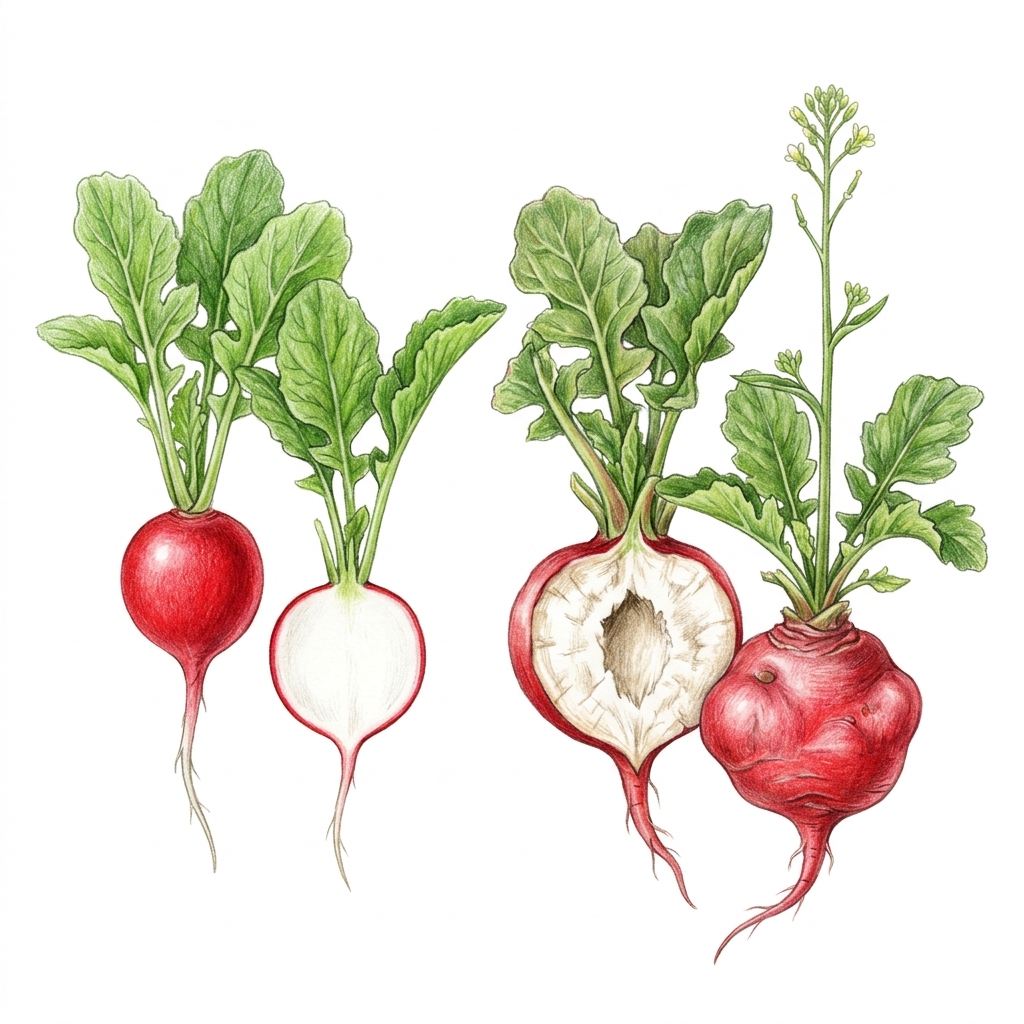
Illustration
Radishes that turn spongy and hot inside, sometimes hollow, because they stayed in the ground too long or grew slowly through heat or dry soil. Pulling them as soon as they're big enough, and sowing small batches in cool weather, prevent it.
How to spot it
- Flesh that is spongy, soft or dry instead of crisp and juicy, sometimes with a hollow centre.
- A hot, strong or bitter taste.
- Mostly in radishes left in the ground past their best, or grown in hot or dry weather.
- Oversized summer radishes can also turn tough and woody.
- Radishes that have run to flower are pithy and strong-tasting.
Easily confused with
Woody roots
Beetroot, turnips and swedes that turn tough and stringy rather than spongy.
Split fruit and roots
Radishes that crack open, often when a big watering or rain follows a dry spell.
Cabbage root fly
Brown tunnels through the root made by small white maggots.
Bolting
A flower stalk shooting up from the middle; the root stops swelling and turns pithy.
Where it's a problem
- Worldwide: Common everywhere, especially in warm weather. Not regulated.
What to do
- Sow in cool weather: spring and autumn in most places, or the cooler, drier months in the tropics.
- Sow short rows every 10–14 days rather than one big sowing, so there are always young ones to pull.
- Thin seedlings early to about 1–2.5 cm (½–1 in) apart: crowded radishes grow slowly.
- Keep the soil evenly moist so they grow fast.
- Check often, and pull salad radishes as soon as they reach about 2.5 cm (1 in) across, usually 3–6 weeks after sowing.
- In summer, grow more heat-tolerant kinds. In late summer, sow winter radishes such as daikon, which stay crisp even when large.
Spraying won't help: pithy roots come from age, heat and slow growth, not an infection. Official guides prevent them with small, regular sowings, steady watering and pulling on time.
Vegetables it affects
Free account, no card needed. You sign up or sign in first, then the scanner opens.
Sources (5, from RHS, University of Illinois Extension, Iowa State University Extension and others)
- RHS: How to grow radishes
- University of Illinois Extension: Radish
- Iowa State University Extension: Radishes with lush foliage but poor roots
- Utah State University Extension: Radishes in the garden
- Clemson Cooperative Extension: Carrot, beet, radish and parsnip
Facts checked Wednesday 28 October 2026. General guidance only: follow your local council, agency and product label.