Home › Plant diseases › Chocolate spot
Plant diseases
Chocolate spot
Botrytis fabae, sometimes with Botrytis cinerea · Fungus
Also called chocolate spot of faba bean (Australia).
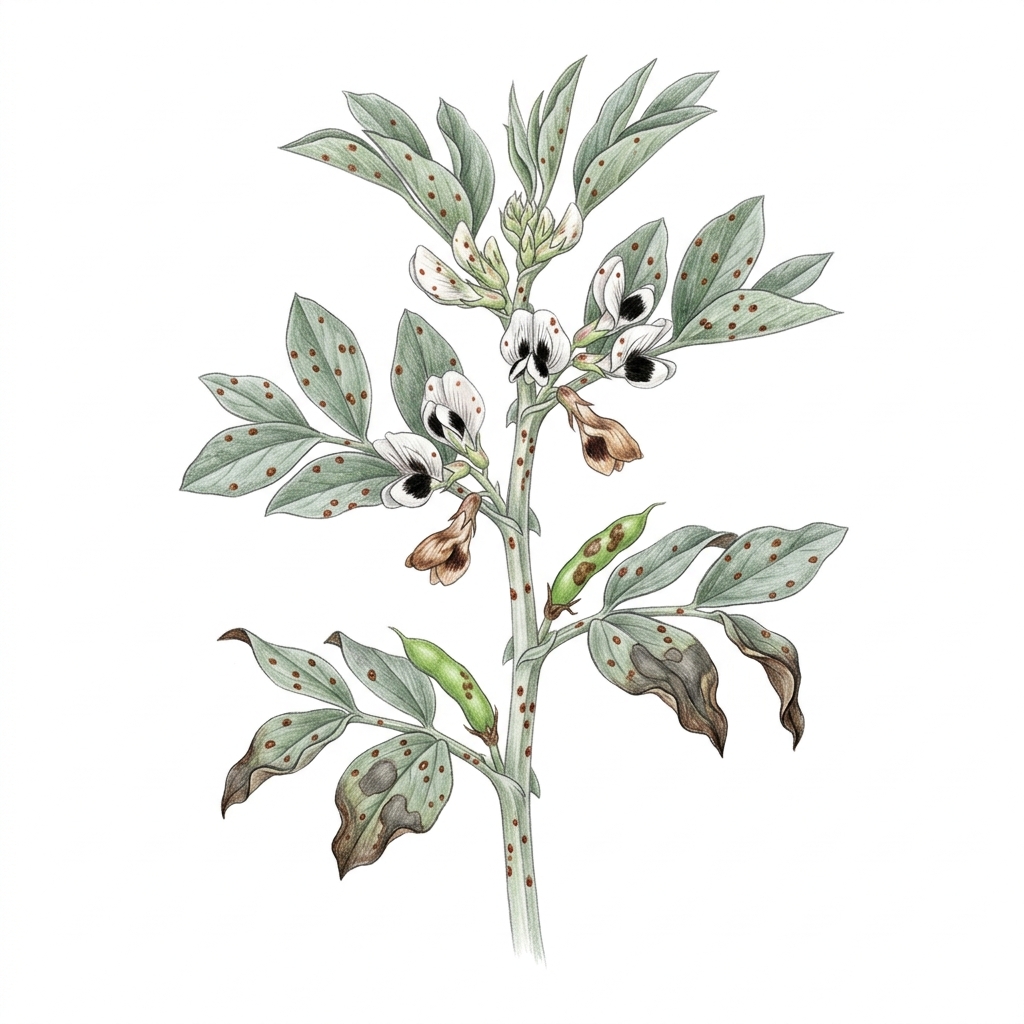
Illustration
A fungus that peppers broad beans with small chocolate-brown spots in damp, humid weather; in a wet spell the spots grow and join until leaves, flowers and stems blacken. Space plants widely in an open spot, sow healthy seed, and clear the old plants away after harvest.
How to spot it
- Small, round, reddish-brown spots peppered over the leaves, stems and flowers.
- In wet weather the spots darken, grow and join into larger grey-brown patches, sometimes with rings, and the leaves shrivel.
- Spotted flowers drop, so fewer pods set; pods can carry spots, or blacken and shrivel.
- In a bad attack the whole plant blackens, and the stems can collapse.
- Worst in crowded plants in damp, humid weather, especially once the plants flower.
Easily confused with
Broad bean rust
Small, dusty dark brown spots, often with a pale yellow halo, that leave brown powder on a white tissue; chocolate spot leaves no powder.
Grey mould
The grey mould fungus can cause almost the same spots on broad beans. Elsewhere it shows as fuzzy grey mould on soft, rotting flowers and fruit.
Red-legged earth mite damage
Silvery patches that turn red-brown, in large, irregular shapes rather than round spots, on the lower leaves of seedlings.
Where it's a problem
- Worldwide: Found where broad beans grow in mild, damp, humid weather, including Europe, Australia and North America. Hot, dry spells slow it down.
- United Kingdom: A common problem on broad beans, from late winter on autumn-sown plants and from mid-spring on spring-sown ones, worst in cool, damp weather.
- Australia: The most serious disease of faba beans on farms in Victoria, South Australia and New South Wales, where it can wipe out a crop.
What to do
- Space plants widely, and grow them in an open spot rather than a damp, sheltered one.
- Sow fresh, healthy seed, and don't save seed from plants that had it.
- Pull out vetch growing nearby, which can carry it.
- At the end of the season, clear away the old plants rather than leaving them on the bed.
- Grow broad beans in a different bed each year, as far as you can from where last year's plants stood: spores blow in from old bean debris.
If you use a fungicide, choose one labelled for chocolate spot and follow the label and local rules. No fungicides are available to UK gardeners for it. On Australian farms, sprays go on early, before the leaves close over.
Follow your local council's guidance for disposing of diseased plant material. Official guides usually advise against putting it in a home compost heap.
Vegetables it affects
Free account, no card needed. You sign up or sign in first, then the scanner opens.
Sources (4, from RHS, Agriculture Victoria, Field Crop Diseases Victoria and North Dakota State University)
- RHS: Broad bean chocolate spot · Broad bean rust
- Agriculture Victoria, Field Crop Diseases Victoria: Chocolate spot of faba bean
- North Dakota State University: Faba bean variety trial and chocolate spot, Langdon
Facts checked Wednesday 28 October 2026. General guidance only: follow your local council, agency and product label.