Home › Plant diseases › Pea bacterial blight
Plant diseases
Pea bacterial blight
Pseudomonas syringae pv. pisi; also Pseudomonas syringae pv. syringae · Bacterium
Also called bacterial blight of field pea (Australia).
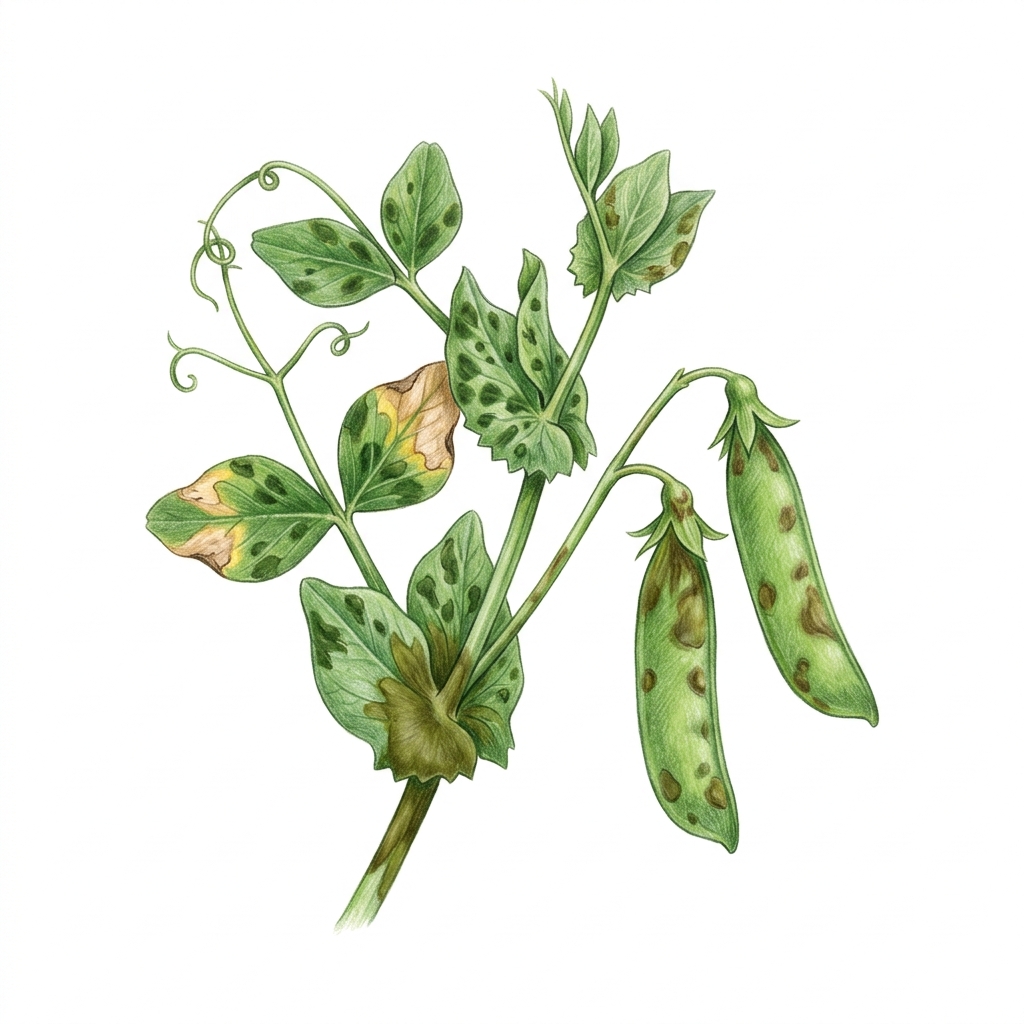
Illustration
A seed-borne bacterial disease of peas that makes dark, water-soaked spots on the leaves, stems and pods, often after frost, hail or strong wind in wet weather. There's no cure, so sow clean seed, don't sow earlier than usual, keep off wet plants and leave at least two years between pea crops in a bed.
How to spot it
- Small, dark green, water-soaked spots on the leaves and on the leafy flaps (stipules) where they join the stem.
- The spots spread, held in by the veins, often into a fan shape, then turn yellowish and finally brown and papery.
- Water-soaked patches on the stem near the ground that darken to olive-green or dark brown. They can spread up into the leafy flaps and leaves, and girdle and kill the stem.
- Sunken, olive-brown spots on the pods.
- Worst after frost, hail or wind has damaged the plants, and in wet weather.
Easily confused with
Ascochyta blight (blackspot)
Purplish-black streaks on the lower stem and dark brown spots, some large and round; the spots aren't water-soaked and don't fan out from the stem.
Downy mildew
Yellow patches on top of the leaf with grey-purple fuzz underneath, and no water-soaked spots on the stems.
Cold damage
Frost alone damages the plant once and doesn't spread. With bacterial blight, water-soaked spots appear in the days after a frost and keep spreading in wet weather.
Where it's a problem
- Worldwide: Recorded in most pea-growing regions, including Australia, New Zealand, the United Kingdom, Europe, the USA and Canada.
- Australia: Widespread in Victoria and southern New South Wales, where repeated frosts can set off serious outbreaks in field peas.
- North America: Mostly a problem in very wet springs and where sprinklers are used.
What to do
- Sow fresh, bought seed, and never save seed from plants that had blight.
- Don't sow earlier than usual for your area: early-sown peas are hit harder. Agriculture Victoria also advises avoiding frost-prone ground, as frost-damaged plants are more easily infected.
- Grow peas in the same bed no more than one year in three, or one year in four after an outbreak.
- Water at the base rather than with sprinklers.
- Keep out of the patch while the plants are wet, and wash boots and tools after working among affected plants.
- After harvest, pull out the old plants rather than leaving them on the bed: the bacteria survive in old pea straw.
No spray cures it. Fungicides don't work on bacteria, and Agriculture Victoria says the evidence for the sprays registered against it is limited and inconclusive: clean seed, sowing time and rotation matter more.
Follow your local council's guidance for disposing of diseased plant material. Official guides usually advise against putting it in a home compost heap.
Vegetables it affects
Free account, no card needed. You sign up or sign in first, then the scanner opens.
Sources (5, from Agriculture Victoria, Field Crop Diseases Victoria, Pacific Northwest Plant Disease Management Handbook, EPPO Global Database and others)
- Agriculture Victoria, Field Crop Diseases Victoria: Bacterial blight of field pea · Ascochyta blight of field pea
- Pacific Northwest Plant Disease Management Handbook: Pea bacterial blight
- EPPO Global Database: Pseudomonas syringae pv. pisi distribution
- University of Minnesota Extension: Peas, spots on leaves
Facts checked Wednesday 28 October 2026. General guidance only: follow your local council, agency and product label.