Home › Garden pests › Pea moth
Garden pests
Pea moth
Cydia nigricana · Insect
Illustration
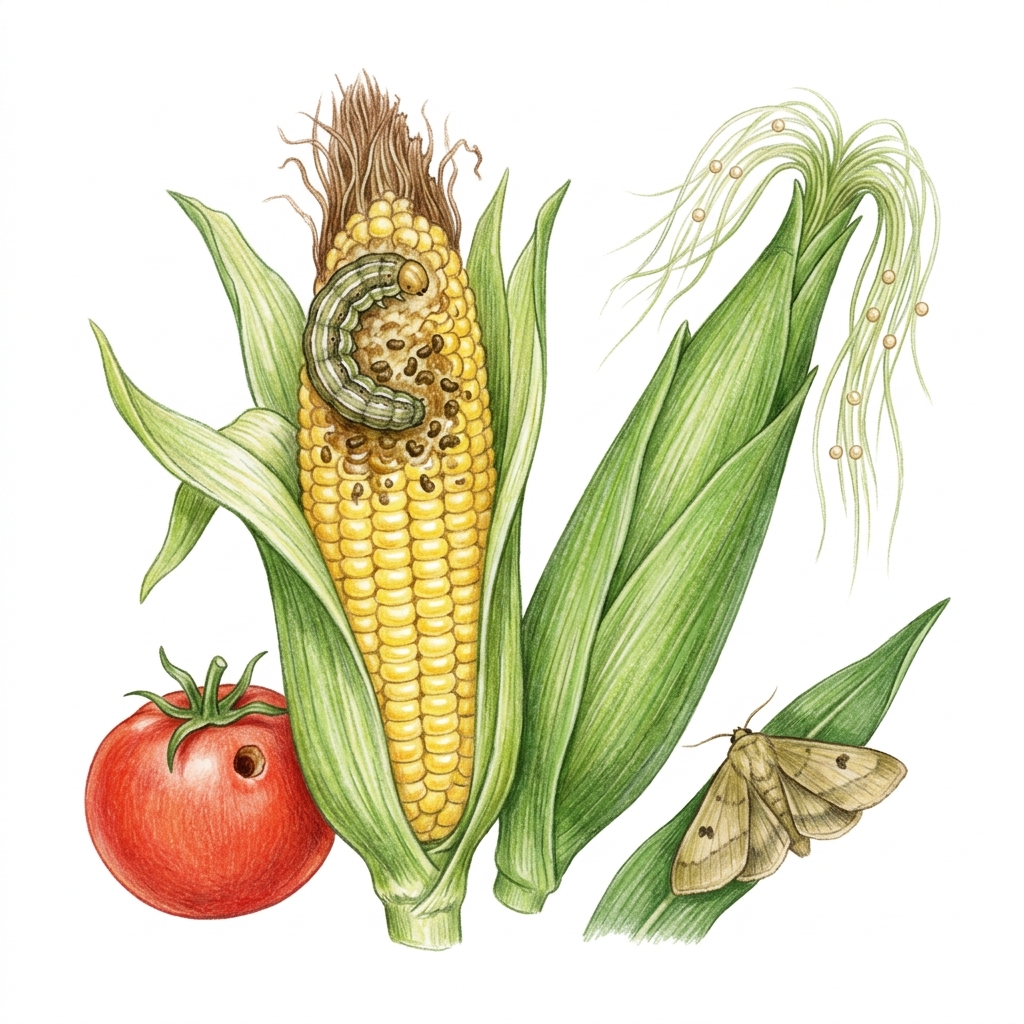
A small grey-brown moth whose caterpillars feed hidden inside pea pods, eating the peas and leaving droppings, so the damage is often only found at shelling. Grow peas under fine mesh or fleece while they flower, or sow early or late so they flower outside the moths' summer flight.
How to spot it
- Peas partly eaten inside the pod, with small piles of caterpillar droppings (frass) beside them, usually found only when you shell them.
- Creamy-white to pale yellow caterpillars with a darker head and rows of small dark dots, up to about 14 mm (½ in) long, inside the pod.
- Rarely more than one or two caterpillars in a pod, but each can damage several peas.
- Pods that turn yellow and ripen early.
- The adult: a small grey-brown moth about 15 mm (⅝ in) across the wings, around flowering peas in early to mid-summer.
Easily confused with
Pea weevil
A small beetle grub develops inside a single pea, and the adult chews its way out through a round hole about 2.5 mm (1/10 in) across. Pea moth caterpillars move between peas in the green pod, leaving droppings.
Corn earworm and native budworm
Caterpillars that feed on leaves, buds and flowers as well as pods; pea moth caterpillars stay hidden inside the pod.
Where it's a problem
- United Kingdom: Moths fly in June and July and lay eggs on flowering peas. Caterpillars feed in the pods from late June to August, then leave to spend the winter in a cocoon in the soil, about 10 cm (4 in) down. There is one generation a year.
- North America: Also found in North America: the Pacific Northwest's insect management handbook lists it as a pest of green and dry peas.
- Australia: Our sources record it in Europe and North America, not in Australia. Caterpillars found in pea pods there are more likely to be Helicoverpa (corn earworm or native budworm), which feed on the pods of many pulse crops.
What to do
- If pea moth was a problem last year, plan before you sow.
- Grow peas under fine insect mesh or fleece through flowering, to stop the moths laying eggs. Peas pollinate themselves, so covering them doesn't cost any crop.
- Sow quick-maturing kinds early or late, so they flower outside the moths' egg-laying time (June and July in the UK).
- Grow mangetout and other peas eaten as pods before the seeds swell; they escape the damage.
- Dig over the ground after harvest, where caterpillars spend the winter, and clear wild vetches and weeds nearby.
- Shell pods carefully, so damaged peas and droppings don't spoil the rest.
If you use an insecticide, choose one labelled for pea moth and follow the label and local rules.
Vegetables it affects
Free account, no card needed. You sign up or sign in first, then the scanner opens.
Sources (5, from RHS, AHDB, PNW Insect Management Handbook and others)
- RHS: Pea moth
- AHDB: Biology and management of the pea moth
- PNW Insect Management Handbook: Pea, green and dry, pea moth
- Canadian Grain Commission: Pea weevil
- Business Queensland: Helicoverpa
Facts checked Wednesday 28 October 2026. General guidance only: follow your local council, agency and product label.