Home › Weed guide › Wild violet
Weed guide
Wild violet
Viola sororia and Viola odorata · Violet family (Violaceae)
Also called common blue violet (USA), sweet or English violet (UK, Australia and New Zealand).
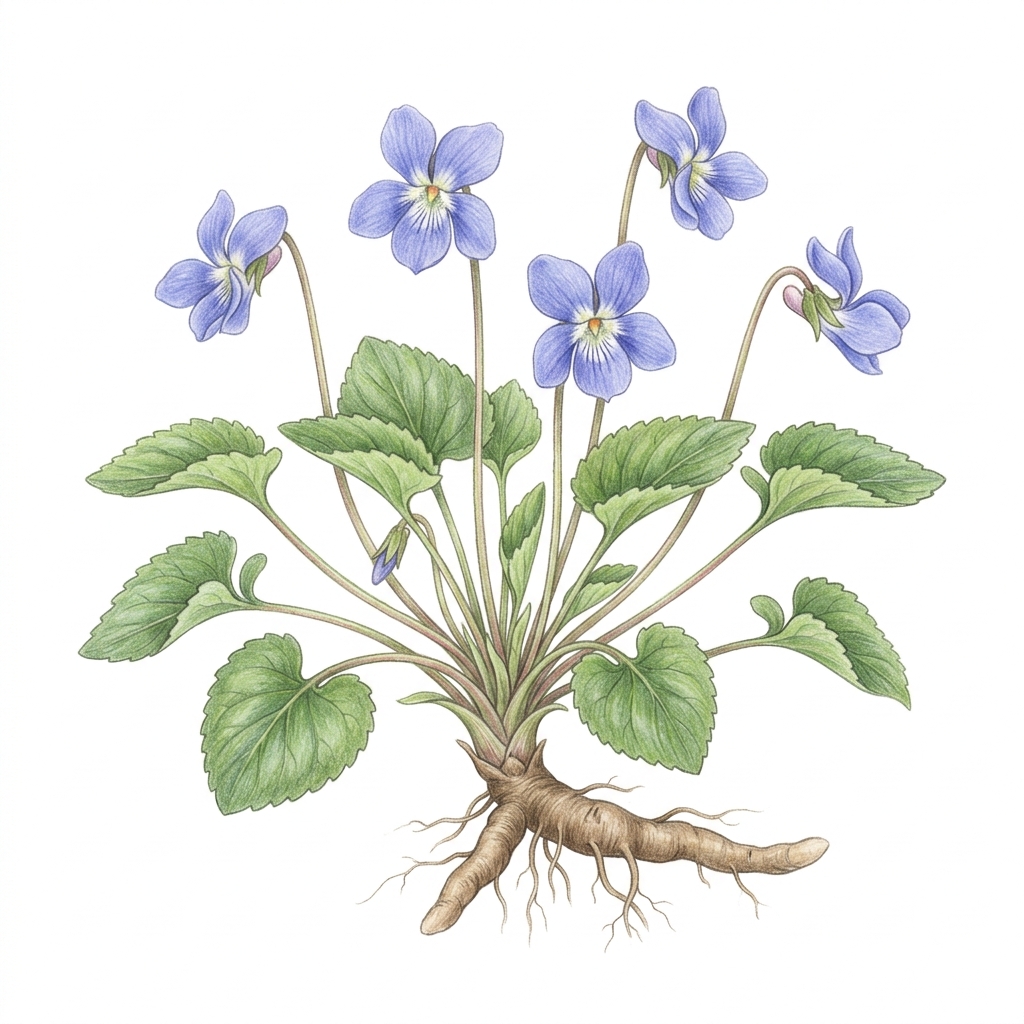
Illustration
Pretty purple flowers in spring, but in a shady lawn wild violets spread into dense patches that are hard to shift. Dig out the thick roots, and decide first whether you'd rather keep them.
How to spot it
- A low rosette of heart-shaped leaves with rounded teeth, on long stalks.
- Five-petalled blue-violet or white flowers, each on its own stalk, with a short spur on the lower petal and white hairs at the base of the two side petals.
- Thick, finger-sized underground stems.
- Sweet violet has fragrant flowers and also spreads by leafy runners on the surface.
- It loves shade and moist soil.
Easily confused with
Creeping Charlie
Square stems with pairs of leaves along creeping stems, and a strong smell when crushed.
Native violet (Viola hederacea, Australia)
Small kidney-shaped leaves and two-tone mauve-and-white flowers with no spur. It's a native: leave it be.
Where it's a problem
- North America: Native and common in shady, moist lawns; it's even the Illinois state wildflower.
- UK and Europe: Sweet violet is native, and the RHS lists violets among flowers for lawns.
- Australia: Sweet violet is a common environmental weed in Victoria and South Australia.
- New Zealand: Sweet violet is naturalised.
What to do
- Decide first: violet leaves feed fritillary butterfly caterpillars, and many gardeners keep them.
- Dig them out, taking all the roots and underground stems, or they grow back. Digging is usually the most effective option in beds.
- Pulling by hand rarely works unless the roots come out too.
- A thicker lawn slows them down, though it won't clear an established patch.
If you use a herbicide, choose one labelled for wild violet and follow the label and local rules. Their thick, waxy leaves make them hard to kill, and two treatments a few weeks apart in spring or autumn may be needed.
Follow your local council's guidance for disposing of weeds. Councils usually advise against putting weeds like this in the green waste / vegetation bin or the compost.
Free account, no card needed. You sign up or sign in first, then the scanner opens.
Sources
- Penn State Extension: Wild violet
- Purdue University Turf Science: Wild violets
- University of Illinois Extension: Managing violets
- Iowa State University Extension: Managing violets
- Weeds of Australia (Queensland Government): Sweet violet
- VicFlora, Royal Botanic Gardens Victoria
- NZ Plant Conservation Network: Viola odorata
Facts checked Sunday 27 September 2026. General guidance only: follow your local council, agency and product label.