Daily gardening tip · Northern hemisphere · Friday 28 August 2026 · late summer
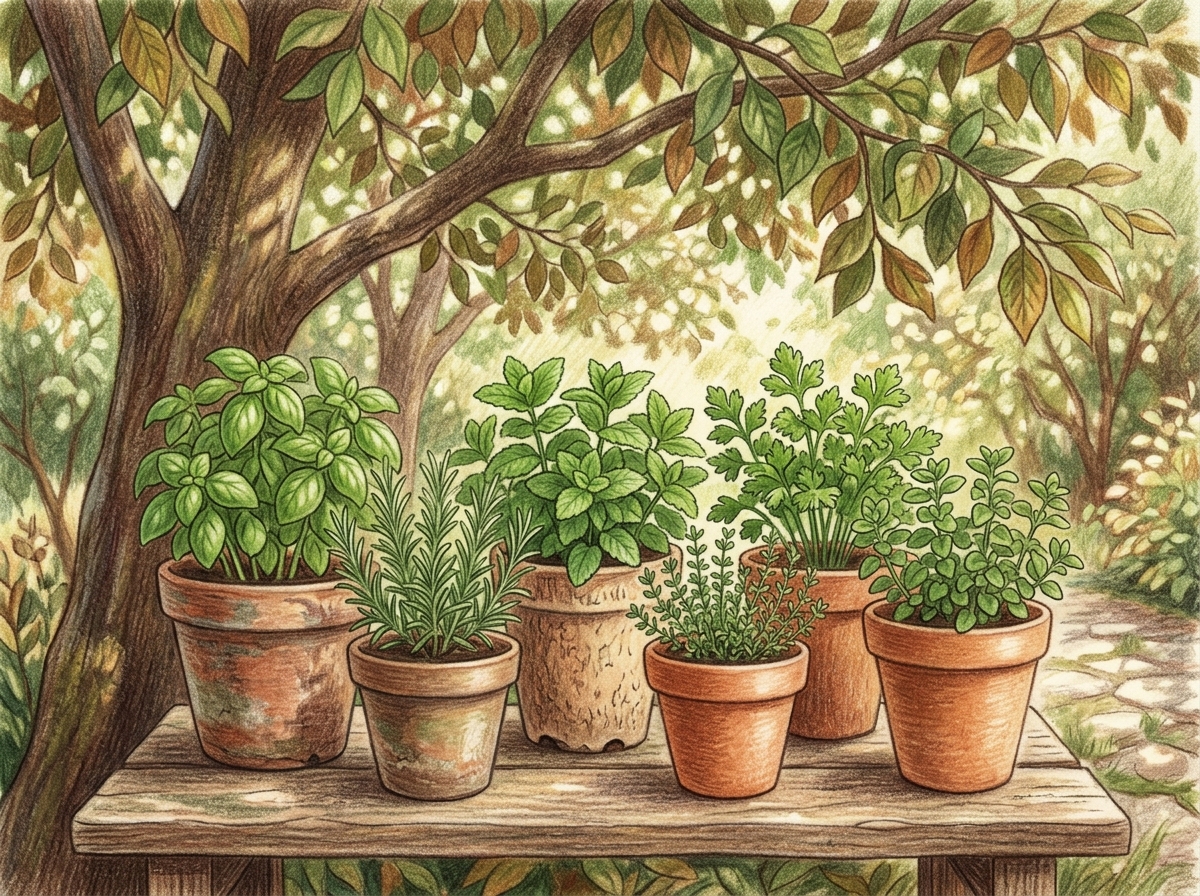
Move Potted Plants to Shade
Late-summer heat spikes can quickly scorch the leaves of your delicate potted plants.
5 minuteseasyheat protection
Identify potted plants with thin leaves or shallow roots, such as herbs and young seedlings, that are sitting in direct sun.
Group these vulnerable pots together to make watering easier and keep the air around them slightly more humid.
Move the group of pots to a shady location, such as under a tall shrub, on a covered patio, or behind a garden wall.
Leave them in this temporary shade until the extreme heat spike passes, then move them back to their usual spots.
Why it works
Plants in pots have a limited amount of soil, which means their roots heat up and dry out much faster than those in the ground. Shifting them into the shade reduces evaporation from the soil and lowers leaf temperature, which stops the foliage from burning.
Gardening news
Gardening news
Horticultural skills and education under the spotlight at CIH summit
Gardening professionals, teachers, and employers are meeting at the Royal Botanic Gardens, Kew, to discuss how to train and prepare future workers for the industry.
Abandoned farmland transforms naturally into a species-rich wildflower meadow
Researchers tracked an unused farm field over eleven years to see how plant life recovered without human planting. The land naturally doubled in plant variety and produced thousands of wild orchids. The study shows that giving land time to heal on its own can restore plant diversity without expensive commercial seeds.
Botanist Charles Christopher Parry was born in Gloucestershire, England
On 28 August 1823, British-American botanist Charles Christopher Parry was born. He collected extensively across the western United States and named many native species, including the Torrey pine and Engelmann spruce. Several wild plants and a Colorado mountain peak now bear his name in honor of his discoveries.