Soil
Soil testing
Also called soil analysis (UK), feel or ribbon test (the squeeze test), percolation test (the drainage hole test).
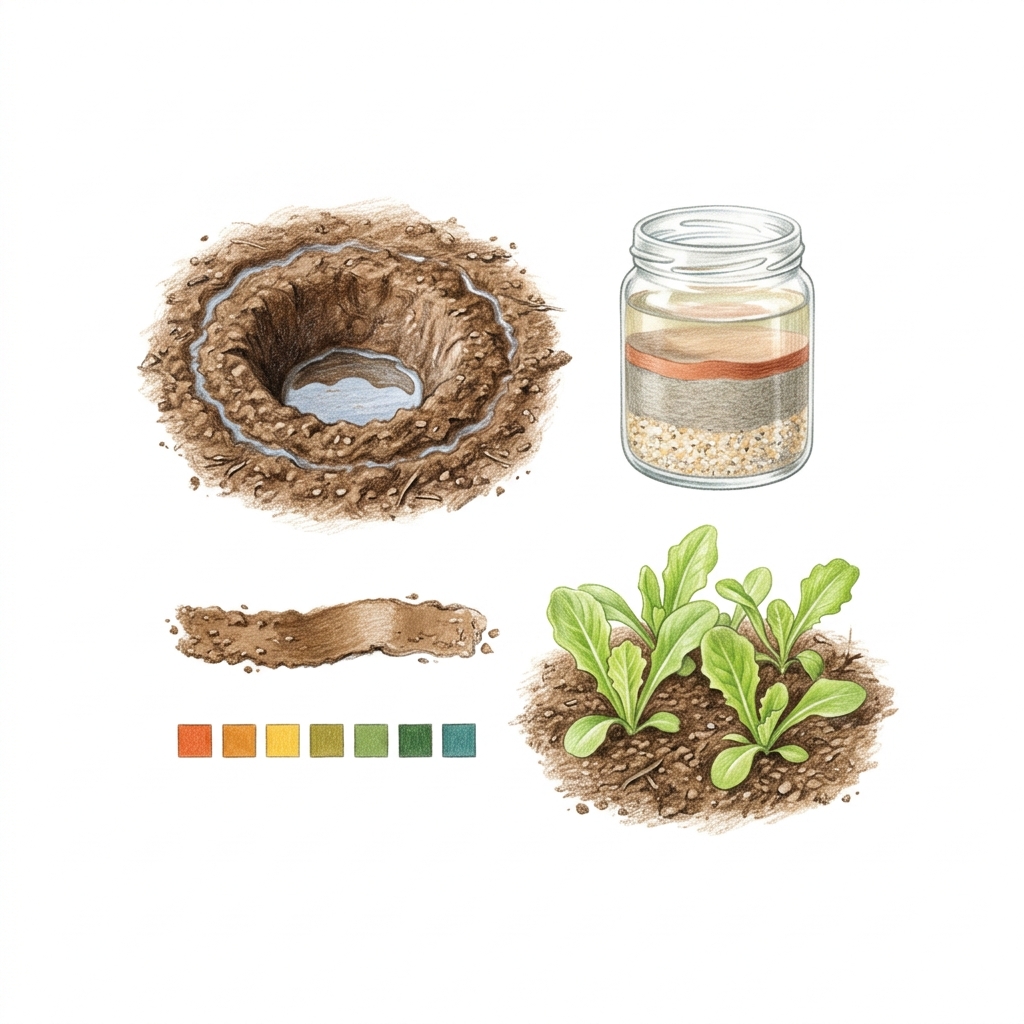
Illustration
Simple home tests show your soil's texture, drainage and rough pH. For accurate pH and nutrients, with advice to match, send a sample to a lab. Lead isn't part of a routine test, so ask for it before growing food in an older city garden.
Tests you can do at home
- Squeeze test: knead a moist pinch. Sand feels gritty, silt smooth and clay sticky. Then push it out between thumb and finger into a ribbon: one longer than about 5 cm before it breaks means clayey soil, and one under 2.5 cm means a lighter soil.
- Jar test: shake soil hard with water and a little dishwasher powder in a tall, clear jar, then leave it still. Sand settles in a minute, silt in about two hours, and clay only when the water clears, often 1 to 3 days. Compare the depths of the layers.
- Drainage test: dig a hole at least 30 cm deep, fill it with water and let it drain, then refill it and measure the drop after 15 minutes. Times four gives the drop per hour. About 2.5 to 7.5 cm (1 to 3 in) an hour suits most plants; less than 2.5 cm is poor drainage.
- pH test kit: cheap, easy and a good guide, but only a ballpark figure. A kit may show 'between 7 and 8', and that gap matters to some plants.
- Vinegar test: if soil fizzes in vinegar, it contains free chalk or limestone.
What a soil test won't tell you
Soil pH
A pH test measures acidity only. A full soil test also covers nutrients, organic matter and salts.
A test for lead
A routine garden test doesn't include lead or other heavy metals. They're separate tests you ask the lab for.
Diagnosing a sick plant
A soil test won't show overwatering, poor drainage, compaction, pests, diseases or too much shade.
By region
- Australia: NSW EPA advises testing for lead first if you live near a current or former lead source, such as a mine, smelter or major road, or have lead paint on or around your home. Houses built before 1970 may have lead paint.
- Victoria: EPA Victoria's GardenSafe program screens soil from Victorian gardens for lead, arsenic and other trace elements, free apart from postage.
- United Kingdom: The RHS runs a soil analysis service with a full written report. Lab tests also pick up free chalk or limestone.
- North America: Choose a local lab that knows your region's soils. Home kits can be especially unreliable on the alkaline soils of the American West.
Getting a lab test
- Test before making a new garden, vegetable plot or fruit planting, or when growth is poor or leaves yellow. Wait three months after adding lime, fertiliser or organic matter, or the result may mislead.
- Take one mixed sample per area: five or more small scoops from spots across a bed (10 to 15 for bigger areas), mixed in a clean plastic bucket. Sample the lawn, vegetable beds and borders separately, and dig to the depth the lab asks for.
- A routine test usually covers pH, lime, organic matter, salts and the main nutrients, often with an estimate of texture. Lead and other heavy metals are extra tests, so ask for them.
- Tell the lab what you grow so its advice fits, and use the same lab each time so results compare.
- Retest every few years, or after big changes such as lots of manure or compost. Where acid soils are limed often, a yearly test may be needed.
- If lead turns up where you grow food, grow vegetables in pots or raised beds of certified clean soil, cover bare soil with mulch or grass, and ask your local environment agency for advice. NSW EPA suggests beds at least 30 cm tall, lined with mesh at the bottom.
Best used for
- Planning a new garden, vegetable plot or fruit planting
- Working out why growth is poor or leaves are yellowing
- Knowing whether lime or sulphur is needed, before adding either
- Checking older city garden soil for lead before growing food
- Setting a baseline and tracking changes over the years
Take care: Lead is a real risk in some city gardens, from old lead paint and past leaded petrol, and near major roads, mines or smelters. It's most harmful to pregnant women, babies and children. Wear gloves, wash your hands after gardening and vegetables before eating, and see your doctor if you think your family has been exposed.
Free account, no card needed. You sign up or sign in first, then the scanner opens.
Sources
- RHS: Soil: understanding pH and testing soil
- Colorado State University Extension: Estimating soil texture: sandy, loamy, or clayey
- Iowa State University Extension: Testing and improving soil drainage
- Colorado State University Extension: CMG GardenNotes #221, Soil tests
- NSW EPA: Lead: gardening and home renovations
- EPA Victoria: GardenSafe
- US EPA: Growing gardens in urban soils
Facts checked Sunday 27 September 2026. General guidance only: follow your local council, agency and product label.