Soil
Peaty soil
Also called muck (North America, alongside peat), organic soil (soil scientists).
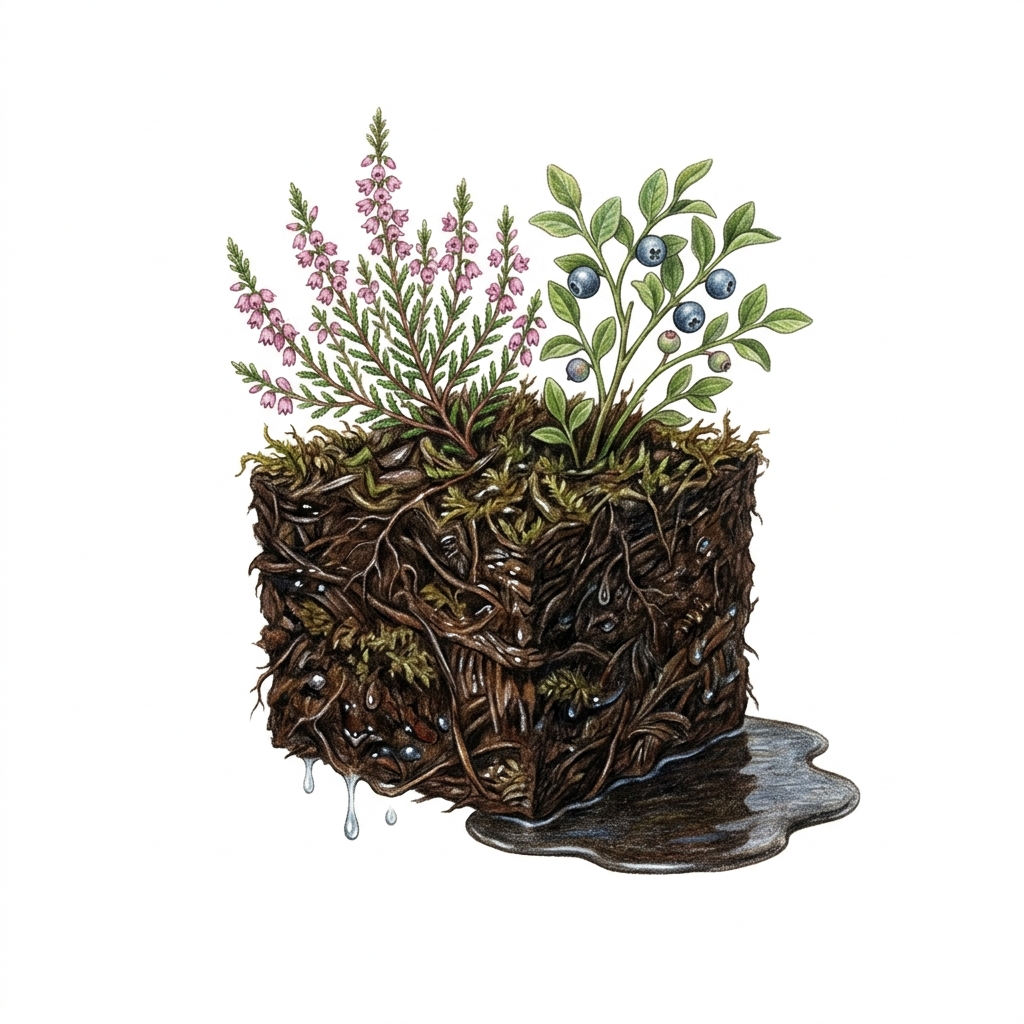
Illustration
Spongy, acid and very wetShrinks and wastes away once drained
Peaty soil is made mostly of part-rotted plant remains. It's light and spongy, holds lots of water and is usually very acid. It's rare in gardens. Where you have it, test the pH, don't over-drain it, and grow plants that like moist, acid soil.
How to tell
- Light and spongy, made mostly of plant remains. In less-rotted peat you can still see plant fibres.
- Holds a great deal of water, up to 20 times its own weight, like a sponge.
- Soft underfoot, and usually in low, wet ground such as fens and bogs.
- A pH test kit usually shows it's strongly acid.
- Once drained, it shrinks as it dries, and dry peat can blow away.
Easily confused with
Garden soil rich in compost
Crumbly and full of organic matter, but still mostly sand, silt or clay. Peat is mainly plant remains.
Waterlogged soil
Any soil can sit wet. Peat stays light and spongy even when drained, because it's mostly plant remains.
Where it's common
- England: The Fens were drained for farming, and their peat keeps shrinking. At Holme Fen, over four metres has been lost since 1851, and it still drops about 9 mm a year.
- United Kingdom: In 2022 the Government announced plans to end sales of peat compost to gardeners in England. The RHS is calling on the Government to bring in that law, and says at least 80% of UK peatlands are damaged.
- New Zealand: Organic (peat) soils cover about 1% of the country, in wetlands and under acid forest litter in high-rainfall areas.
- North America: In Ontario, drained peat and muck soils are used widely for vegetables, but the ground sinks permanently over time as the peat breaks down, shrinks and erodes.
How to improve it
- Test the pH first. Peat is usually strongly acid; lime only if a test shows your plants need it, and not where you grow acid-lovers.
- Don't over-drain it. Drained peat dries out, shrinks and slowly disappears, so keep it as moist as your plants allow.
- Keep the surface covered and moist. Mulch, winter cover crops or windbreaks stop dry peat blowing away.
- Have nutrients tested and feed to the results; shortages are common in peat.
- Work with it: choose plants that like moist, acid soil.
Plants that do well
- Rhododendrons and camellias
- Heathers
- Blueberries
- Onions, carrots and parsnips, on drained peat
- Lettuce and celery, on drained peat
- Potatoes, cabbage and cauliflower, on drained peat
Free account, no card needed. You sign up or sign in first, then the scanner opens.
Sources
- RHS: Soil types explained
- RHS: Peat-free information for gardeners
- RHS: Acidifying soil
- GOV.UK: Sale of horticultural peat to be banned in move to protect England's precious peatlands
- Natural England: Holme Fen National Nature Reserve peatland restoration project
- Ontario Ministry of Agriculture: Management of organic soils
- Manaaki Whenua Landcare Research: Organic soils
Facts checked Sunday 27 September 2026. General guidance only: follow your local council, agency and product label.