Home › Plant diseases › Bitter fruit
Plant diseases
Bitter fruit
Also called bitter cucumbers (widely).
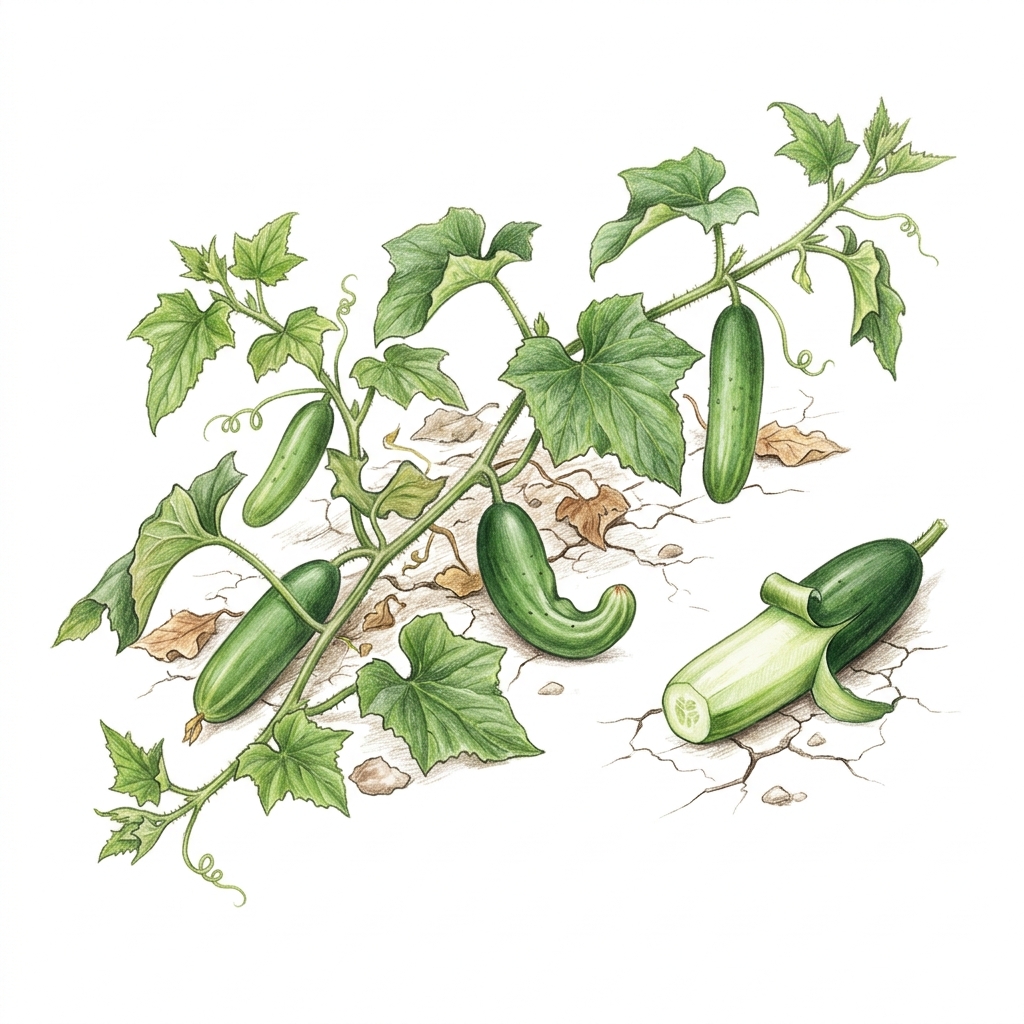
Illustration
Cucumbers that taste bitter, because natural bitter compounds (cucurbitacins) move into the fruit when the plant is stressed by heat, dry soil or uneven watering. Deep, steady watering, mulch and bitter-free kinds prevent it, and fruit that is still bitter after peeling should not be eaten.
How to spot it
- Fruit that looks normal but tastes bitter.
- The bitterness is strongest at the stalk end and just under the skin.
- Often after a hot spell, a dry spell, uneven watering, or days and nights swinging between hot and cool.
- Misshapen fruit are more likely to be bitter.
- Mild bitterness from stress usually shows on all the plants in a bed, as they faced the same weather.
- Intense bitterness in one plant, often grown from saved seed or a self-sown seedling, comes from its genes and won't improve.
Easily confused with
Poor fruit set
Fruit that are thin or misshapen at the flower end, or shrivel while small, from poor pollination; the shape is the problem, and most still taste normal.
Mosaic virus
Fruit with bumps, warts or blotchy colour, usually with mottled, crinkled leaves.
Where it's a problem
- Worldwide: Common in hot, dry summers wherever cucumbers grow. Not regulated.
What to do
- Water deeply and regularly, about 25–40 mm (1–1½ in) a week including rain, and more in hot spells, so the soil doesn't swing from wet to dry.
- Mulch around the plants and keep weeds down, to hold moisture in the soil.
- Feed and lime only as a soil test shows: low fertility and acidic soil add to the stress, and too much nitrogen may raise bitterness.
- Check for pests and diseases and deal with them early: they stress the plant too.
- Grow kinds sold as burpless or bitter-free.
- Buy seed from a reputable source. Don't sow seed saved from cucumbers, zucchini or squash that could have crossed with other kinds, and be wary of self-sown seedlings.
- For a cucumber that is only mildly bitter, cut off the stalk end and peel it; if it still tastes bitter, throw it away. Later fruit often taste normal once growing conditions improve.
Spraying won't help: bitterness comes from the plant's own compounds, brought on by stress or by its genes, not from an infection. Official guides prevent it with steady watering, mulch and bitter-free kinds.
Vegetables it affects
Take care: Don't eat a cucumber that is still bitter after peeling, or a zucchini or other squash that tastes bitter at all: spit out the first bite and throw the fruit away. A few grams of a very bitter fruit can cause severe stomach cramps and diarrhoea.
Free account, no card needed. You sign up or sign in first, then the scanner opens.
Sources (5, from Alabama Cooperative Extension System, Purdue University, Oregon State University Extension and others)
- Alabama Cooperative Extension System: Bitter cukes
- Purdue University: Cucumbers bitter during hot, dry weather
- Oregon State University Extension: Are volunteer squash toxic?
- Pacific Northwest Plant Disease Management Handbook: Toxic cucumber
- University of Washington, Elisabeth C. Miller Library: Bitter cucumbers
Facts checked Wednesday 28 October 2026. General guidance only: follow your local council, agency and product label.