Home › Garden pests › Codling moth
Garden pests
Codling moth
Cydia pomonella · Insect
Illustration
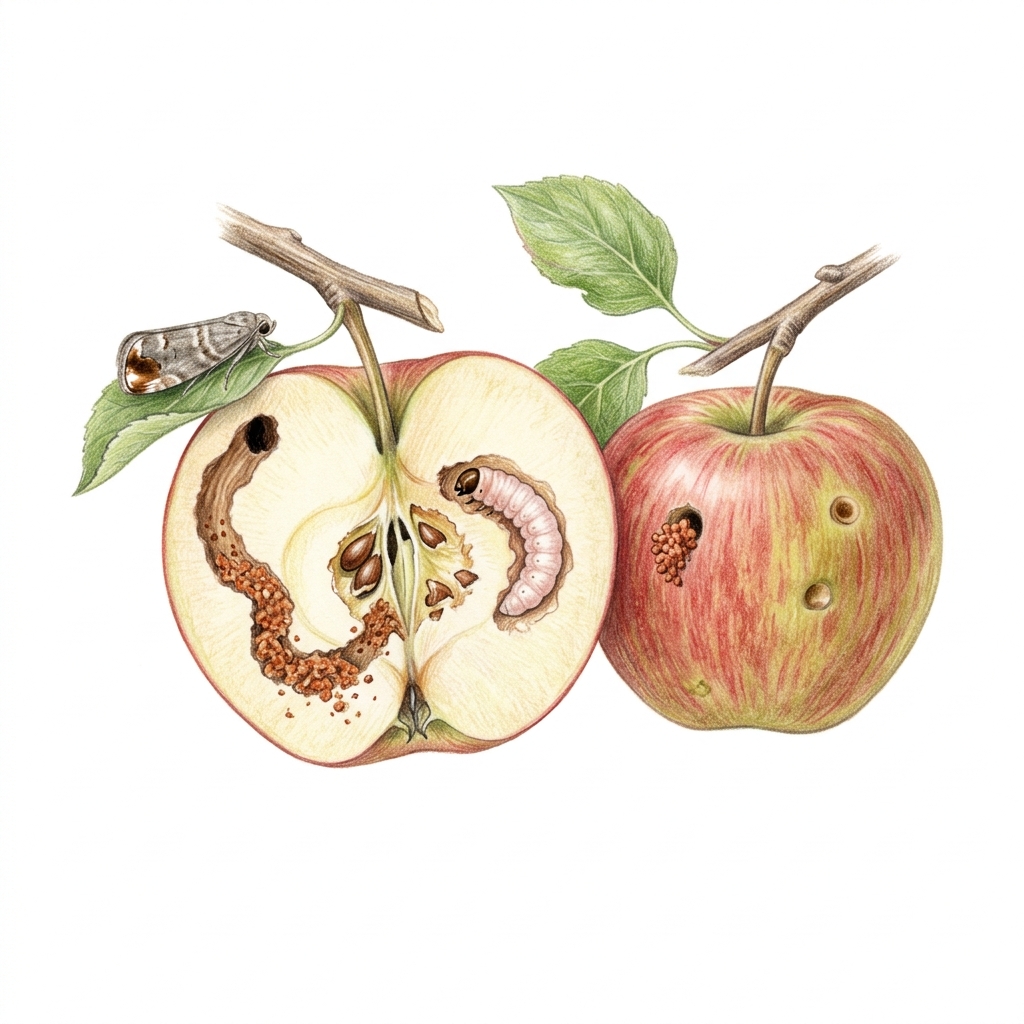
The 'worm' in your apple: a pinkish-white caterpillar with a brown head that tunnels to the core of apples and pears, leaving reddish-brown droppings at the hole. Western Australia is free of it, and anyone who finds it there must report it.
How to spot it
- A hole in the side or at the eye end of the fruit, plugged with reddish-brown, crumbly droppings (frass).
- Inside, a tunnel to the core, with the seeds eaten and more droppings.
- A white to light pink caterpillar, 15–19 mm long when grown, with a dark brown head.
- Small shallow pits ('stings') on the skin.
- Fruit that ripens and drops early.
Easily confused with
Apple sawfly
Leaves a ribbon-like scar on the skin, and its larvae leave the fruit earlier in summer.
Fruit fly
White, carrot-shaped maggots about 7 mm long, not a caterpillar with a dark brown head; the fruit rots quickly around small sting marks.
Where it's a problem
- Western Australia: Not known to occur and a declared pest: anyone who finds or suspects it must report it to DPIRD (MyPestGuide Reporter, or PaDIS on (08) 9368 3080). Caterpillars can arrive in apples carried in luggage and vehicles, so check the rules before bringing fruit in.
- Worldwide: Described as the most serious pest of apples and pears worldwide.
- United Kingdom: A common garden pest. Moths lay eggs on or near young fruit from June to mid-July, and each caterpillar feeds inside for about four weeks.
- North America: Two to four generations a year in California and two to three in Utah.
What to do
- Thin fruit to one per cluster.
- Bag young, undamaged fruit about 4–6 weeks after petal fall, when it's about 1.5–2 cm across; bagging protects fruit even in bad years.
- From about six weeks after flowering, check trees every week or two: pick off infested fruit, pick up dropped fruit as soon as it falls, and destroy both.
- Wrap corrugated cardboard or hessian bands around the trunk to trap caterpillars on the move, and destroy what you catch.
- Keep trees small enough to reach, and use pheromone traps to tell when moths are flying. They catch only males, so treat them as a warning, not a cure.
- Encourage birds, wasps and ground beetles, which eat the caterpillars.
In Western Australia, report it rather than treating it. Elsewhere, if you use an insecticide, choose one labelled for codling moth and follow the label and local rules; some are toxic to bees, so sources say never to spray plants in flower.
Free account, no card needed. You sign up or sign in first, then the scanner opens.
Sources
- WA DPIRD: Codling moth
- RHS: Codling moth
- University of California IPM: Codling moth
- Utah State University Extension: Codling moth in Utah orchards
- Washington State University Hortsense: Apple, codling moth
Facts checked Sunday 27 September 2026. General guidance only: follow your local council, agency and product label.