Daily gardening tip · Southern hemisphere · Monday 28 September 2026 · early spring
Check Indoor Plants for Crowded Roots
As indoor plants begin active spring growth, checking their roots now tells you if they have outgrown their pots.
5 minuteseasyindoor plants
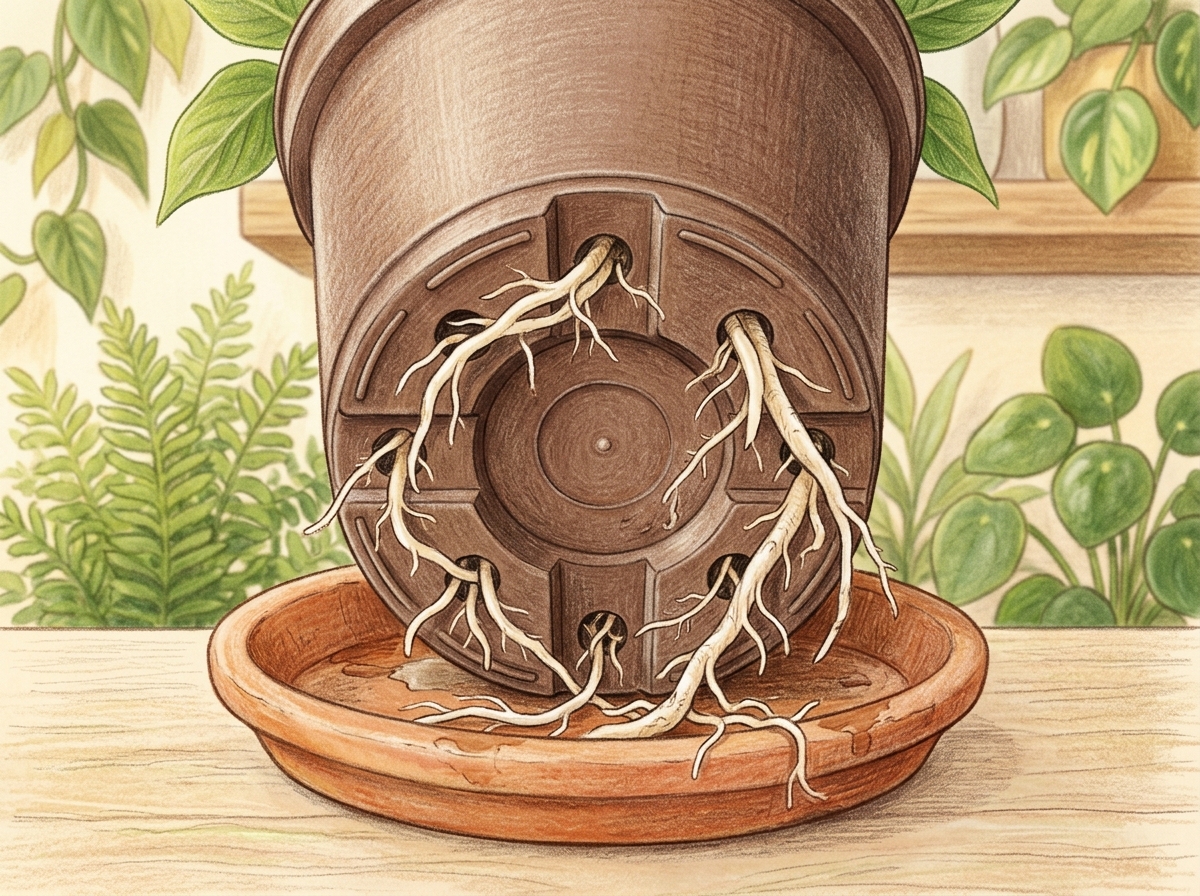
Pick up your indoor plant pot and look closely at the drainage holes at the bottom.
Look for thick roots or a dense tangle of roots growing out of the holes.
Gently squeeze the sides of plastic pots to loosen the soil if you cannot see any roots but suspect the plant is crowded.
Support the base of the plant stem with one hand and slide the root ball out of the pot.
Inspect the outside of the soil ball for roots that are wrapping tightly around the edge.
Place the plant back in its pot and plan to repot it into a slightly larger container if the roots are tightly bound.
Why it works
When a plant becomes root-bound, its roots wrap tightly around the inside of the pot instead of growing outward. This leaves very little soil to hold water and nutrients, which eventually stunts the plant's growth and causes leaves to yellow.
Fungi could help plants grow in extraterrestrial soil
Research shows that soil fungi can help plants absorb nutrients in harsh environments like lunar and Martian soil. These beneficial microbes improve soil structure and protect roots from environmental stress. This discovery may help future space missions produce fresh food crops.
Plant ecologist Pierre Dansereau passed away in 2011
Canadian botanist Pierre Dansereau died on 28 September 2011. He pioneered the study of forest dynamics and helped establish the Montreal Botanical Garden. His work helped shape modern ecology and plant conservation.