Daily gardening tip · Southern hemisphere · Tuesday 25 August 2026 · late winter
Creating a winter shelter pile for beneficial bugs
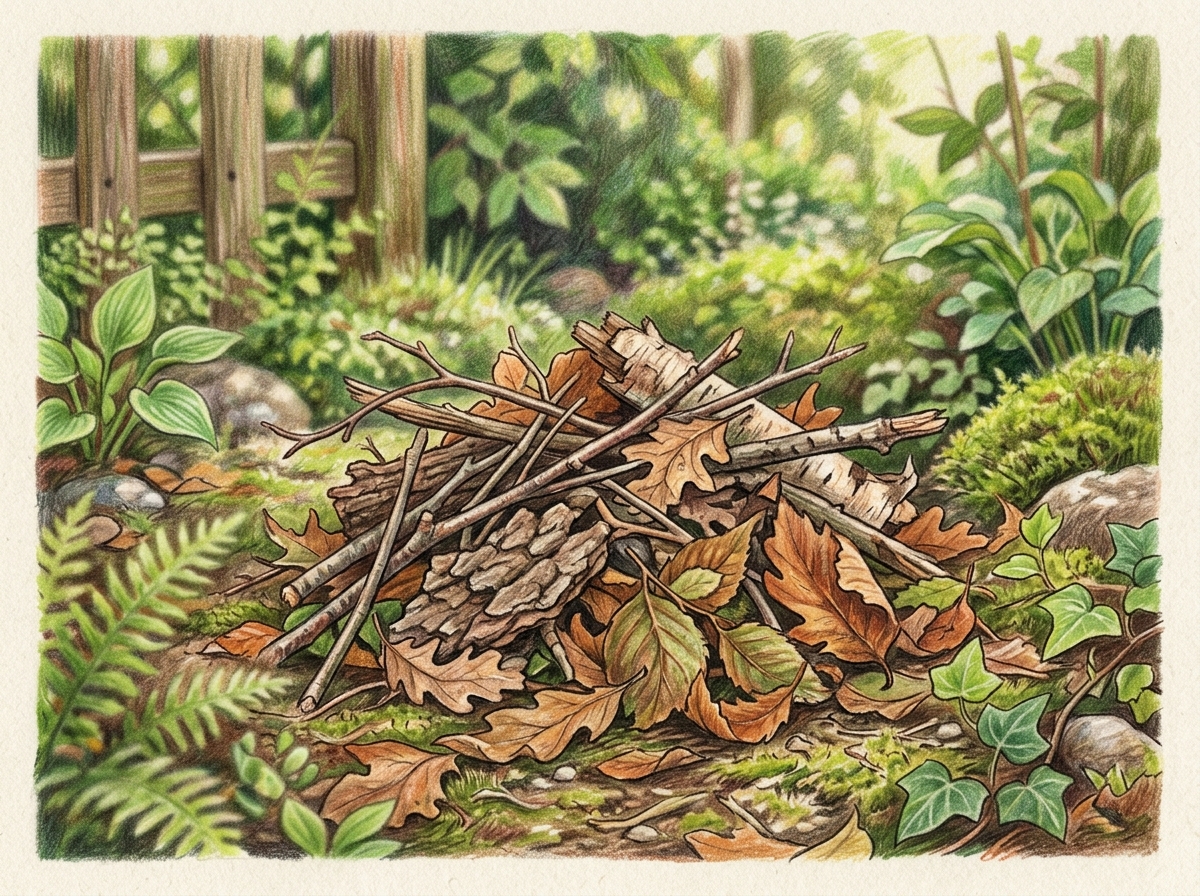
Leaving a small, deliberate pile of garden debris gives helpful insects a safe place to shelter from the remaining winter cold.
15 minuteseasywildlife
Choose a quiet, out-of-the-way corner of your garden that will not be disturbed.
Gather small fallen branches, twigs, and bark from your lawn or paths.
Pile the twigs loosely in your chosen spot to create small cavities and hollows.
Scatter a loose layer of dry leaves over the top of the pile for insulation.
Leave the pile untouched until spring is well underway and the weather warms up.
Why it works
Beneficial insects like ladybugs, predatory beetles, and lacewings need shelter from late winter frosts and cold winds. Providing a loose pile of natural wood and leaves mimics their natural forest habitat, keeping them safe and nearby so they can help control pests in your spring garden.
Gardening news
Gardening news
EU green claims: What businesses need to know
The European Union is introducing stricter rules for how companies can claim their products are good for the environment.
Study examines how aged biochar impacts lettuce in different soils
Researchers tested how aging biochar for six months affects lettuce health across two soil types. They discovered that even aged biochar reduced plant mass and caused stress in nutrient-poor soil. The findings show that soil quality and biochar makeup dictate whether biochar helps plants.
President Woodrow Wilson signs the act creating the National Park Service
On 25 August 1916, United States President Woodrow Wilson signed the Organic Act into law. This established the National Park Service to conserve natural scenery, wildlife, and historic objects across federal parklands. The agency was tasked with keeping these public lands unimpaired for future generations.