Daily gardening tip · Northern hemisphere · Monday 24 August 2026 · late summer
The Truth About Homemade Pest Sprays
Many new gardeners use household dish soap to fight late-summer pests, but this common shortcut can severely damage your plants in the August heat.
10 minuteseasypests
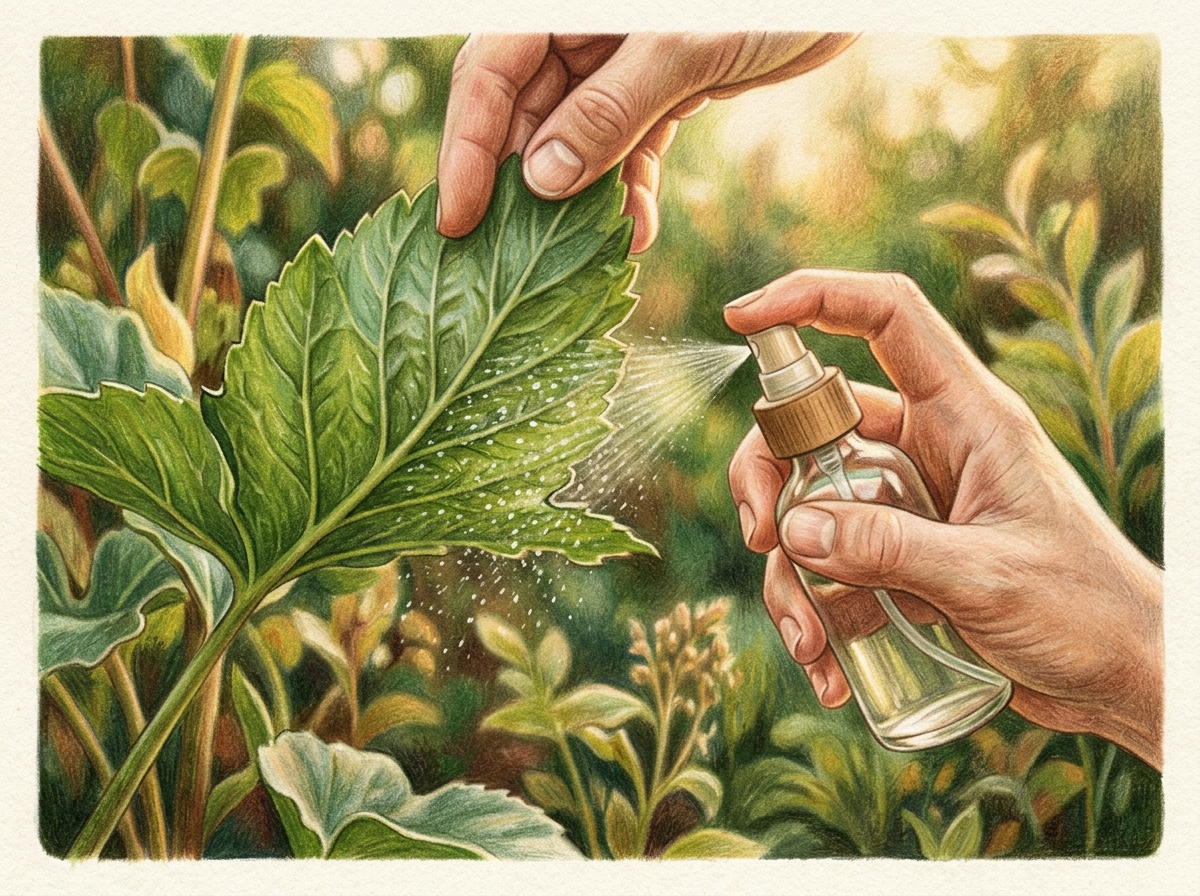
Look closely at the underside of damaged leaves to identify the actual pest before acting.
Skip the DIY dish soap recipes, which contain harsh detergents that strip a plant's protective leaf coating.
Purchase a commercially formulated insecticidal soap instead.
Spray a single leaf as a test patch and wait 24 hours to ensure no burning occurs.
Apply the soap to the pests in the evening when the sun is down and temperatures are cooler.
Why it works
Commercial insecticidal soaps use specific potassium salts of fatty acids that kill soft-bodied pests without breaking down the protective waxy cuticle of the leaf. Applying the mixture in the evening prevents the late-summer sun from heating the wet soap and scorching the plant tissue.
Gardening news
Gardening news
Groundbreaker: Hydrangea paniculata bred as ground cover
A new type of hydrangea has been developed that grows low and spreads across the soil to cover the ground, rather than growing upright like a typical bush.
Wildflowers and Orchids Return to Abandoned Farmland
Scientists tracked an unplanted farm field in Norfolk for eleven years. The land naturally transformed into a wildflower meadow with twice as many plant species and thousands of orchids. The findings show that letting nature recover on its own can work better than buying commercial seed mixes.
English botanist Thomas Nuttall crossed the Snake River into Oregon on August 24, 1834. He spent months collecting, drying, and identifying hundreds of plant species along the Columbia and Willamette rivers. His work expanded scientific knowledge of North American native plants.