Home › Plant diseases › Apple scab
Plant diseases
Apple scab
Venturia inaequalis and Venturia pyrina · Fungus
Also called pear scab (on pears).
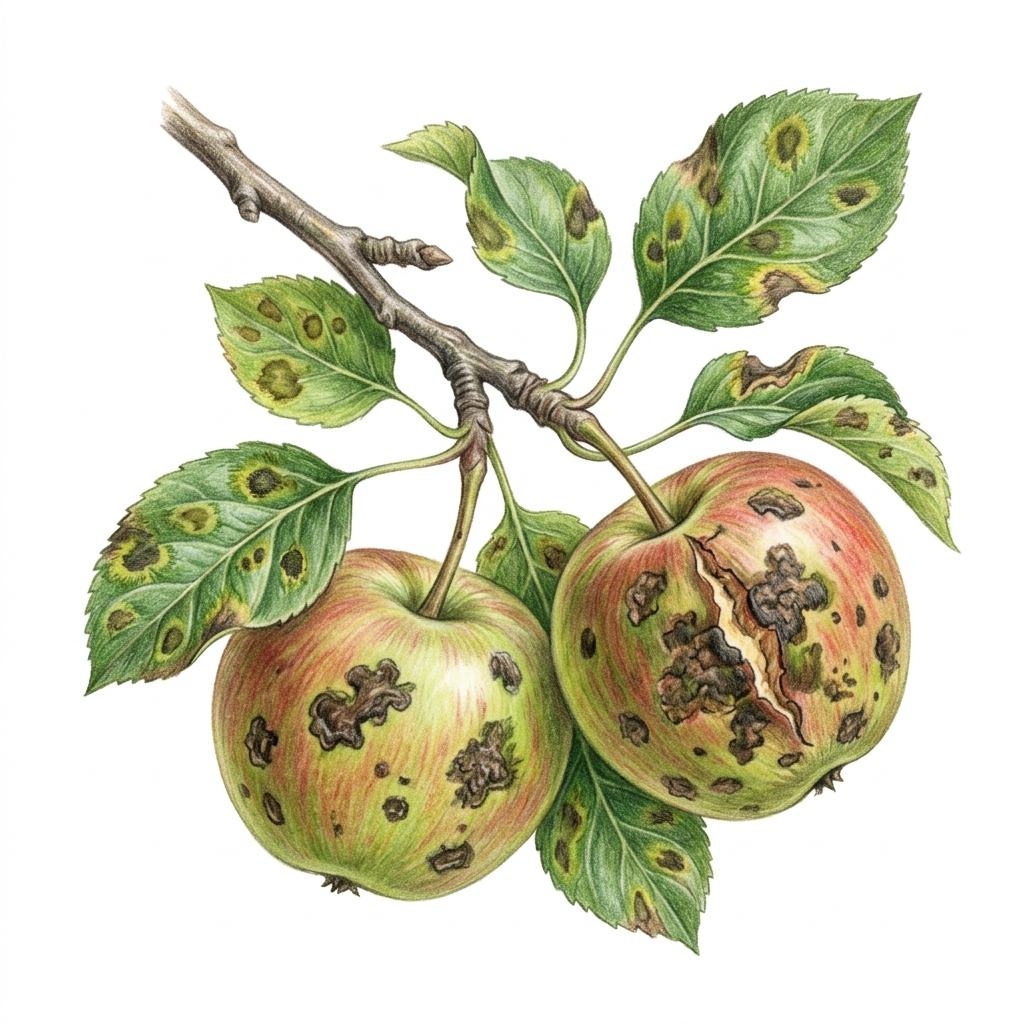
Illustration
Olive-green to black scabby spots on apple and pear leaves and fruit. It survives winter on fallen leaves, so raking them up and choosing resistant varieties are the best defences.
How to spot it
- Olive-green, velvety spots on leaves, with feathery edges, darkening with age.
- Yellowing and early leaf fall.
- Brown-black, corky scabs on the fruit, which can crack and distort.
- Blistered, cracked twigs, more often on pears.
Easily confused with
Sooty blotch and flyspeck
Smudges or clusters of shiny black dots on the skin only, which partly rub off.
Frogeye leaf spot
Purple-edged spots with tan centres.
Where it's a problem
- Worldwide: Common wherever springs are wet.
- Western Australia: Now established, particularly in the Perth Hills.
- South Africa: Present in the main apple-growing regions.
What to do
- Plant resistant varieties.
- Rake up fallen leaves and infected fruit every autumn.
- Prune out blistered twigs.
- Thin the canopy so it dries faster after rain.
If you use a fungicide, choose one labelled for apple scab and follow the label and local rules. Sprays only protect before infection: once you can see it, it's too late for this season. The RHS advises against fungicides on garden fruit trees.
Follow your local council's guidance for disposing of diseased plant material.
Free account, no card needed. You sign up or sign in first, then the scanner opens.
Sources
- RHS: Apple and pear scab
- University of California IPM: Apple and pear scab
- University of Wisconsin–Madison Extension: Apple scab
- Government of British Columbia: Apple scab
- NSW DPI: Apple and pear scab
Facts checked Sunday 27 September 2026. General guidance only: follow your local council, agency and product label.